Control your real Chrome from Claude Code. 29 tools with CAPTCHA solving and multi-session.
Quick Install
Automated & IDE SetupCopy the AI prompt to install this server into Claude Code, Cursor, or another agent — or use 1-click editor setup below.
Not yet automatically verified
We haven't yet run this listing's install command through our automated sandbox check. This isn't a red flag — we're steadily working through the catalog.
Manual Client & Custom JSON ConfigExpand JSON ▾
Client Config & Setup
Choose your client or environment
Target File:
💡 Paste the JSON block into your client's configuration file under mcpServers, then restart the application.
Documentation Overview
Browser MCP by Agent360
The browser tool that can stop and ask you. A 2FA code, a CAPTCHA, a choice only you can make: it asks on your own screen, then carries on in the tab you were already signed into.
It drives the Chrome you are already signed into: no login step to fail, no API key to wire up, no fresh profile that is a stranger to every account you have. Up to 20 agents at once, each in its own colour-coded tab group. 40 tools, MIT, runs on your machine.
→ What it can and cannot get past - every wall, marked measured, by design, not yet, or won't. Including the ones we have not fixed.









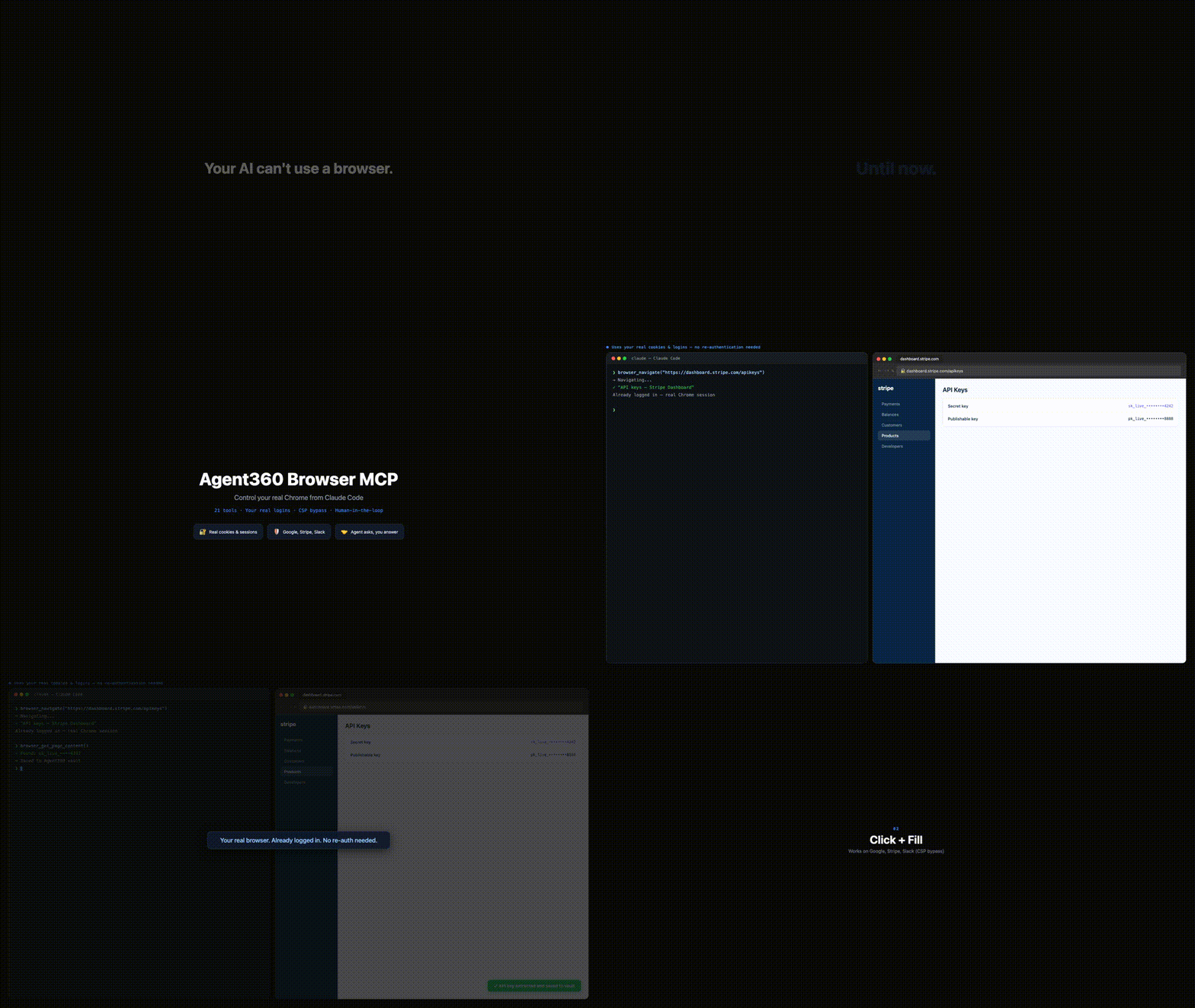
▶ Watch the 37-second demo with sound →
Browser MCP gives Claude Code (and any MCP client - Cursor, VS Code agent mode) control of your actual Chrome: your cookies, your sessions, your 2FA. So it works on CAPTCHA, 2FA and anti-bot sites where Playwright and Puppeteer get blocked - because it's you browsing.
The killer move: it hits a login wall, reads the verification code from your own Gmail tab, and continues the sign-in. No API can do that. Operate platforms with no API, QA your own web app end-to-end, or work dashboards, LinkedIn and Reddit at human pace - with you approving the sensitive steps.
40 tools. Auto-clicks the reCAPTCHA v2 checkbox, with a human fallback for the rest. Multi-session color-coded tab groups. MIT, free, and it runs on your machine - no account, no telemetry, nothing sent to us.
The whole thing, in four steps
Rather not do it by hand? Paste this to your AI assistant - Claude Code, Cursor, Codex, VS Code, Windsurf, Cline - and it sets itself up:
Set up Browser MCP for me. Read https://browsermcp.dev/llms-install.md and follow it for whichever AI client you are running in. One step only I can do - tell me which one, and wait for me. When I confirm, call
browser_list_tabsto prove both halves are talking.If you cannot open URLs:
npx @agent360/browser-mcp install
It reads the same guide the four steps below spell out by hand. One step stays yours either way: Chrome will not let an extension install itself, so you load it once.
1 - Install the Chrome extension. One click from the Chrome Web Store; Chrome keeps it updated. No store? See the unpacked install below.
2 - Add the MCP server. Paste this in a terminal. Required - the extension does nothing on its own:
3 - Restart Claude Code. That is what starts the server. The extension shows no badge until step 4 - the server only takes a port the first time your agent actually uses the browser. A green badge with the number of connected agents appears then; nothing on the icon before that is normal. (The icon itself never changes colour - it is the badge that turns green.)
4 - Say this, to check it worked. Paste it to Claude Code:
Take a screenshot of my current Chrome tab.
You get an image back instead of "I don't have browser access". That's it - you're running. → What else to say
Using Cursor, VS Code, Codex or Windsurf? Same server, that client's own config - the prompt at the top handles it, or see browsermcp.dev/docs. Everything below is the long version.
The long version - install, step by step
Browser MCP is two halves and you need both: a Chrome extension (drives the browser) and a local MCP server (what your agent actually talks to). Installing only the extension - e.g. straight from the Chrome Web Store - leaves it stuck on "Not connected", because there is no server for it to reach. Chrome cannot install the server, and npm cannot install the extension. Hence two steps.
Step 1: Register the MCP server with Claude Code
That is Claude Code's own MCP command, so the entry lands in the config Claude Code actually reads. --scope user makes it available in every project.
Want the extension files on disk for the unpacked install in Step 2? Also run:
It copies the extension to ~/.browser-mcp/extension/ and prints that path in the terminal - copy it. (Use it for the extension files only; register the server with claude mcp add above.)
Step 2: Load the extension in Chrome
Chrome won't let extensions install themselves from npm - you load it manually one time. To update later, re-run the install command and reload it (see Keeping it updated). Prefer the Chrome Web Store install if you'd rather have the extension auto-update.
- Open Chrome and type
chrome://extensionsin the address bar - Toggle "Developer mode" ON (top right corner)
- Click "Load unpacked" (top left, next to "Pack extension")
- Navigate to
~/.browser-mcp/extension/and click "Select"- On Mac: Press
Cmd+Shift+Gin the file picker, paste~/.browser-mcp/extension/, press Enter - On Windows: Paste
%USERPROFILE%\.browser-mcp\extension\in the address bar - On Linux: Type
~/.browser-mcp/extension/in the path field
- On Mac: Press
- Restart Claude Code so it picks up the new MCP server
That's it. The Browser MCP icon will appear in your toolbar, and 40 browser tools are now available in Claude Code.
Alternative: Manual zip download (no npm)
If you don't want to use npm, download the extension directly:
- Download the extension zip (
agent360-browser-mcp-<version>.zip) from the latest GitHub release - Unzip the file (anywhere - e.g.
~/Downloads/browser-mcp-extension/) - Follow Step 2 above, but select the unzipped folder instead of
~/.browser-mcp/extension/ - Register the server - run
claude mcp add --scope user browser-mcp -- npx @agent360/browser-mcp@latest, or add this to~/.claude.jsonby hand:
Chrome Web Store (no Developer mode, auto-updating extension)
This replaces Step 2 only - you still need Step 1.
- Install the extension from the Chrome Web Store → - no Developer mode toggle, and Chrome keeps it updated for you.
- Register the MCP server: (For Cursor / VS Code / Codex, use that client's own MCP config instead - see browsermcp.dev/docs.)
- Restart Claude Code.
Skip step 2 and the extension icon will sit on "Not connected" forever - that is the symptom of a missing MCP server, not a broken extension.
You're in. Now what?
Nothing happens until you ask, and the hardest part of a new tool is knowing what to ask for. Paste one of these to your agent:
Related MCP Servers
Adoption & maintenance
Factual signals from GitHub, npm, and our automated checks — not a rating.
GitHub stars
45
Stargazers on the source repository.
Last commit
3d ago
Most recent push to the default branch.
Reviews
No reviews yet — be the first to share how this listing worked for you.
Frequently Asked Questions about Browser MCP
AllMCPs Directory Badge
Showcase your server listing on GitHub or your project documentation. Embed this dynamic SVG badge to highlight official listing status and live engagement.
Badge Style:
Live Dynamic SVG Preview
Markdown (GitHub README)
[](https://allmcps.com/mcp/browser-mcp)HTML Embed
<a href="https://allmcps.com/mcp/browser-mcp"><img src="https://allmcps.com/api/badge/browser-mcp?style=directory" alt="Browser MCP on AllMCPs" /></a>