Ms 365 MCP Server vs Outlook Assistant
A side-by-side look at the Ms 365 MCP Server and Outlook Assistant MCP servers: transport, auth, tools, quality signals, and the config to install either one in Claude, Cursor, Windsurf or VS Code.
Verdict: choose Ms 365 MCP Server for communication work as a local process; choose Outlook Assistant for communication as a local process. You can also run both side by side in one mcpServers block.
Which MCP server should you choose?
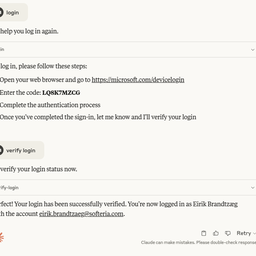 Choose Ms 365 MCP Server when
- You need dedicated capabilities in the Communication domain.
- You prefer a local stdio subprocess transport.
- Its auth model fits you: OAuth 2.0.
- You have the keys it needs:
MS365_MCP_CLIENT_ID, MS365_MCP_TENANT_ID, MS365_MCP_GRAPH_BASE_URL, MS365_MCP_OUTPUT_FORMAT, MS365_MCP_ALLOWED_SCOPES. - You want tools like
login, logout, verify-login.
 Choose Outlook Assistant when
- You need dedicated capabilities in the Communication domain.
- You prefer a local stdio subprocess transport.
- You want tools like
auth, list-events, create-event.
Feature & specification comparison
Rows where the two servers differ are marked.
| Spec | ||
|---|---|---|
| Category | Communication | Communication |
| Quality signal | 72/100 · Great | 68/100 · Great |
| Install command | Confirmed | Confirmed |
| Transport | Local subprocess (stdio) | Local subprocess (stdio) |
| Auth | OAuth 2.0 | Not declared |
| Pricing | Not declared | Not declared |
| Required env vars | MS365_MCP_CLIENT_IDMS365_MCP_TENANT_IDMS365_MCP_GRAPH_BASE_URLMS365_MCP_OUTPUT_FORMATMS365_MCP_ALLOWED_SCOPES | None listed |
| Verified owner | Community listing | Community listing |
| GitHub stars | 1,056 | 39 |
| Directory activity | 1 views 0 installs 0 upvotes | 2 views 0 installs 0 upvotes |
| Tools | 19 | 22 |
| Full listing | View Ms 365 MCP Server | View Outlook Assistant |
Tools & capabilities
Ms 365 MCP Server tools 19
loginAuthenticate with Microsoft accountlogoutLog out from Microsoft accountverify-loginCheck current Microsoft authentication statuslist-accountsList all Microsoft accounts configured in this server. Use this to discover available account emails before making tool calls. Reflects accounts added mid-session via --login.select-accountSelect a Microsoft account as the default. Accepts email address (e.g. user@outlook.com) or account ID. Use list-accounts to discover available accounts.remove-accountRemove a Microsoft account from the cache. Accepts email address (e.g. user@outlook.com) or account ID. Use list-accounts to discover available accounts.graph-batchCombine up to 20 Graph requests into a single HTTP call. Body: { requests: [{ id: '1', method: 'GET'|'POST'|'PATCH'|'DELETE', url: '/me/messages?$top=5', headers?: {...}, body?: {...}, dependsOn?: ['1'] }, ...] }. Returns { responses: [{ id, status, body, headers }] } in arbitrary order — match by id. Use cases: (1) parallelize many small reads (e.g. fetch 15 mail messages by id in one round-trip); (2) sequence dependent writes via dependsOn; (3) batch many Excel range writes into one call to dramatically reduce latency on large workbook builds. Note: each sub-request URL is relative to the Graph version root (/me/..., /drives/..., NOT https://graph.microsoft.com/v1.0/...). 💡 TIP: Combine up to 20 Graph requests into a single HTTP call. Body: { requests: [{ id: '1', method: 'GET'|'POST'|'PATCH'|'DELETE', url: '/me/messages?$top=5', headers?: {...}, body?: {...}, dependsOn?: ['1'] }, ...] }. Returns { responses: [{ id, status, body, headers }] } in arbitrary order — match by id. Use cases: (1) parallelize many small reads (e.g. fetch 15 mail messages by id in one round-trip); (2) sequence dependent writes via dependsOn; (3) batch many Excel range writes into one call to dramatically reduce latency on large workbook builds. Note: each sub-request URL is relative to the Graph version root (/me/..., /drives/..., NOT https://graph.microsoft.com/v1.0/...).list-subscriptionsRetrieve the properties and relationships of webhook subscriptions, based on the app ID, the user, and the user's role with a tenant. The content of the response depends on the context in which the app is calling; for details, see the scenarios in the Permissions section. 💡 TIP: Lists webhook subscriptions owned by the current app/user. Returns id, resource, changeType, notificationUrl, expirationDateTime, clientState. Use $filter=resource eq '/me/messages' to find subscriptions for a specific resource. No dedicated 'Subscription.*' scope exists — the caller must already have a read permission for the subscribed resource (e.g. Mail.Read for /me/messages), which is supplied by the tool that reads that resource.create-subscriptionSubscribes a listener application to receive change notifications when the requested type of changes occur to the specified resource in Microsoft Graph. To identify the resources for which you can create subscriptions and the limitations on subscriptions, see Set up notifications for changes in resource data: Supported resources. Some resources support rich notifications, that is, notifications that include resource data. For more information about these resources, see Set up change notifications that include resource data: Supported resources. 💡 TIP: Creates a webhook subscription for change notifications. Required body: { changeType (comma-separated: 'created,updated,deleted'), notificationUrl (HTTPS, must validate with token echo), resource (e.g. '/me/mailFolders/inbox/messages', '/users/{id}/events', '/teams/{id}/channels/{id}/messages'), expirationDateTime (ISO 8601, max varies by resource type — 1 hour for calls, 24h for messages, 3 days for mail), clientState (opaque string returned in notifications, for validation) }. Optional: includeResourceData (true enables rich notifications, requires encryptionCertificate + encryptionCertificateId). No dedicated scope — caller must have a read permission for the target resource (e.g. Mail.Read, Calendars.Read, ChannelMessage.Read.All, Files.Read.All).get-subscriptionRetrieve the properties and relationships of a subscription. See the table in the Permissions section for the list of resources that support subscribing to change notifications. 💡 TIP: Gets a specific webhook subscription by id. Use list-subscriptions to find the id. Returns full subscription details including resource, changeType, notificationUrl, expirationDateTime, applicationId.update-subscriptionRenew a subscription by extending its expiry time. The table in the Permissions section lists the resources that support subscribing to change notifications. Subscriptions expire after a length of time that varies by resource type. In order to avoid missing change notifications, an app should renew its subscriptions well in advance of their expiry date. See subscription for maximum length of a subscription for each resource type. 💡 TIP: Renews a webhook subscription by extending its expiration. Body: { expirationDateTime (ISO 8601, new expiry) }. Call before the current expirationDateTime to avoid missing notifications. Max extension varies by resource type — check Microsoft Graph docs for subscription limits.delete-subscriptionDelete a subscription. For the list of resources that support subscribing to change notifications, see the table in the Permissions section. 💡 TIP: Deletes a webhook subscription. No further change notifications will be sent. Use this to clean up stale subscriptions or stop receiving notifications. Use list-subscriptions to find the id.- +7 more on the listing page
Outlook Assistant tools 22
authManage authentication with the Microsoft Graph API. action=`status` (default) returns the current auth state, refreshing an expired access token while the refresh token is still valid (~90 days); call it first to check before other tools. action=`authenticate` starts sign-in: `method: "device-code"` (default, works headlessly) returns a code + URL for the user to visit; `method: "browser"` uses the local auth server on :3333 (run `npm run auth-server` first). `force: true` re-authenticates over an existing valid session. If sign-in reports that OUTLOOK_CLIENT_ID is not configured, ask the user for their Azure Application (client) ID and pass it as `clientId`. action=`device-code-complete` finishes device-code sign-in once the browser shows it succeeded. action=`about` returns server version, configured audience, scope list and other diagnostics. Tokens persist to `~/.outlook-assistant-tokens.json` and survive server restarts.list-eventsList calendar events for the signed-in user (read-only). By default returns upcoming events (start ≥ now). Optional `startAfter`, `startBefore` and `subject` filters find past, current or specifically-named events; supplying any of them replaces the default "now" lower bound and the filters are AND-ed together. Results are oldest first, except when the search only looks backwards (`startBefore` without `startAfter`, or `subject` alone), where they are newest first. Each event shows its subject, location, start/end, a body preview and its id. Use `count` (default 10, max 100) to control page size. Each start/end is returned as a canonical UTC ISO-8601 instant (e.g. `2026-04-02T22:00:00.000Z`) followed by a labelled local rendering in the configured display timezone (default Australia/Melbourne; override with `OUTLOOK_DEFAULT_TIMEZONE`) — the UTC value is authoritative, so consumers never have to guess the zone.create-eventCreate a new calendar event on the signed-in user's default calendar. Returns the created event with its `id`, `webLink`, and (if attendees are present) an auto-generated online-meeting URL — attendees receive invitations on save, so pass `dryRun: true` first to preview who would be invited (and how many are external) without creating anything. When `OUTLOOK_ALLOWED_RECIPIENTS` is set, every attendee must be allowed or nothing is created. Times use the configured timezone (default Australia/Melbourne; override with `OUTLOOK_DEFAULT_TIMEZONE`); omit the `Z` suffix to send local time. Use `manage-event` action=`update` to modify an event after creation, or `manage-event` action=`cancel`/`delete` to remove it. Real creates count against the session limit (`OUTLOOK_MAX_CREATE_EVENT_PER_SESSION`, else `OUTLOOK_MAX_EMAILS_PER_SESSION`); 0 refuses every create.manage-eventManage an existing calendar event. `dryRun: true` previews any action without changing or sending anything: who would be emailed, with an external count (update also: who is added or removed, and the PATCH body). action=`update` edits fields via PATCH (subject, start, end, attendees, body, location, isOnlineMeeting, sensitivity, showAs, importance, categories, reminderMinutesBeforeStart); only fields you pass change. action=`decline` declines an invitation (optional `comment`; `sendResponse: false` declines without notifying the organiser). action=`cancel` cancels an event you organised and emails attendees. action=`delete` removes the event from your calendar (Graph documents no guaranteed recovery); deleting a meeting you organised that has attendees still emails them a cancellation, so use `cancel` with a `comment` to control that message. Returns the updated event on update; a confirmation otherwise. There is no `accept` action: accept invitations in the Outlook UI, as Graph's accept verb is unreliable.search-emailsSearch, list, delta-sync or thread-group emails (read-only); parameters set the mode. No params: recent emails in `folder` (default `inbox`). `query`/`from`/`to`/`subject`/date filters: search, combined as an OData filter. `searchExpression` (deprecated alias `kqlQuery`): a raw Graph `$search` expression. `deltaMode: true`: current state plus a `deltaToken` to pass back next time for changes only. `groupByConversation: true`: conversation threads. `conversationId`: every message in one thread. `internetMessageId`: the message with that RFC Message-ID. `sharedMailbox` (alias `email`) searches a shared/delegated mailbox, custom folders and nested paths included. Personal Outlook.com accounts have limited `$search`, so the tool falls back to OData filters and a recent listing automatically; structured filters (`from`/`subject`/`receivedAfter`/`hasAttachments`/`unreadOnly`) give cleaner results there. Returns up to `count` messages (id/subject/from/receivedDateTime/preview); `outputVerbosity` expands them.read-emailRead a single email by id (read-only). Returns subject, from/to/cc, date and the body as Markdown (HTML stripped to text): up to 2,000 characters by default, up to 40,000 with `outputVerbosity: full`; a cut body ends with a note on how to get the rest. With `headersMode: true`: returns RFC-822 forensic headers in place of the body (DKIM, SPF, DMARC, Received chain, Message-ID, Authentication-Results) — `importantOnly: true` for the security-relevant subset, `groupByType: true` for a category-bucketed view, `raw: true` for JSON. With `includeHeaders: true` (non-headers-mode): adds basic headers alongside the body. **If the id came from a shared/delegated mailbox (e.g. via `search-emails` or `access-shared-mailbox` with `sharedMailbox` set), you MUST pass the same `sharedMailbox` (or alias `email`) here** — message IDs are mailbox-scoped, and reading a shared-mailbox id without it fails with 404 ErrorInvalidMailboxItemId.send-emailCompose and send an email immediately (destructive: sends external comms). Returns a confirmation. Safety controls: `dryRun: true` returns the composed message for review without sending; `checkRecipients: true` runs `get-mail-tips` first and returns its warnings. If the tips show an out-of-office reply, a full mailbox, a delivery restriction or external recipients, the send is refused until repeated with `acknowledgeWarnings: true`. Personal Outlook.com accounts return no tips, and no warnings is not proof of delivery. Subject to the session limit (`OUTLOOK_MAX_SEND_EMAIL_PER_SESSION`, else `OUTLOOK_MAX_EMAILS_PER_SESSION`; 0 refuses every send) and recipient allowlist (`OUTLOOK_ALLOWED_RECIPIENTS`) when configured; both refuse before any Graph request. For a review-before-send workflow, use `draft` (action=`create` → `update` → `send`); a draft can be checked in Outlook before it goes. Comma-separated recipient strings or arrays both accepted.draftDraft lifecycle for review-before-send workflows (destructive: covers `send` and `delete`). action=`create` saves a new draft and returns its id (`dryRun: true` previews without saving; `checkRecipients: true` runs mail-tips first). action=`update` patches a draft by `id` (only fields passed change). action=`send` sends a draft and counts against the `send-email` session limit (0 refuses every send). action=`delete` moves a draft to Recoverable Items (restorable for a limited time). update/send/delete refuse any `id` that is not an unsent draft. action=`reply`/`reply-all` creates a reply draft from a message `id` (`comment` prepends text; not with `body`). action=`forward` creates a forward draft (needs `id` and `to`). The recipient allowlist (OUTLOOK_ALLOWED_RECIPIENTS) applies to create/update/forward, to the draft's current to/cc/bcc on send, and to reply/reply-all, whose draft is deleted if a recipient is not allowed. Returns the draft on create/update/reply/forward; a status on send/delete.update-emailUpdate message state without modifying content (idempotent — safe to retry). action=`mark-read`/`mark-unread` sets `isRead` on a single message by `id`. action=`flag` sets a follow-up flag with optional `dueDateTime`/`startDateTime`: ISO 8601 with a time, kept as that exact instant when it has `Z` or a ±hh:mm offset and read in OUTLOOK_DEFAULT_TIMEZONE when it has none; date-only or unparseable values are refused before any change. With only `dueDateTime`, the start is 09:00 on the due date, or the due time if earlier. action=`unflag` clears the flag; action=`complete` marks it done. Flag/unflag/complete take `id` (single) or `ids` (batch, updated one at a time: one PATCH each, not Graph `$batch`). `sharedMailbox` (alias `email`) updates messages in a shared/delegated mailbox (default: the signed-in account; needs Mail.ReadWrite.Shared and delegate access). Returns a status per message.attachmentsInspect or retrieve email attachments. action=`list` (default) returns metadata for all attachments on `messageId` (id, name, contentType, size, isInline) — read-only. action=`view` returns inline content for text/JSON/XML attachments via `attachmentId`; binary types require download. action=`download` saves the attachment under a new, unique name in `outputDir` (default system temp directory, auto-created; must be inside the temp directory, ~/Downloads, ~/Documents or OUTLOOK_EXPORT_DIR) and returns the saved file path. `messageId` is required for all actions; `attachmentId` is required for view/download. If `messageId` came from a shared/delegated mailbox, pass the same `sharedMailbox` (or alias `email`) — attachment IDs are scoped to the message and fail under /me otherwise. Use `outputVerbosity` to control list field count.exportExport emails to files. target=`message` (default) exports one email by `id` (mime/eml/markdown/json/csv) to `savePath`: a directory (or a path ending in `/`, created if missing) gets a new, unique file name; a file path is created new and an existing file is replaced only with `overwrite: true`. target=`messages` batch-exports `emailIds`, or matches for `searchQuery`/`query`, into `outputDir`, at most 100 messages per call. target=`conversation` exports a thread (up to 1000 messages) by `conversationId` into `outputDir` (eml/mbox/markdown/json/html/csv; `order: "reverse"` for newest first). target=`mime` returns raw RFC-822 MIME for `id` (`headersOnly`, `base64`, `maxSize`, default 1MB). Files are written only inside the system temp directory (the default), ~/Downloads, ~/Documents or OUTLOOK_EXPORT_DIR, never to dot-prefixed names. Pass `sharedMailbox` (alias `email`) when the ids come from a shared mailbox. `includeAttachments` defaults to true for one message, false for batch.get-mail-tipsPre-send recipient validation via Graph `POST /me/getMailTips` (read-only; uses the existing `Mail.Read` scope — no extra permissions). Returns per-recipient tips covering automatic replies (out-of-office), mailbox full status, custom admin mail tips, delivery restrictions, moderation requirements, external-vs-internal scope, max message size, and group member counts (total + external). Use ahead of `send-email` or `draft` action=`create` to catch issues like OOO replies or external-recipient warnings before the message goes out; `send-email`/`draft` accept `checkRecipients: true` to invoke this automatically. Accepts either a comma-separated string or an array of addresses; `tipTypes` filters which tips are requested (defaults to all).- +10 more on the listing page
Ready-to-paste client configs
Paste either block (or both) into your client config, e.g. claude_desktop_config.json or ~/.cursor/mcp.json. We only show a config when the install command is confirmed.
Ms 365 MCP Server
{
  "mcpServers": {
    "softeria-ms-365-mcp-server": {
      "command": "npx",
      "args": [
        "-y",
        "@softeria/ms-365-mcp-server"
      ],
      "env": {
        "MS365_MCP_CLIENT_ID": "YOUR_MS365_MCP_CLIENT_ID_HERE",
        "MS365_MCP_TENANT_ID": "YOUR_MS365_MCP_TENANT_ID_HERE",
        "MS365_MCP_GRAPH_BASE_URL": "YOUR_MS365_MCP_GRAPH_BASE_URL_HERE",
        "MS365_MCP_OUTPUT_FORMAT": "YOUR_MS365_MCP_OUTPUT_FORMAT_HERE",
        "MS365_MCP_ALLOWED_SCOPES": "YOUR_MS365_MCP_ALLOWED_SCOPES_HERE"
      }
    }
  }
}
Outlook Assistant
{
  "mcpServers": {
    "littlebearapps-outlook-assistant": {
      "command": "npx",
      "args": [
        "-y",
        "@littlebearapps/outlook-assistant"
      ]
    }
  }
}
Frequently asked questions
Ms 365 MCP Server is categorized under Communication and uses a local stdio subprocess. Outlook Assistant belongs to Communication and uses a local stdio subprocess. Pick Ms 365 MCP Server for communication work and Outlook Assistant for communication.
Copy the mcpServers block from the config section on this page into your client's config (for example claude_desktop_config.json or ~/.cursor/mcp.json), then fully restart the client.
Ms 365 MCP Server has no declared pricing — check the project's own site. Auth: oauth 2.0. Outlook Assistant has no declared pricing — check the project's own site. If a server needs environment variables such as API keys, define them under the env key in your client's MCP config.
Yes. MCP clients support multiple servers: add softeria-ms-365-mcp-server and littlebearapps-outlook-assistant as separate keys in the same mcpServers object, and your assistant will call tools from either one.
On AllMCPs, Ms 365 MCP Server has a quality signal of 72/100 (Great) with 1 views, 0 installs and 1,056 GitHub stars. Outlook Assistant has 68/100 (Great) with 2 views, 0 installs and 39 GitHub stars.