Prumo README
The full upstream README, mirrored here for reference. Install config, tool schemas, adoption signals, and an original overview live on the Prumo listing page.

Checks the context files your coding agent reads against the code beside them.


The problem
Three months ago someone wrote this in CLAUDE.md:
The folder has since been renamed to Layouts, with a capital L. Windows and macOS still open that path, so nothing ever complained. Linux and CI don't, and every agent that reads the file gets sent somewhere that doesn't exist.
That line survived six hand-run audits of the same files. prumo found it in four seconds.
Quick start
If you already have Node.js 18+ and git, you are ready. Nothing to install, nothing to configure, no account to create. From a terminal inside any git repository:
prumo locates your context files on its own: CLAUDE.md, AGENTS.md, .cursor/rules, .github/copilot-instructions.md, installed skills in .claude/skills/ and the rest. Every file and folder it looks for is in the reference.
For frequent use, install it once:
Either way the command is prumo, with zero dependencies. Errors at this step, such as an old Node or a folder that isn't a git repository, are in Troubleshooting.
Reading the result
A clean run:
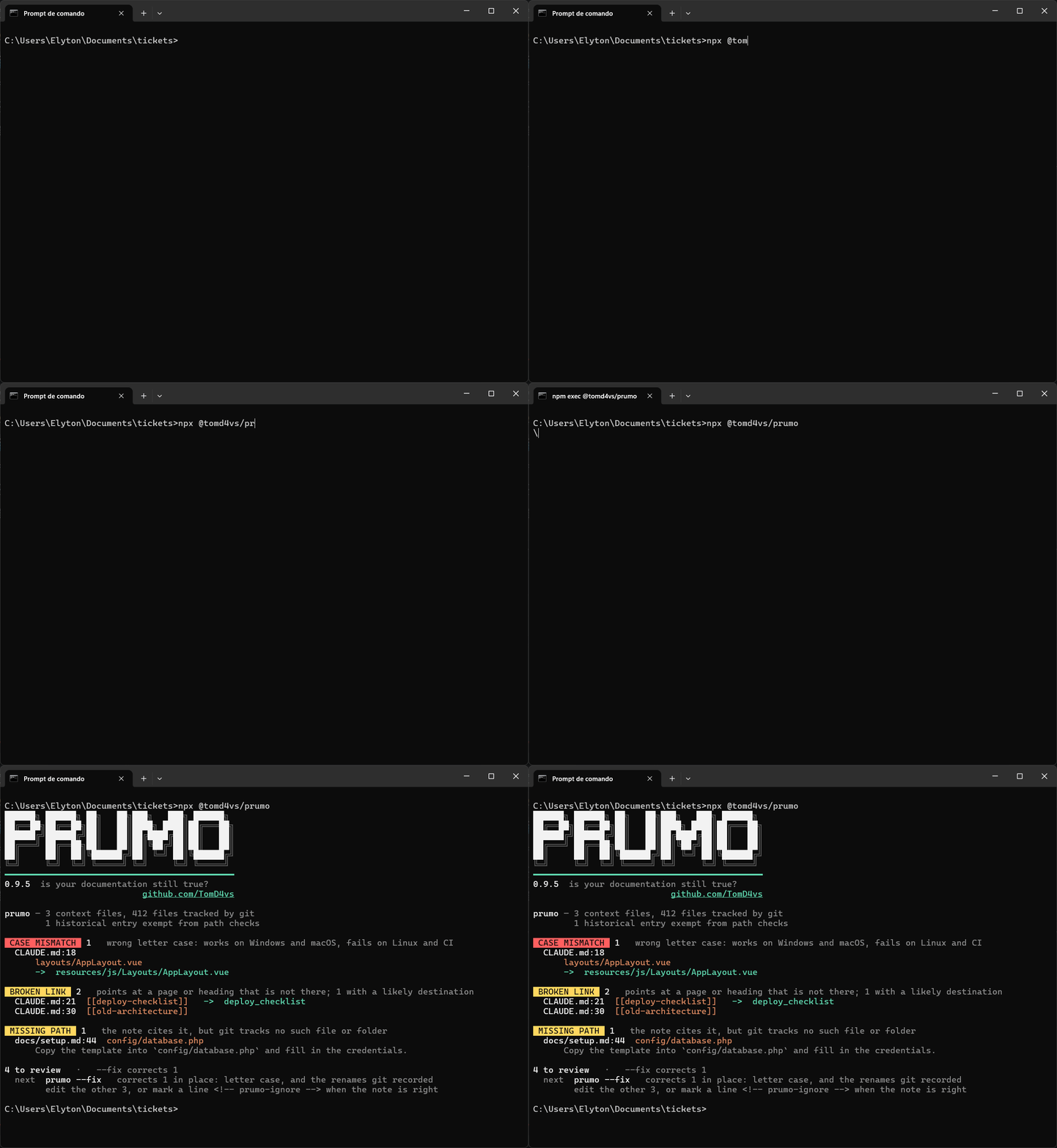
A run with findings, annotated:
Every finding carries a file, a line number and the correction, and a missing path says where git moved it when the history holds a rename. Nothing is guessed and nothing is written. What each finding means, and what to do about it, is in the reference. If it flags a line you know is correct, Silencing a finding covers the two ways to say so.
What it will not do
Three limits, chosen on purpose and explained in Design:
- It does not judge claims. Whether "this flag disables caching" is still true needs a model, and that is a different tool.
- It does not edit beyond letter case and the renames git itself recorded. A link suggested from a name is an educated guess, and a missing path with no history may be missing on purpose.
- It makes no network calls. No telemetry, no account, no model.
Every check was measured on public repositories before it shipped, and the design page publishes the numbers, the ugly ones included.
Using it from an agent
prumo is a plain CLI, so any agent with shell access can run it.
Ask the agent to run it. npx @tomd4vs/prumo works in any git repository, and covers skills installed under .claude/skills/ on its own. For a repository that is itself a skill, name the file: npx @tomd4vs/prumo . SKILL.md. The text output names the file, the line and the correction, which is enough for an agent to act on without parsing. --format json returns the same findings as structured data.
Expose it as a tool. The package also ships prumo-mcp, an MCP server over stdio with four tools: prumo_check, which is read only, prumo_fix, which rewrites letter case and the renames git recorded, and the two reports, prumo_drift and prumo_budget, read only as well. In Claude Code:
The configuration for any other MCP client is in Agents.
Add a slash command. A file at .claude/commands/prumo.md turns the check into /prumo:
Run it after every edit. A PostToolUse hook runs prumo whenever the agent writes a context file, so the findings land in the transcript and it can fix them in the same turn. The hook, for bash and for PowerShell, is in Agents.
Continuous integration
prumo exits non-zero on findings, so it drops into a pipeline as a single step. The shortest form is the action this repository ships:
It annotates the exact line of the pull request and fails the job when something needs review. npx @tomd4vs/prumo --quiet after actions/setup-node does the same in any pipeline. Use actions/checkout as normal; prumo reads the git index, so a checkout that omits it will not work. Three options cover the rest:
--baselinerecords what a repository with a backlog already has, once; later runs fail only on what is new.--since origin/mainchecks only the context files a pull request touched.--sarif FILEwrites the findings for code scanning, and.pre-commit-hooks.yamlruns the same check before each commit through the pre-commit framework.
The action's inputs, the SARIF upload and the pre-commit block are in the reference.
Two reports
Beyond the checks, two commands measure instead of judging, and exit 0 whatever they find:
drift reads from git blame when each section was last written, counts the commits that touched the files it cites since then, and lists the sections most moved first: a reading order for a review, since a section whose files changed forty times may still be right. budget estimates the tokens each file costs at every session, how much that grew since a commit, and which paragraphs are written in more than one place. Both are on the reference, and both are tools of the MCP server.
Documentation
| Page | What it answers |
|---|---|
| Reference | Every option and exit code, what each finding means, how to silence one, what --fix touches |
| Agents | Every integration in full: the MCP server, the PostToolUse hook for bash and PowerShell, the slash command |
| Design | Why so few checks: the measurement that removed the symbol checker, and the filters that keep the rest quiet |
| Troubleshooting | Error messages, and the questions people ask before adopting it |
| API | Calling it from code, and running the test suite |
License
MIT