AllMCPs
BrowseBestCategoriesStackCompareToolsGuidesBlog
Log in Submit MCP

Stay in the loop

Get new MCP servers and top picks in your inbox.

AllMCPs

The open directory for discovering and installing Model Context Protocol servers.

AllMCPs on GitHub (opens in a new tab)
Launched onTiny Startupstinystartups.com
Explore
  • Browse servers
  • Best MCP servers
  • Categories
  • MCP clients
  • Agent prompts
  • Stack Builder
  • Compare servers
  • Random discovery New
  • Submit a server
  • Pricing & Boost Boost
Learn
  • Guides hub
  • What is MCP?
  • Install guide
  • Build an MCP server
  • Deploy an MCP server
  • Security guide
  • Troubleshooting
  • MCP for SEO & AEO
  • Protocol versioning
  • Transports: stdio vs HTTP
  • State of MCP (stats)
  • Blog & updates
Tools
  • All developer tools
  • Config generator
  • Config validator
  • Config auditor
  • MCP playground
  • Token calculator
  • OpenAPI → MCP
  • Badge generator
For agents
  • REST API docs
  • Trust & traffic Live
  • Remote MCP server SSE ↗ (opens in a new tab)
  • llms.txt ↗ (opens in a new tab)
  • Catalog JSON ↗ (opens in a new tab)
Company
  • About
  • Advertise Sponsor
  • Contact
  • GitHub ↗ (opens in a new tab)
  • Terms
  • Privacy
AllMCPs VerifiedAllMCPs VerifiedFeatured on Nick LaunchesFeatured on Nick LaunchesLaunch Llama NewsletterLaunch Llama NewsletterVerified DR - allmcps.comVerified DR - allmcps.comFeatured on SaaSGrowFeatured on SaaSGrowFeatured on Twelve ToolsFeatured on Twelve ToolsFeatured on Saaspa.geFeatured on Saaspa.geFeatured on Findly.toolsFeatured on Findly.toolsFeatured on Startup FameFeatured on Startup FameFeatured on LaunchKiwiFeatured on LaunchKiwiFeatured on ScrollLaunchFeatured on ScrollLaunchFeatured on DailyPingsFeatured on DailyPingsFazier badgeFazier badgeFeatured on NewTool.siteFeatured on NewTool.siteFeatured on saasfame.comFeatured on saasfame.comDR Checker - Domain RatingDR Checker - Domain RatingListed on Turbo0Listed on Turbo0Launched on LaunchBoard - Product Launch PlatformLaunched on LaunchBoard - Product Launch PlatformList on SimilarlabsList on Similarlabshttps://codetrendy.comhttps://codetrendy.comListed on DevTool.ioFeatured on BuildlistFeatured on BuildlistLaunched on Tiny StartupsFeatured on ShowMeBestAIFeatured on ShowMeBestAIFind us on LaunchZoneFind us on LaunchZoneAllMCPs VerifiedAllMCPs VerifiedFeatured on Nick LaunchesFeatured on Nick LaunchesLaunch Llama NewsletterLaunch Llama NewsletterVerified DR - allmcps.comVerified DR - allmcps.comFeatured on SaaSGrowFeatured on SaaSGrowFeatured on Twelve ToolsFeatured on Twelve ToolsFeatured on Saaspa.geFeatured on Saaspa.geFeatured on Findly.toolsFeatured on Findly.toolsFeatured on Startup FameFeatured on Startup FameFeatured on LaunchKiwiFeatured on LaunchKiwiFeatured on ScrollLaunchFeatured on ScrollLaunchFeatured on DailyPingsFeatured on DailyPingsFazier badgeFazier badgeFeatured on NewTool.siteFeatured on NewTool.siteFeatured on saasfame.comFeatured on saasfame.comDR Checker - Domain RatingDR Checker - Domain RatingListed on Turbo0Listed on Turbo0Launched on LaunchBoard - Product Launch PlatformLaunched on LaunchBoard - Product Launch PlatformList on SimilarlabsList on Similarlabshttps://codetrendy.comhttps://codetrendy.comListed on DevTool.ioFeatured on BuildlistFeatured on BuildlistLaunched on Tiny StartupsFeatured on ShowMeBestAIFeatured on ShowMeBestAIFind us on LaunchZoneFind us on LaunchZone
© 2026 Jackalope Digital LLC. All rights reserved.
  1. Home
  2. Developer Tools
  3. Portview
  4. README

Portview README

The full upstream README, mirrored here for reference. Install config, tool schemas, adoption signals, and an original overview live on the Portview listing page.

Back to Portview View source on GitHub

portview

CI Crates.io License: MIT

portview lists ports and the processes using them on Linux, macOS, and Windows. It shows process names, commands, memory usage, and uptime. You can inspect a port, stop its process, or monitor changes in an interactive terminal UI.
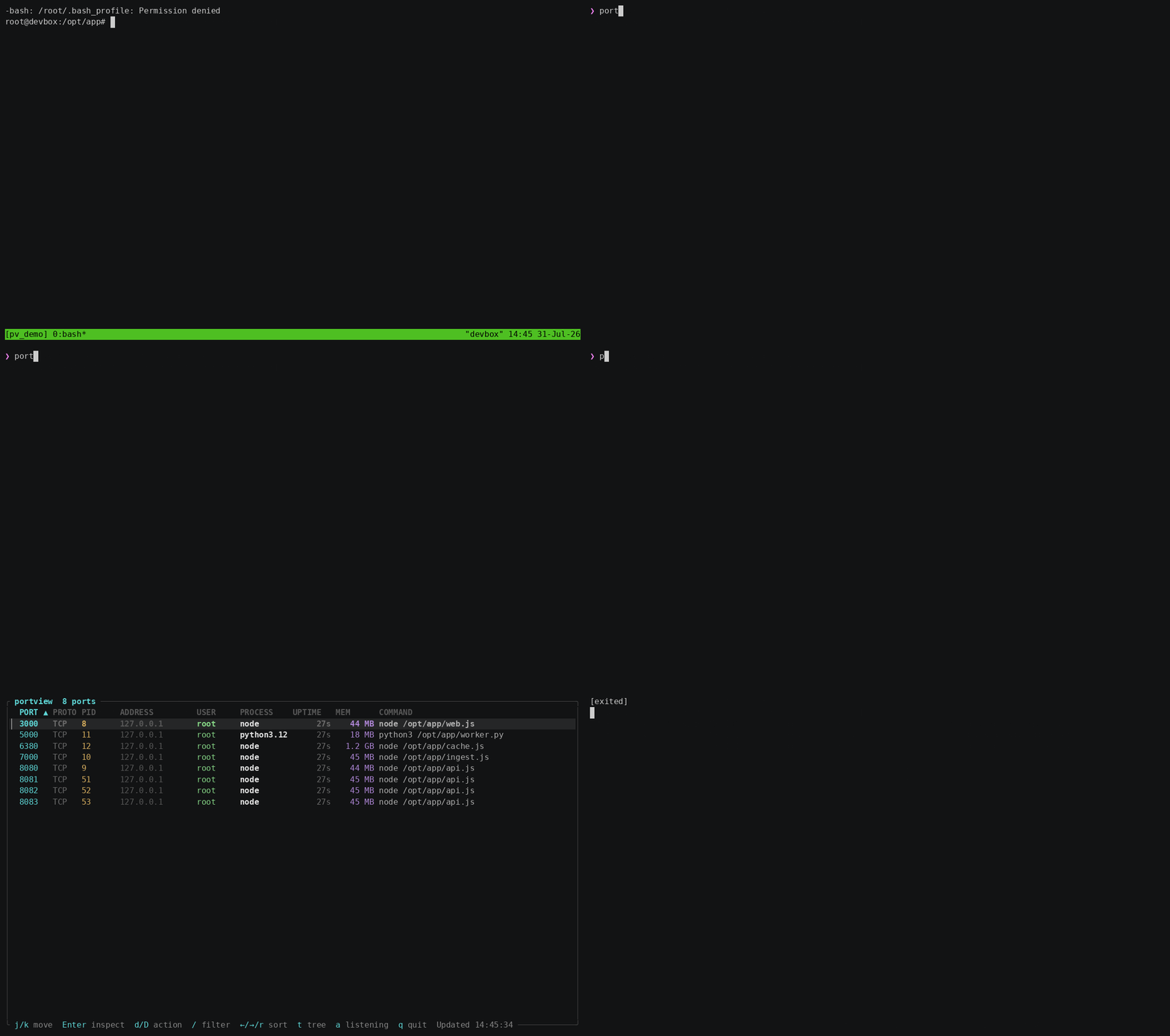
portview demo

It also supports Docker, remote hosts over SSH, and an MCP server for coding agents.

Install

Homebrew:

bash
brew install mapika/tap/portview

Linux / macOS:

Terminal
curl -fsSL https://raw.githubusercontent.com/mapika/portview/main/install.sh | sh

Windows (PowerShell):

powershell
irm https://raw.githubusercontent.com/mapika/portview/main/install.ps1 | iex

Or use cargo install portview, or download a binary from Releases.

What it does

bash
portview                          # list all listening ports
portview 3000                     # inspect port 3000 in detail
portview node                     # find ports by process name
portview watch                    # interactive TUI with live refresh
portview watch --docker           # TUI with Docker containers as rows
portview kill 3000 --force        # terminate the process using port 3000
portview doctor                   # diagnose port conflicts and issues
portview ssh user@server          # inspect ports on a remote host
portview ssh user@server watch    # remote TUI over SSH
portview ssh user@server --agentless   # no portview needed on the remote
portview mcp                      # run as an MCP server for AI agents

Features

Scan

Code
$ portview
╭──────┬───────┬─────┬──────────────┬──────┬────────────┬────────┬────────┬────────────────────────────╮
│ PORT │ PROTO │ PID │ ADDR         │ USER │ PROCESS    │ UPTIME │ MEM    │ COMMAND                    │
├──────┼───────┼─────┼──────────────┼──────┼────────────┼────────┼────────┼────────────────────────────┤
│ 3000 │ TCP   │ 8   │ 127.0.0.1    │ root │ node       │     7s │  44 MB │ node /opt/app/web.js       │
│ 5000 │ TCP   │ 11  │ 127.0.0.1    │ root │ python3.12 │     7s │  18 MB │ python3 /opt/app/worker.py │
│ 6380 │ TCP   │ 12  │ 127.0.0.1    │ root │ node       │     7s │ 1.2 GB │ node /opt/app/cache.js     │
│ 7000 │ TCP   │ 10  │ 127.0.0.1    │ root │ node       │     7s │  45 MB │ node /opt/app/ingest.js    │
│ 8080 │ TCP   │ 9   │ 127.0.0.1    │ root │ node       │     7s │  44 MB │ node /opt/app/api.js       │
╰──────┴───────┴─────┴──────────────┴──────┴────────────┴────────┴────────┴────────────────────────────╯

--all includes non-listening connections, with one row per connection. --wide shows full commands. --json produces JSON output for scripts.

Ports whose owner can't be resolved are still listed, with - in the columns that can't be filled. That happens for another user's process without sudo, and for sockets like TIME_WAIT that outlive the process that opened them.

The scan, doctor, and MCP examples below are real output, captured by demo/record.sh inside an isolated namespace — which is why the user is root and the paths are /opt/app. The Docker example is illustrative, since it needs a running daemon.

MCP server (for AI agents)

portview mcp provides port queries, diagnostics, and process termination over the Model Context Protocol using stdio. To register it with Claude Code:

Terminal
claude mcp add portview -- portview mcp

Or configure it manually:

config.json
{
  "mcpServers": {
    "portview": {
      "command": "portview",
      "args": ["mcp"]
    }
  }
}
ToolWhat it does
list_portsList listening ports with available process details
inspect_portInspect a port, including process working directories and descendants
find_processFind ports by process name or command substring
doctorCheck for conflicts, wildcard exposure, connection buildup, and high memory usage
diff_portsReport ports that opened, closed, or changed owner since a baseline
kill_portTerminate processes using a port; dry_run previews the targets. Marked destructive to the client

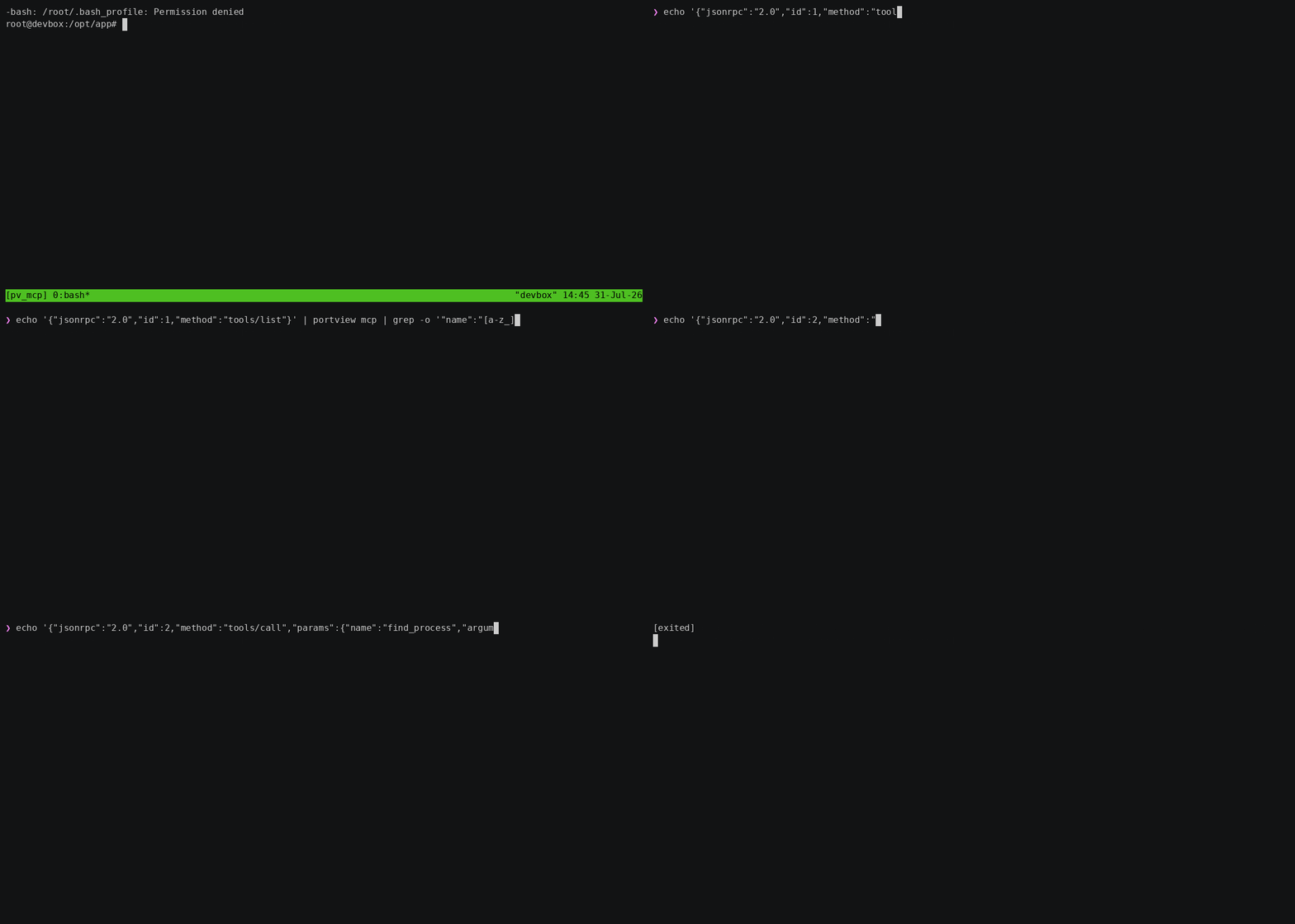
portview MCP server demo

The MCP server is included in the portview binary. Pass --read-only to disable the kill_port tool:

bash
portview mcp --read-only

Listed in the MCP Registry as mcp-name: io.github.Mapika/portview.

Watch mode (interactive TUI)

bash
portview watch                    # live-refresh every 1s
portview watch --docker           # include Docker containers
portview watch --sort mem         # sort by memory on launch
KeyAction
j/k, ↑/↓Navigate rows
EnterInspect port (full command, cwd, children, connections)
d/DKill process or manage Docker container
/Filter across all columns
←/→, rCycle sort column, reverse direction
tToggle process tree view
aToggle all/listening-only
qQuit

Tree view (t): Groups child processes under their parents.

Detail view (Enter): Shows the full unwrapped command, working directory, child process list with ports, and open connections (in --all mode).

Doctor

portview doctor checks for port conflicts, wildcard bindings, connection buildup, and high memory usage:

Code
$ portview doctor
  ✓ No port conflicts
  ✓ No wildcard exposure issues
  ! Port 7000 has 16 CLOSE_WAIT connections — possible connection leak
  ! node (PID 12) is listening on port 6380 and using 1.2 GB of memory

  2 warnings found
CheckFlags
Port conflictsMultiple PIDs bound to the same port
Wildcard exposureDatabases (postgres, redis, mysql, mongod, …) listening on 0.0.0.0
Docker-host conflictsA container publishing a port the host already uses
Connection buildupHigh counts of TIME_WAIT or CLOSE_WAIT connections on one port; these do not by themselves establish a leak
High memory usageListening processes using more than 1 GB of resident memory

Docker is auto-detected. portview doctor --json for scripting (exit code 1 on errors).

In CI

The GitHub Action runs doctor and can fail a workflow on errors or warnings:

yaml
- uses: mapika/portview@v2
  with:
    fail-on: error        # error | warning | never

It annotates each finding inline on the run, writes a summary table, and exposes findings (JSON), count, errors, and warnings as step outputs:

yaml
- uses: mapika/portview@v2
  id: doctor
  with:
    fail-on: never
- run: echo '${{ steps.doctor.outputs.findings }}' | jq .

Set install: false if portview is already on PATH. Linux and macOS runners.

SSH remote mode

Inspect ports on a remote host over SSH:

bash
portview ssh user@server              # one-shot scan
portview ssh user@server watch        # full interactive TUI
portview ssh user@server doctor       # remote diagnostics
portview ssh user@server 3000         # inspect a remote port
portview ssh user@server --ssh-opt "-p 2222"  # custom SSH port

Kill actions in the remote TUI are forwarded over SSH.

If portview is not installed on the remote host, SSH mode collects data using ss and ps, or lsof and ps where ss is unavailable. This requires a POSIX shell and the collection tools on the remote host.

Code
$ portview ssh user@server
portview not found on user@server — falling back to agentless mode (ss + ps over SSH).
╭──────┬───────┬─────┬──────────────┬──────┬─────────┬────────┬───────┬──────────────────────╮
│ PORT │ PROTO │ PID │ ADDR         │ USER │ PROCESS │ UPTIME │ MEM   │ COMMAND              │
├──────┼───────┼─────┼──────────────┼──────┼─────────┼────────┼───────┼──────────────────────┤
│ 3000 │ TCP   │ 6   │ 127.0.0.1    │ root │ node    │     3s │ 45 MB │ node /opt/app/web.js │
│ 8080 │ TCP   │ 7   │ 127.0.0.1    │ root │ node    │     3s │ 45 MB │ node /opt/app/api.js │
╰──────┴───────┴─────┴──────────────┴──────┴─────────┴────────┴───────┴──────────────────────╯

Use --agentless to collect data this way even when portview is installed on the remote host. It supports scans, port inspection, process search, diagnostics, and watch mode.

Run diagnostics on the collected data:

bash
portview ssh user@server doctor --agentless

This uses the same diagnostic checks as local mode. The Docker check is skipped because agentless mode does not query remote containers.

Watch remote ports, with process termination available in the TUI:

bash
portview ssh user@server watch --agentless

Watch mode collects updates through a single persistent SSH connection.

Docker integration

Use --docker to include ports published by Docker containers:

Code
$ portview --docker
╭──────┬───────┬───────┬──────────────┬────────┬──────────┬────────┬────────┬────────────────────────────╮
│ PORT │ PROTO │ PID   │ ADDR         │ USER   │ PROCESS  │ UPTIME │ MEM    │ COMMAND                    │
├──────┼───────┼───────┼──────────────┼────────┼──────────┼────────┼────────┼────────────────────────────┤
│ 3000 │ TCP   │ 48291 │ 127.0.0.1    │ mark   │ node     │ 3h 12m │ 248 MB │ next dev [docker:web]      │
│ 8080 │ TCP   │ -     │ 0.0.0.0      │ docker │ pv-nginx │      - │      - │ nginx:alpine :8080->80/tcp │
╰──────┴───────┴───────┴──────────────┴────────┴──────────┴────────┴────────┴────────────────────────────╯

Container-only rows have no host process, so PID, UPTIME, and MEM render as -.

In watch mode, press d on a Docker row to stop or restart the container, or follow its logs.

JSON output

bash
portview --json                   # pipe to jq, scripts, dashboards
portview --docker --json          # includes Docker ownership data
portview watch --json             # streaming JSON, one array per tick
portview doctor --json            # machine-readable diagnostics

Custom colors

bash
PORTVIEW_COLORS="port=red,pid=magenta,command=bright_cyan" portview

Columns: port, proto, pid, user, process, uptime, mem, command. Use --no-color to disable.

How it works

Local port and process data comes from OS interfaces:

FieldLinuxmacOSWindows
Ports/proc/net/tcp{,6}, udp{,6}proc_pidfdinfoGetExtendedTcp/UdpTable
PIDinode→pid via /proc/*/fd/proc_listpidsIncluded in socket table
Process/proc/<pid>/exeproc_pidpathQueryFullProcessImageNameW
Memory/proc/<pid>/status VmRSSproc_pidinfoK32GetProcessMemoryInfo
Uptime/proc/<pid>/statproc_pidinfoGetProcessTimes

On Linux, portview reads the executable name from /proc/<pid>/exe. The thread name in /proc/<pid>/comm can be changed by the runtime and is limited to 15 bytes.

Docker integration uses the docker CLI. SSH mode uses the system ssh client to run portview or the agentless collection tools on the remote host. MCP mode uses newline-delimited JSON-RPC 2.0 on stdin/stdout.

Building from source

bash
git clone https://github.com/mapika/portview
cd portview
cargo build --release

Requires Rust 1.85+ (edition 2024). Shell completions and man page are generated at build time.

The repository includes a Dockerfile. To inspect the host from a container, share the host's network and PID namespaces:

Terminal
docker run --rm -i --network host --pid host portview

Contributing

See CONTRIBUTING.md for development setup and guidelines, and demo/README.md for regenerating the recordings.

Changes should type-check on all three platforms, not just yours:

bash
cargo check --target aarch64-apple-darwin
cargo check --target x86_64-pc-windows-msvc

Limitations

  • Linux: Other users' ports are listed, but naming the process needs sudo (it reads /proc/<pid>/fd/). Rows you can't attribute show - for PID, user, process, and command rather than being hidden.
  • macOS: Other users' ports are not listed without sudo — sockets are enumerated per process via proc_pidfdinfo, so a process that can't be opened contributes nothing to enumerate. For the same reason doctor cannot detect TIME_WAIT pileups there; CLOSE_WAIT is detected normally.
  • Windows: Ports owned by inaccessible system processes are listed with the PID but - for name and user. Kill always force-terminates. Run as Administrator for full detail.
  • Docker: Requires docker CLI and daemon access
  • SSH: every command falls back to agentless collection when portview is missing on the remote, using ss + ps on Linux and lsof where ss does not exist. The remote needs one of those and a POSIX shell. Agentless collection cannot see Docker on the far end, so that check reports as skipped rather than passed.

License

MIT