Hitkeep README
The full upstream README, mirrored here for reference. Install config, tool schemas, adoption signals, and an original overview live on the Hitkeep listing page.

AI native, sovereign, privacy-first web analytics in one binary.
100% open source under MIT, HitKeep unifies traffic, conversions, Search Console, and AI visibility with custom tracking domains, SSO, open exports, and no separate database, queue, or cache.
Self-host · Documentation · Cloud · Website




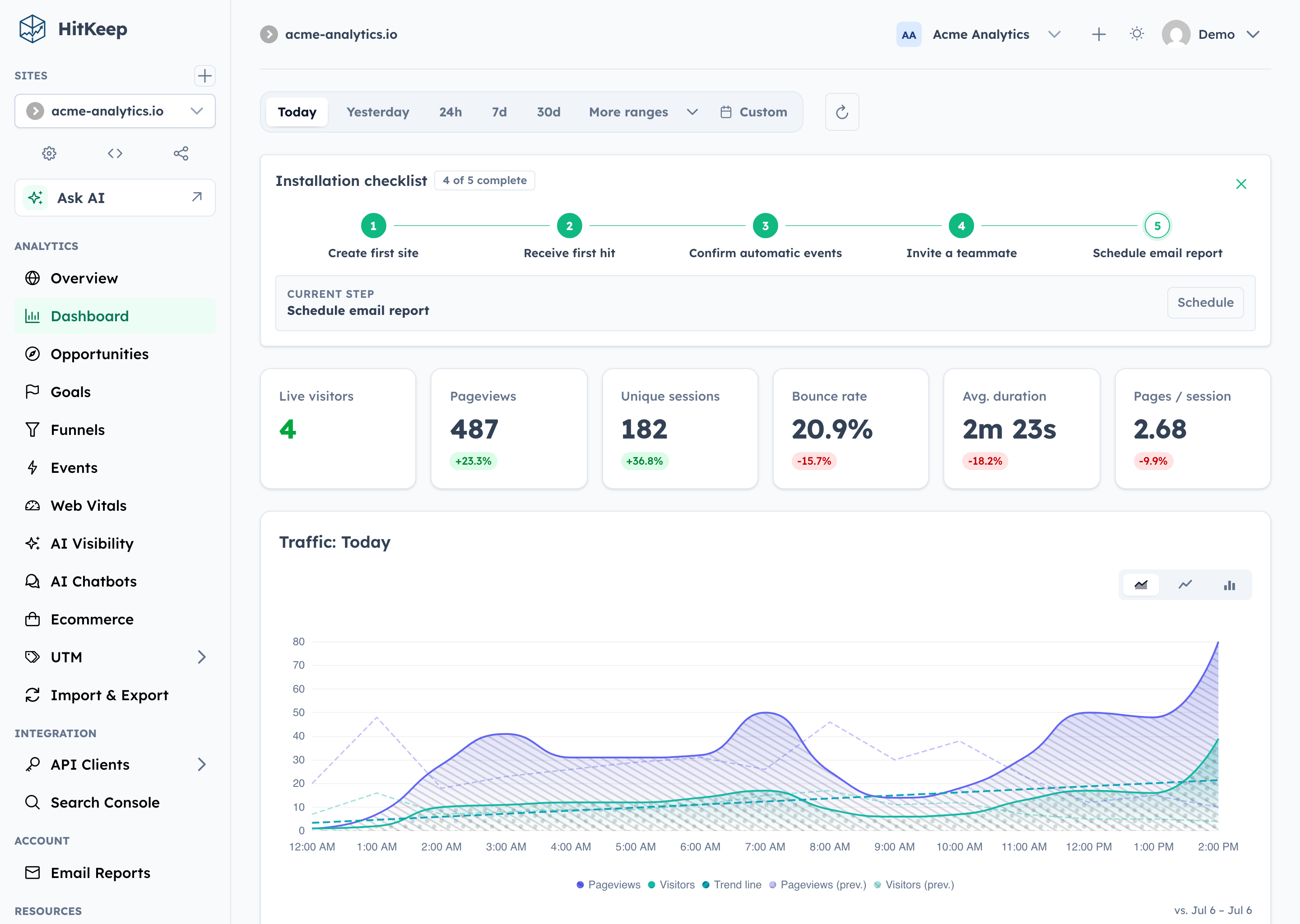
Why HitKeep
- 100% open source. The complete product is MIT-licensed. Custom tracking domains and team SSO live in the same public codebase—not in a separate proprietary edition.
- Full data sovereignty. Self-host one Go binary with embedded DuckDB and NSQ, or export your data in open formats. Complete takeout, APIs, webhooks, share links, and permissions keep the data useful outside HitKeep.
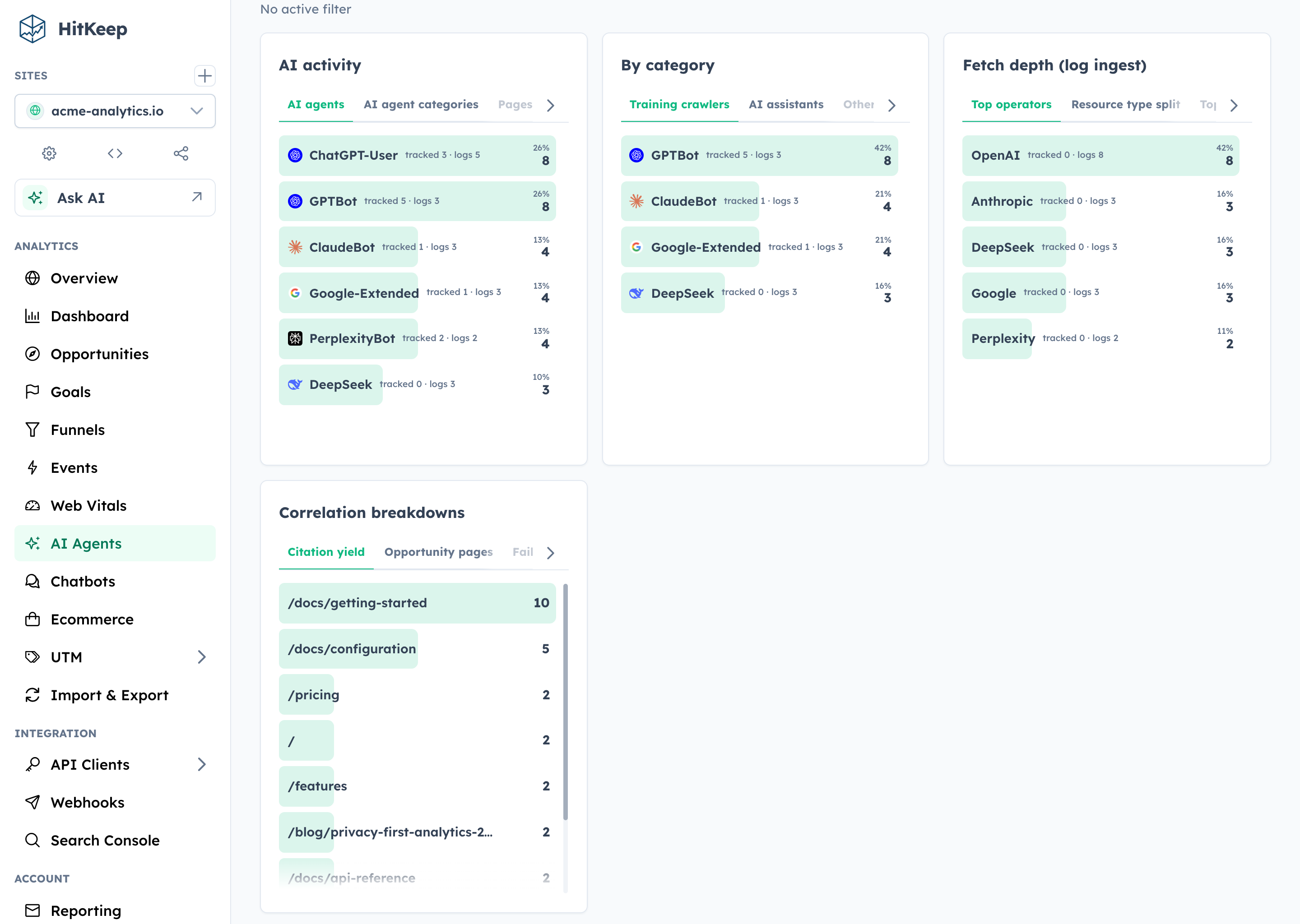
- AI-native analytics. HitKeep treats AI as a first-class traffic channel: crawler fetches, AI-referred visits, and chatbot outcomes remain distinct. Ask AI uses cited aggregate evidence, while read-only MCP gives approved assistants governed analytics access.
- Privacy by default. The browser tracker sets no analytics cookies, respects Do Not Track, and collects focused website analytics without building a cross-site identity.
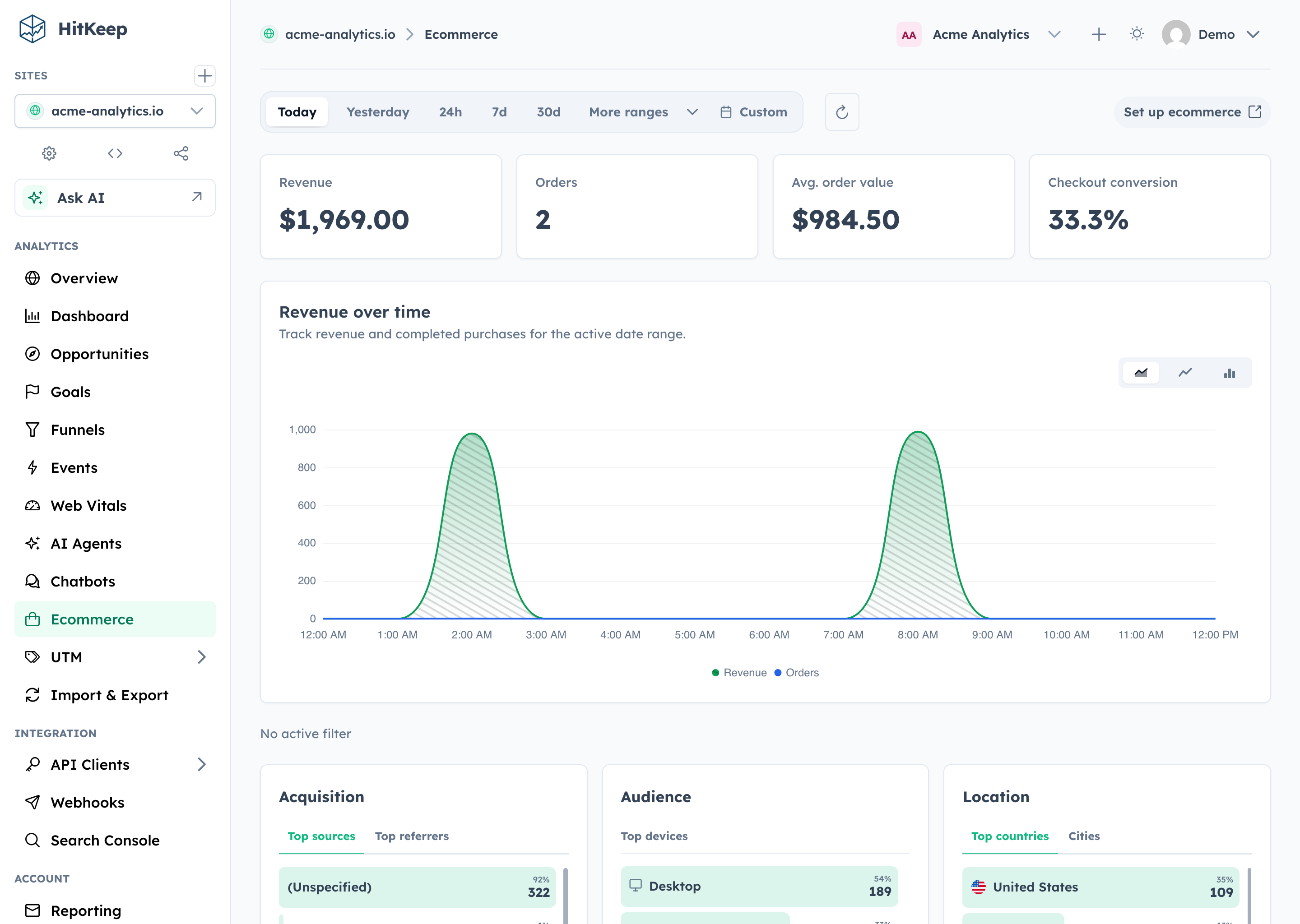
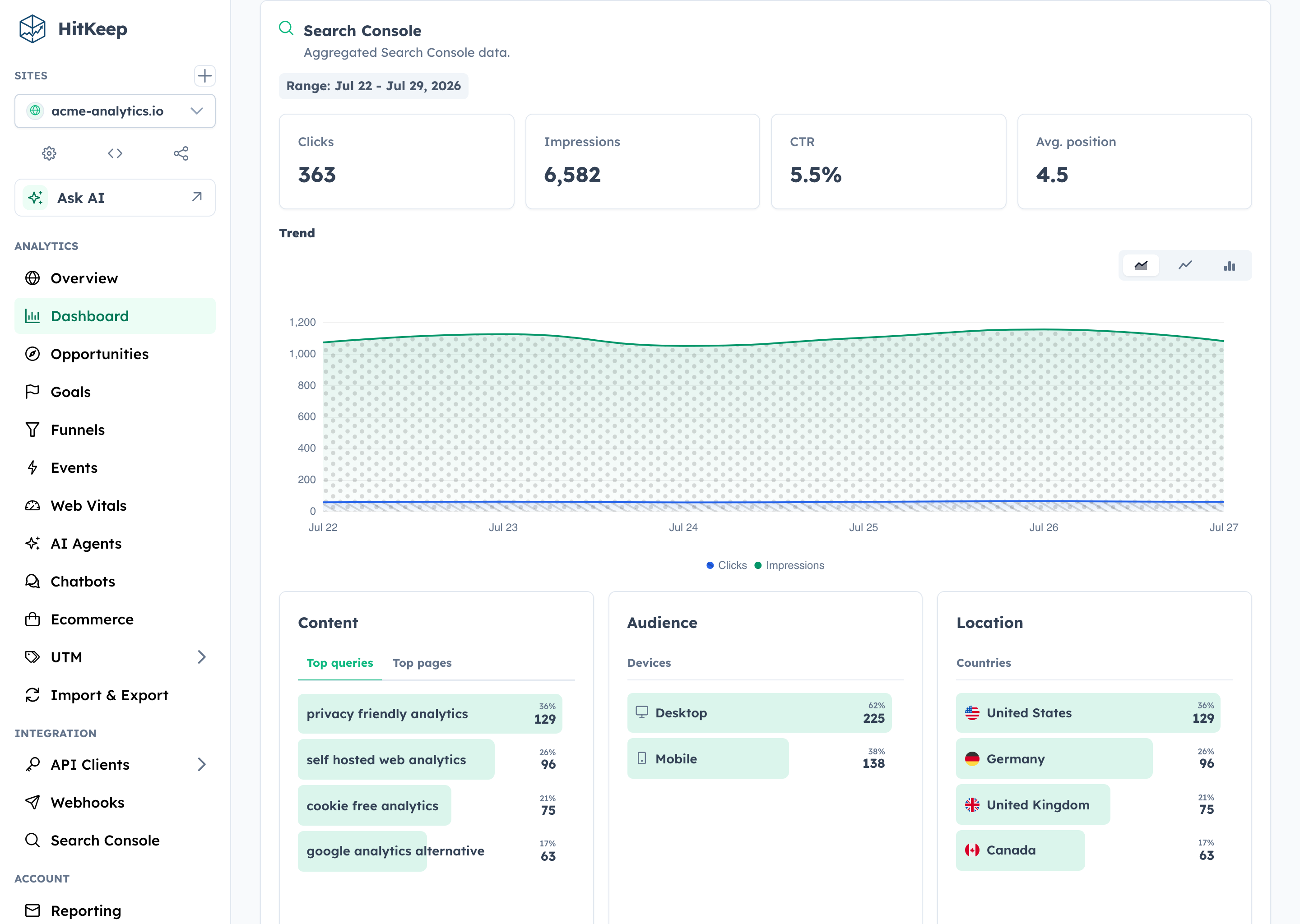
- Reporting that reaches the outcome. Follow acquisition through pages, automatic and custom events, goals, funnels, ecommerce revenue, UTM and QR campaigns, Search Console, and Web Vitals.
Self-host the complete open-source product, or use HitKeep Cloud in a managed EU or US region when you do not want to operate it yourself.
HitKeep is web-focused. It favors aggregate traffic and conversion evidence over visitor profiles, session replay, mobile SDKs, or built-in experimentation. The result is a smaller collection boundary and operating surface without stopping at a basic pageview counter.
Quick Start
On Apple silicon macOS or x86_64 Linux, install HitKeep with Homebrew:
Follow the Homebrew installation guide to configure and start HitKeep. On Linux ARM64, use the published ARM64 binary or Docker instead.
For a production-oriented self-hosted setup, download the Docker Compose file and environment template:
Open .env and replace paste-the-generated-value-here with a long random value from your password manager. Then start HitKeep:
Open http://localhost:8080 and create the first account. Keep .env private and retain the same secret across restarts.
Before exposing an instance publicly, follow the Docker Compose guide for HTTPS and trusted proxies, then review backups and the configuration reference. For a native Linux service, download an AMD64 or ARM64 binary from GitHub Releases and follow the binary installation guide.
Track Your First Site
Create a site in the dashboard, then add the tracker to your pages:
Pageviews and supported automatic interaction events—outbound clicks, file downloads, and form submissions—start flowing immediately. Use the custom events guide for product-specific actions such as signups, purchases, or qualified leads.
Explore HitKeep
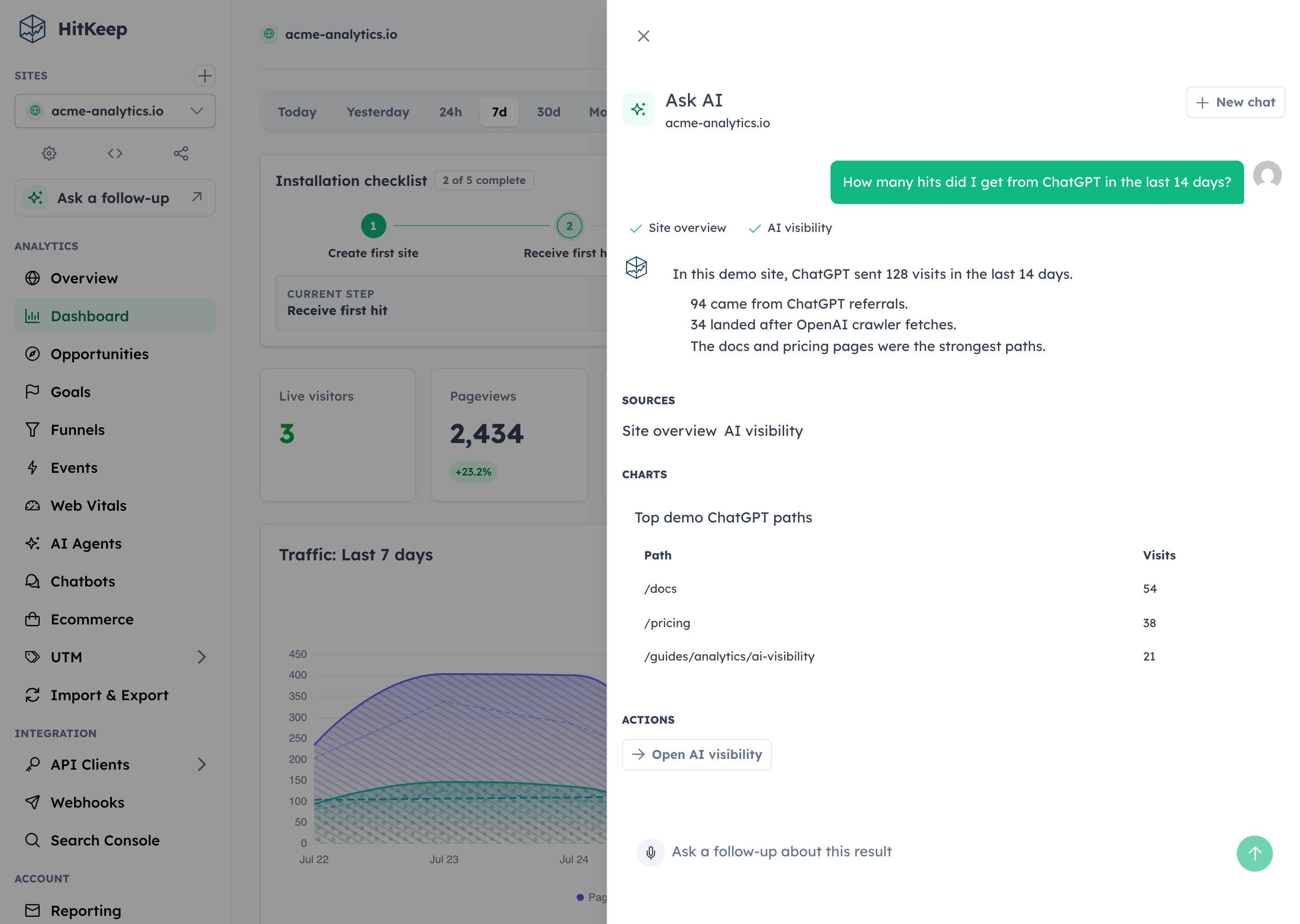
See AI visibility, ecommerce, Search Console, and Ask AI
AI visibility
Ecommerce
Search Console
Ask AI
Documentation, Community, and Support
Find answers in the documentation, report reproducible bugs through GitHub Issues, and disclose vulnerabilities privately through the security policy.
Contributor quick path
Run ./hk setup, then start seeded development with ./hk dev --seed or use ./hk dev --detach. Capture product proof with ./hk screenshot; inspect ./hk catalog commands --output json and ./hk catalog configuration --output json instead of copying mutable workflow facts. Validate with ./hk qa pr. The Compose stack and complete workflow live in CONTRIBUTING.md.
- Operate: Installation · Configuration · REST API · Goals · Funnels
- Evaluate: Comparison library · Compliance · Releases · Changelog
- Contribute: Contributor guide · Security policy · Issues
- Support open source: Fund HitKeep on GitHub Sponsors or make a one-time contribution.
License
HitKeep is distributed under the MIT License.