Unfour README
The full upstream README, mirrored here for reference. Install config, tool schemas, adoption signals, and an original overview live on the Unfour listing page.
Unfour
A unified, local-first developer workspace for tracing backend failures from API requests through server logs and database state to verified fixes.
Unfour brings API testing, SSH, database tools, and MCP-assisted troubleshooting into one desktop application.




[!WARNING] This source tree targets Unfour v0.9.4. Windows NSIS installers are unsigned and may trigger SmartScreen or other operating-system security warnings. Use
SHA256SUMS.txtfrom the GitHub Release to verify downloaded files.
Download
Download the latest Unfour release from GitHub Releases.
- Windows is the primary distribution path: NSIS
.exeinstaller. It is unsigned and may trigger SmartScreen. - macOS has Apple Silicon and Intel packages that have been verified on real devices, but they are not Apple-signed or notarized; Gatekeeper may block them.
- Linux publishes an x86_64 (x64) AppImage only. It is Experimental and currently
targets Ubuntu 22.04+; Ubuntu 20.04 is not supported. The published v0.9.0
AppImage predates this build baseline; new-artifact runtime verification is
still pending.
.deband.rpmpackages are not formally supported or published. - Verify downloaded installers with the release
SHA256SUMS.txtasset.
What Is Unfour?
Unfour helps backend developers investigate failures that span an API, a server, and its database. Troubleshooting is Unfour's core product loop: reproduce an issue with an API request, inspect server logs over SSH, check database state, identify the cause, and make and verify a fix.
A unified, local-first workspace keeps requests, connections, local activity, and layout together throughout the investigation. API testing, SSH terminals, and database tools provide the capabilities for each step in that loop.
MCP is an optional assisted layer: Codex and Cursor can use the local stdio MCP server to work with the same saved API, SSH, and database connections as the desktop app. Its workspace-scoped tools run through the shared command bus, subject to MCP policy and high-risk action confirmation checks. Troubleshooting remains user-directed. Unfour does not automatically correlate requests, logs, and database state or detect root causes, and it does not ship an automatic troubleshooting playbook or workflow runner.
Unfour is one application and one product. Its core desktop features are free and open source under Apache-2.0. An active Pro subscription unlocks Cloud Sync in the same application. Pro is an entitlement within Unfour, not a separate client, package, repository, or release.
The app is built with Tauri 2, React, TypeScript, and Rust. The frontend owns the workbench UI, while security-sensitive execution such as HTTP, SSH, database drivers, local storage, and credential references lives behind Rust capability crates and the command bus.
Troubleshooting Workflow
The investigation stays in one workspace, while you remain in control of each request, SSH session, query, and verification step.
For Coding Agents
Codex or Cursor can use their own repository tools to inspect, change, and test code. Unfour complements those tools with controlled access to API behavior, SSH/server evidence, and database state through MCP, so the agent can help investigate the running backend and re-check it after a change.
Unfour does not edit the repository itself: the coding client owns code changes, while Unfour provides the runtime side of the investigation. You control the workspace, environment, risky actions, and final decision.
Modules
- API Client - Compose and send HTTP requests, organize saved requests into collections and folders, resolve shared workspace variables, inspect response body/headers/cookies/timing, run saved pre-request and post-response scripts, review script tests and console output, and keep redacted history.
- SSH Terminal - Manage SSH connections and terminal sessions (split panes, search, clipboard context menu, persistent redacted command history and typing suggestions, host-key trust, redacted logs), browse and transfer remote files over SFTP, and automate multi-step SSH tasks (command, upload, download) from the Connections / Files / Tasks sidebar.
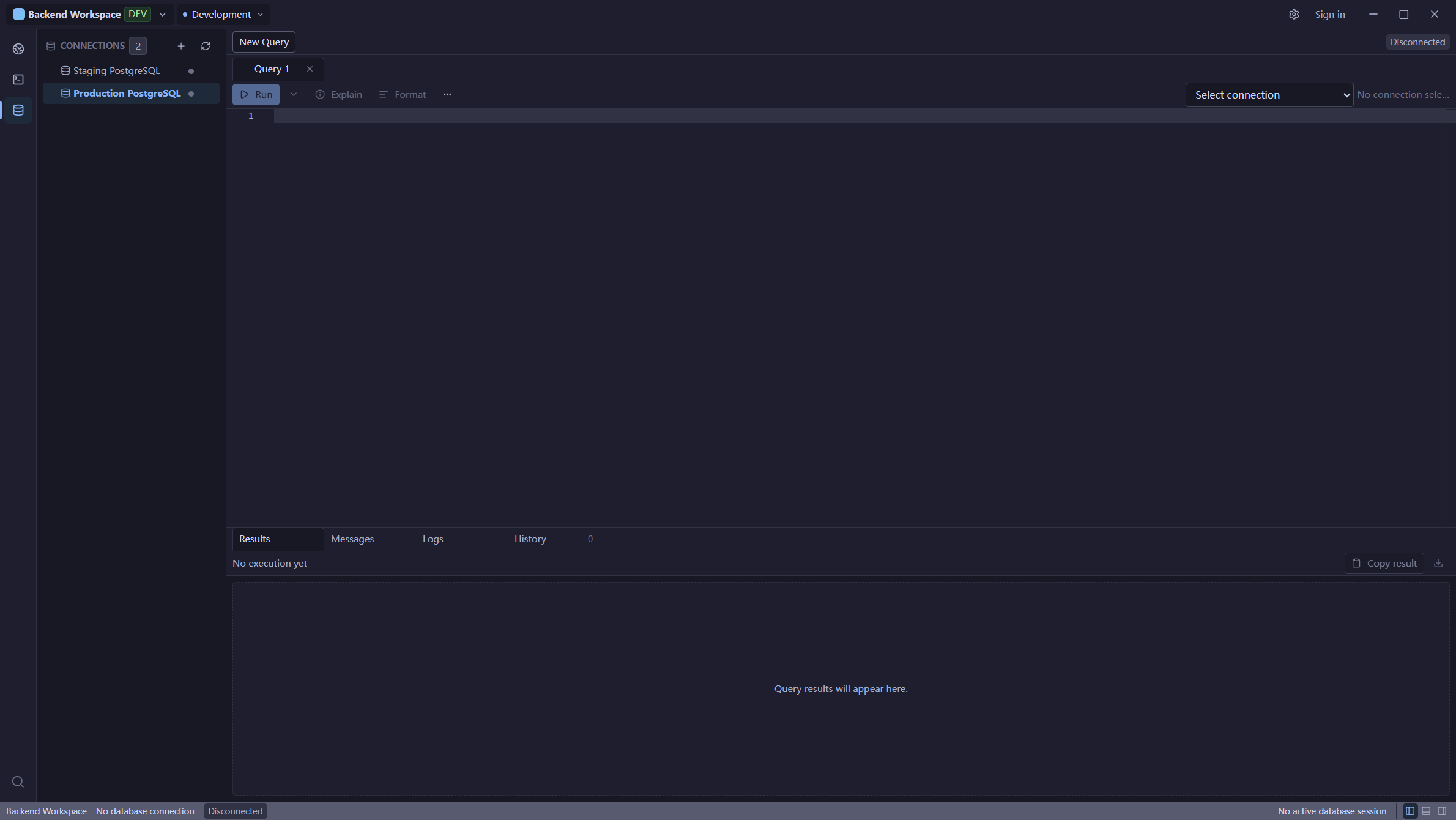
- Database - Manage database connections, browse schemas, run SQL with confirmation-aware safety checks (including multi-statement Run Current / Run All), preview and edit table rows, and review query output.
- Workspace - Scope saved requests, shared environments/variables, connections, activity, tabs, and layout state to a local workspace, with title-bar active-environment switching.
- MCP integration for Codex and Cursor - Expose safe local stdio diagnostic tools through the same command bus used by the desktop app. Codex and Cursor can use the same saved API, SSH, and database connections to reproduce issues, inspect logs and database state, and verify a fix. The user and Codex or Cursor work through the steps together; Unfour does not ship an automatic troubleshooting playbook or workflow runner.
Screenshots
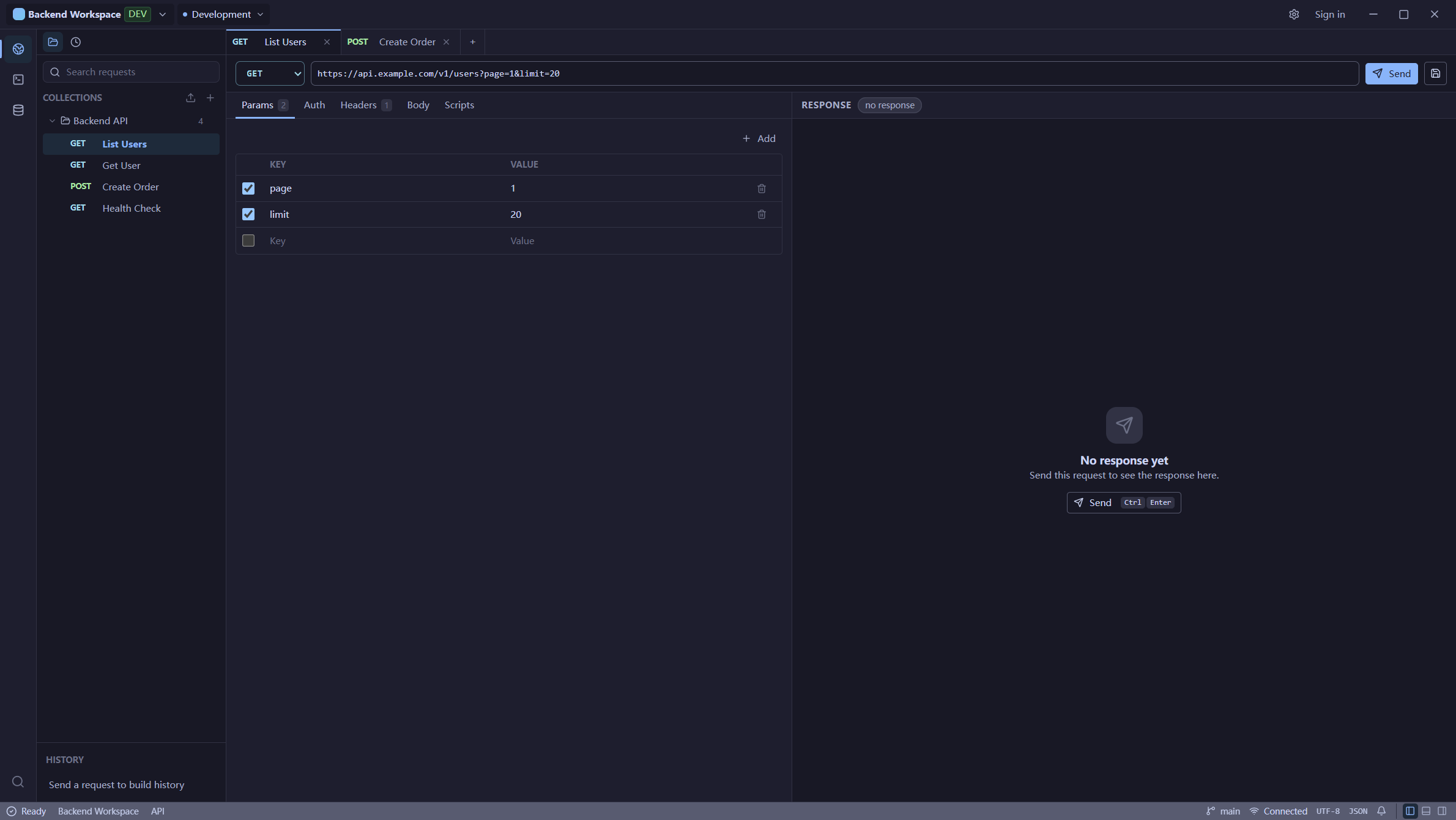
App overview — sidebar with module switcher and the API Client workspace
API Client — request builder with params, auth, headers, body, and response
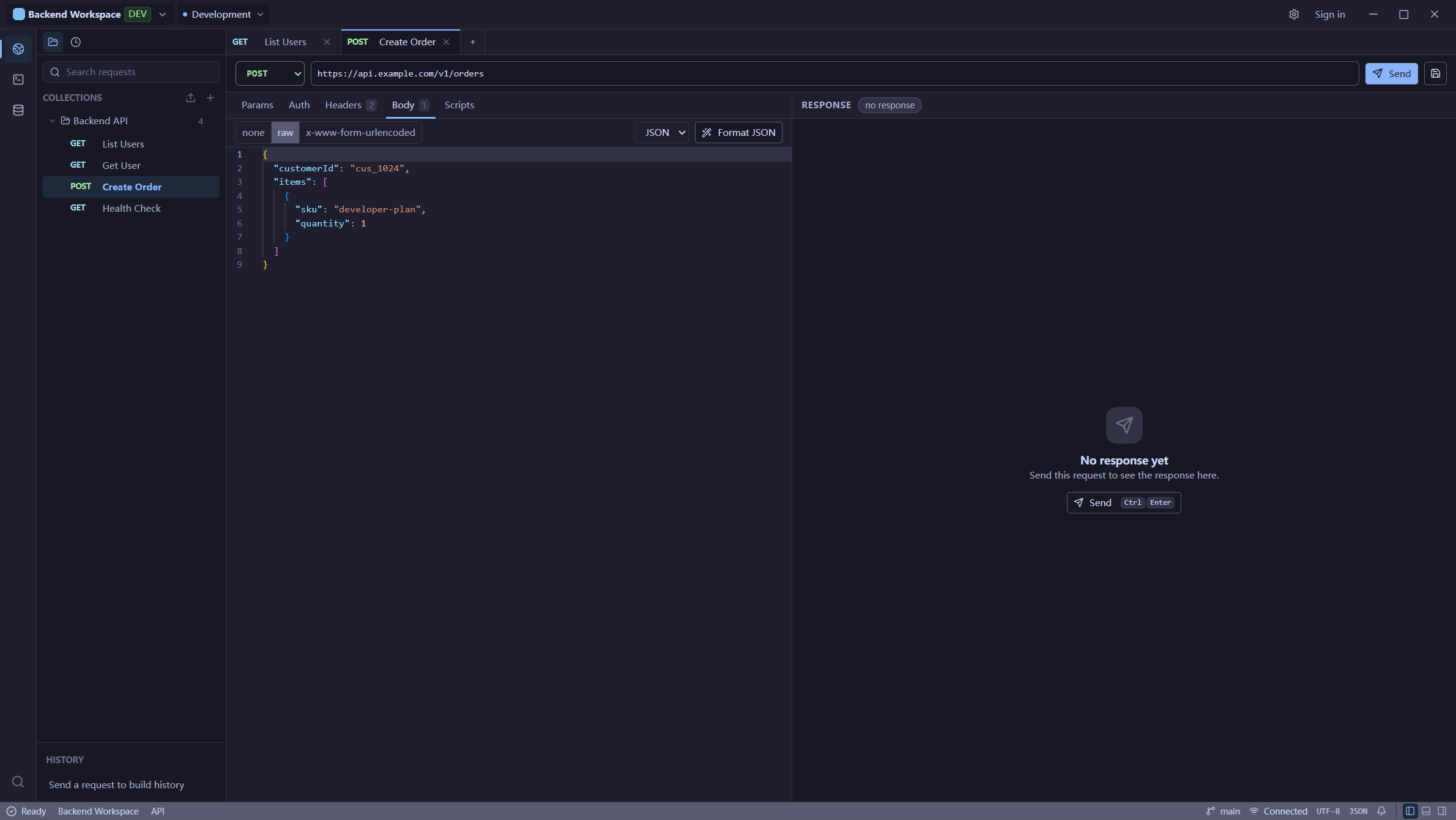
SSH Terminal — connections, sessions, remote files, and tasks
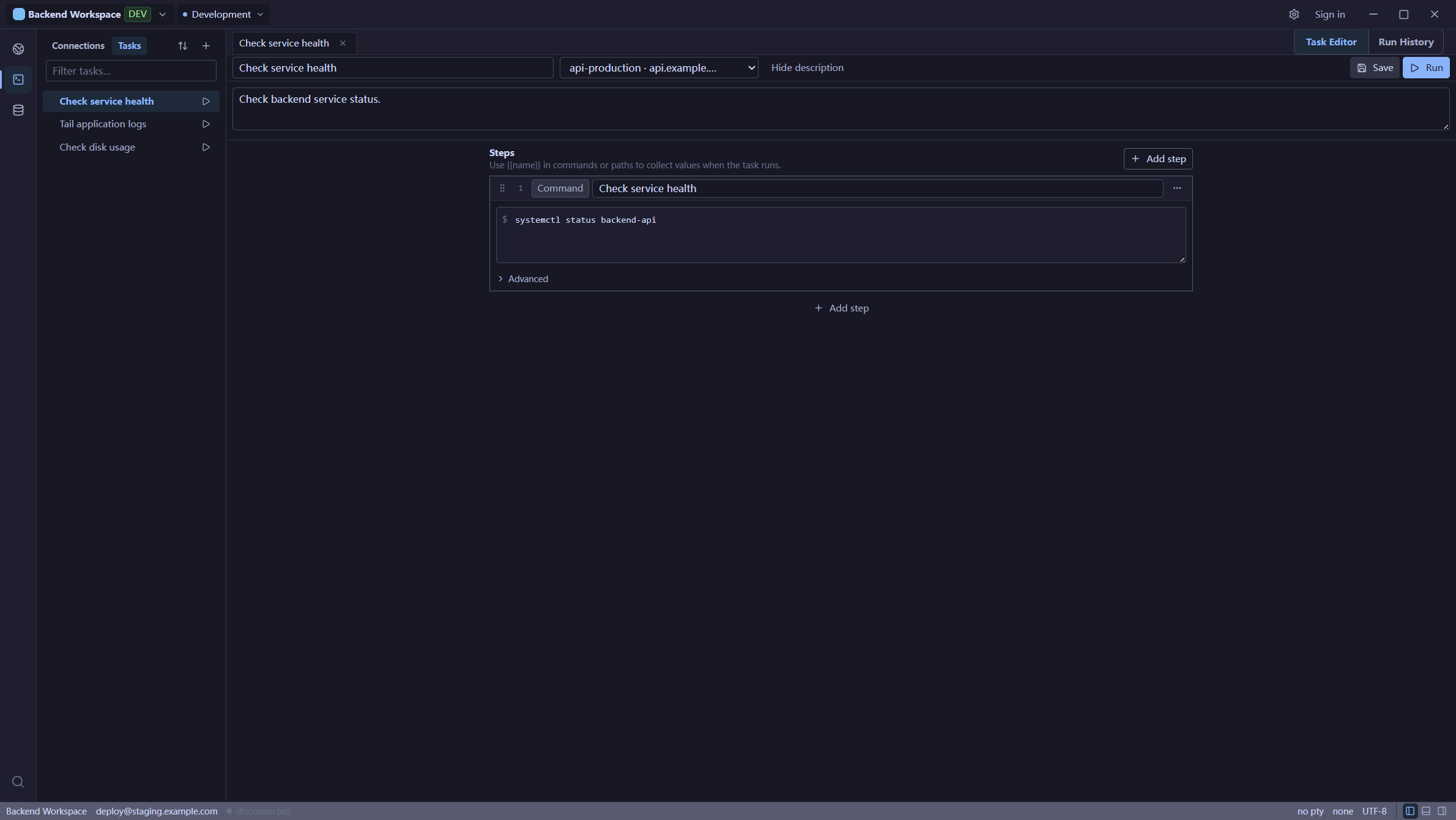
Database — schema browsing and SQL query output
Local Development
Requirements:
- Node.js and pnpm.
- A stable Rust toolchain.
- Tauri 2 prerequisites for your operating system.
Install and run:
pnpm install also installs Git hooks through lefthook. A commit formats staged
Rust files with cargo fmt and auto-fixes staged TypeScript with ESLint.
Skip once with LEFTHOOK=0 git commit.
Common commands:
Run commands from the repository root unless a package document says otherwise.
pnpm tauri dev defaults to the Test release channel, while local
pnpm tauri build defaults to Stable. Use pnpm tauri build:test for an
isolated Test-channel bundle. Set UNFOUR_STORAGE_PROFILE=dev when development
data should use ~/.unfour-dev; this storage override is independent from
release identity. Only CI should create formal publishable Stable artifacts,
with UNFOUR_RELEASE_CHANNEL=stable and an exact UNFOUR_BUILD_COMMIT.
Project Layout
| Path | Role |
|---|---|
apps/desktop | Tauri/Vite desktop app entry and Tauri adapter layer. |
packages/app-shell | Global shell composition and module mount slots. |
packages/api-client | API Client frontend module. |
packages/ssh-terminal | SSH Terminal frontend module. |
packages/database | Database frontend module. |
packages/workspace-core | Shared frontend workspace state. |
packages/workspace-environments | Workspace environments and variables management UI. |
packages/workspace-local | Reserved local workspace lifecycle boundary. |
packages/ui | Shared UI primitives and stateless layout helpers. |
packages/command-client | Typed Tauri command wrappers and frontend command types. |
crates/* | Rust backend capability crates and adapters. |
See docs/architecture/project-structure.md for the full package and crate
map.
Release Status
This source tree targets Unfour v0.9.4. Release verification evidence is documented in:
docs/testing/release-verification.mddocs/testing/manual-test-cases.mddocs/release/release-checklist.mddocs/release/distribution.mddocs/release/signing.md
Windows is the primary distribution path and ships an unsigned NSIS .exe
installer that may trigger SmartScreen. macOS has Apple Silicon and Intel
packages verified on real devices, but they are not Apple-signed or notarized
and Gatekeeper may block them. Linux publishes an x86_64 (x64) AppImage only,
remains Experimental, and uses Ubuntu 22.04+ as its current runtime/test baseline.
Ubuntu 20.04 is not supported; compatibility with other distributions is not
guaranteed solely by their glibc version. .deb and .rpm packages are not
formally supported or published. Use the release SHA256SUMS.txt to verify
downloaded artifacts, and do not claim a release check passes unless it was run
successfully for the target platform or is backed by current repository evidence.
The published v0.9.0 Linux AppImage built successfully but failed to launch on
Ubuntu 20.04 because it requires Ubuntu 24.04-era GLIBC/GLIBCXX symbols. The
Ubuntu 22.04 build-baseline fix applies to future artifacts, not the immutable
v0.9.0 download. Ubuntu 22.04/24.04 runtime regression remains NOT VERIFIED
until a new artifact is built and tested; see
release verification.
Recorded v0.9.0 real-environment verification includes Windows install, launch, uninstall, and a previous-Stable-to-new-Stable update; macOS arm64/x64 install and run; GitHub browser OAuth and the Desktop callback/login; Creem Test checkout, webhook, entitlement, and billing portal; PostgreSQL and MySQL; SSH Terminal, SFTP, and SSH Tasks; and real Codex and Cursor MCP initialization, tool discovery, tool calls, and access to Unfour data/tools.
Historical live multi-device Cloud Sync verification exists, but the v0.9.0
unified-client multi-device regression remains NOT VERIFIED and will include
single-device coverage. Creem Production will be recorded after the first real
production transaction flow. MCP production-policy behavior, Linux AppImage
runtime integration, real MSIX/Store servicing, and macOS Gatekeeper trust
behavior also remain NOT VERIFIED; these limits do not reduce the verified
platform install/run results above.
Documentation
AGENTS.md- repository rules for coding agents.docs/agents/START_HERE.md- scoped onboarding path for AI agents.docs/architecture/package-boundaries.md- package ownership and forbidden dependency directions.docs/architecture/project-structure.md- repository, package, crate, and call-chain map.docs/architecture/data-storage.md- workspace data, SQLite, credential references, and local activity rules.docs/architecture/diagnostics.md- local structured logs, redaction, retention, diagnostic bundles, and developer logging guidance.docs/architecture/security-model.md- security posture, redaction, host-key policy, and dangerous-action rules.docs/mcp/overview.mdanddocs/mcp/tools.md- local MCP server behavior.docs/mcp/client-setup.md- installed-user setup for Codex and Cursor.docs/testing/release-verification.md- release verification matrix.docs/release/release-checklist.md- public release checklist.docs/user/USER_GUIDE.md- user-facing workflow guide.
Contributing
Please read CONTRIBUTING.md, CODE_OF_CONDUCT.md, and the package boundary
rules in AGENTS.md before opening a pull request.
Security issues should be reported through SECURITY.md, not a public issue.
Support Unfour
If Unfour is useful to you, you can support its continued open-source development through GitHub Sponsors.
Sponsorship is optional and does not include Unfour Pro or paid cloud services.
Why Unfour?
The name “Unfour” is partly inspired by the Chinese idea of 四不像 — something that doesn’t quite fit into any single category.
Unfour isn’t just an API client, an SSH tool, a database client, or an agent workspace. It brings those usually separate capabilities together, so the name carries a bit of self-deprecating humor: it’s not quite any one of them, but has a little of each.
In traditional Chinese mythology, 四不像 is also associated with an auspicious mythical creature. That gave the name another meaning for me — a small hope that Unfour can grow into something a little unusual, but genuinely useful and built to last.
License
Licensed under the Apache License 2.0.