cloudinfrastructure-as-codecomplianceterraformcost-estimation
Generate typed cloud architecture specs, cost estimates, compliance reports, and infrastructure code from natural language.
Quick Install
Automated & IDE SetupCopy the AI prompt to install this server into Claude Code, Cursor, or another agent — or use 1-click editor setup below.
One-click editor setup isn’t available for this listing yet — we don’t have a confirmed install command, and we’d rather show nothing than point your editor at the wrong package or host. Follow the project’s own setup instructions, linked above.
Manual Client & Custom JSON ConfigExpand JSON ▾
No confirmed setup config for this listing yet. We only publish a config block when the install details come from the project itself — its README, its docs, or a verified owner. We haven’t found those for xmpuspus/cloudwright, and we’d rather show nothing than a guess you’d paste into your client. Follow the project’s own setup instructions for the current steps.
Overview
Use cases
Design cloud architectures using natural language prompts
Generate cost estimates per component and region
Validate compliance against HIPAA, SOC 2, FedRAMP, GDPR, PCI-DSS, and others
Export infrastructure code in Terraform, CloudFormation, or Pulumi formats
Perform offline spec reviews and compliance scoring without API keys
Key features
Typed YAML architecture specs with version control friendliness
Cost estimation with confidence flags per line item
Compliance reports mapped to specific control IDs
Infrastructure code export for Terraform, OpenTofu, Pulumi, and CloudFormation
ASCII, Mermaid, D2, and editable web canvas diagrams
MCP server integration for use with multiple AI coding agents
Capabilities & Tool Schemas
Inspect callable tools, capabilities, and parameters exposed to AI agents by Cloudwright.
Extracted Tool Capabilities
Typed YAML architecture specs with version control friendliness
Cost estimation with confidence flags per line item
Compliance reports mapped to specific control IDs
Infrastructure code export for Terraform, OpenTofu, Pulumi, and CloudFormation
ASCII, Mermaid, D2, and editable web canvas diagrams
MCP server integration for use with multiple AI coding agents
Documentation Overview
Cloudwright
Design a cloud architecture or plan a migration. Get costs, controls, code, and checked evidence.




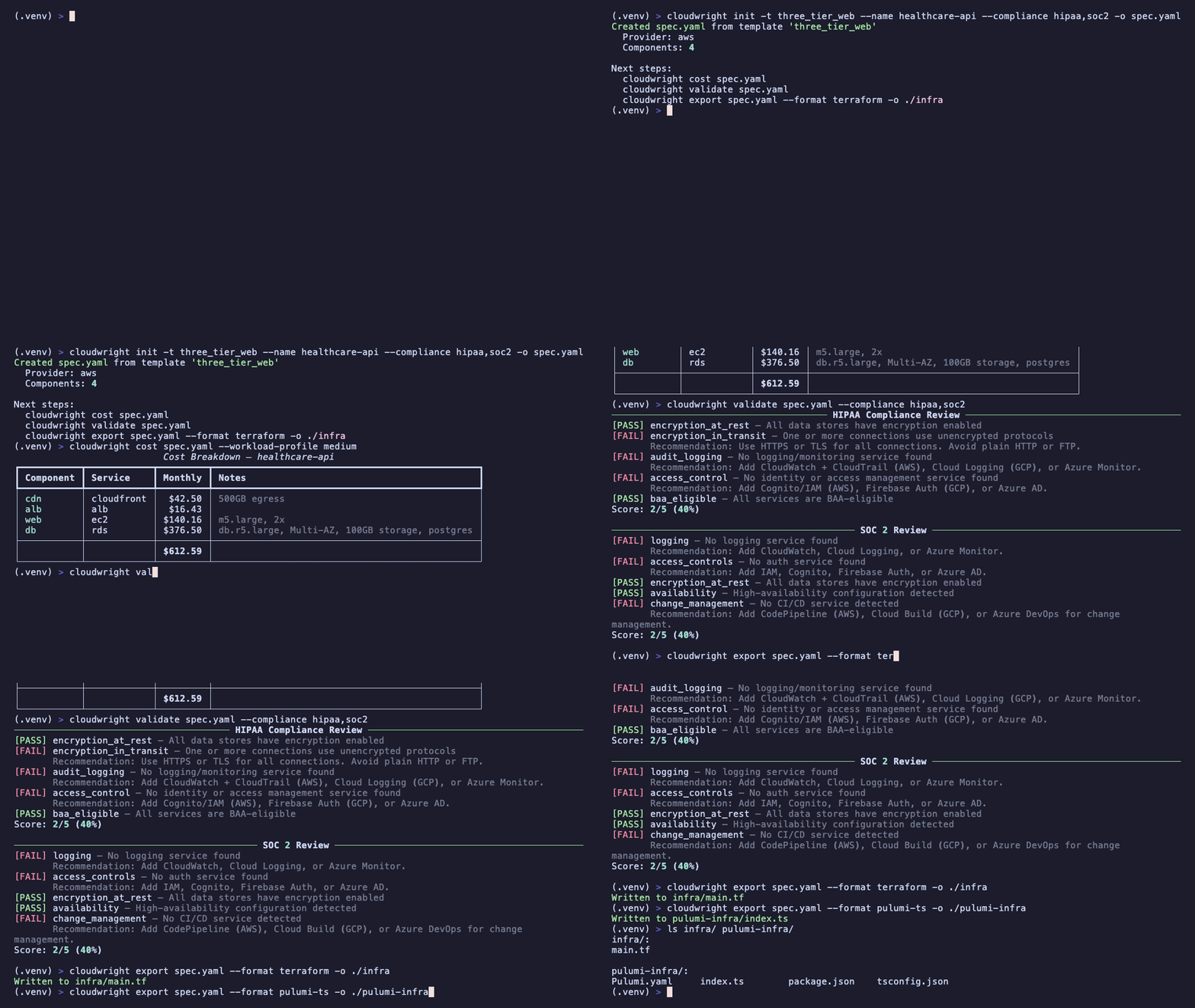
Cloudwright turns one line of English into a typed spec, a cost breakdown, a control-mapped compliance report,
and infrastructure code. A source estate and target become ordered migration waves, explicit costs,
and evidence gates. It covers AWS, GCP, Azure and Databricks across 114 service keys. Only design, modify,
chat and adr call a model. Every other command runs offline and needs no API key.
Quickstart · Migrations · Compliance · Agents · Docs · Changelog
A prompt produces a spec, a cost, a control-mapped report, and Terraform
- Spec. Typed YAML you commit, diff and review. Everything below reads from it.
- Cost. Per component and region-aware, with a confidence flag on every line.
- Compliance. HIPAA, SOC 2, PCI-DSS, FedRAMP, GDPR, ISO 27001 and NIST 800-53 control IDs.
- Infrastructure code. Terraform, OpenTofu, Pulumi (TypeScript or Python) and CloudFormation.
- Diagrams. ASCII, Mermaid, D2, and a web canvas you can edit by hand.
- An MCP server, so any coding agent runs the same checks inside its own loop.
Exports carry safe defaults. S3 gets a public-access block, SSE and versioning. RDS gets encryption, multi-AZ and deletion protection. EC2 gets IMDSv2. A compliance framework overrides the workload profile, and always forces encryption and high availability.
Quickstart
Add --json before any subcommand for machine-readable output, or --stream to watch tokens arrive. Set ANTHROPIC_API_KEY or OPENAI_API_KEY for the four commands that need a model.
Migration plans stop when evidence is missing
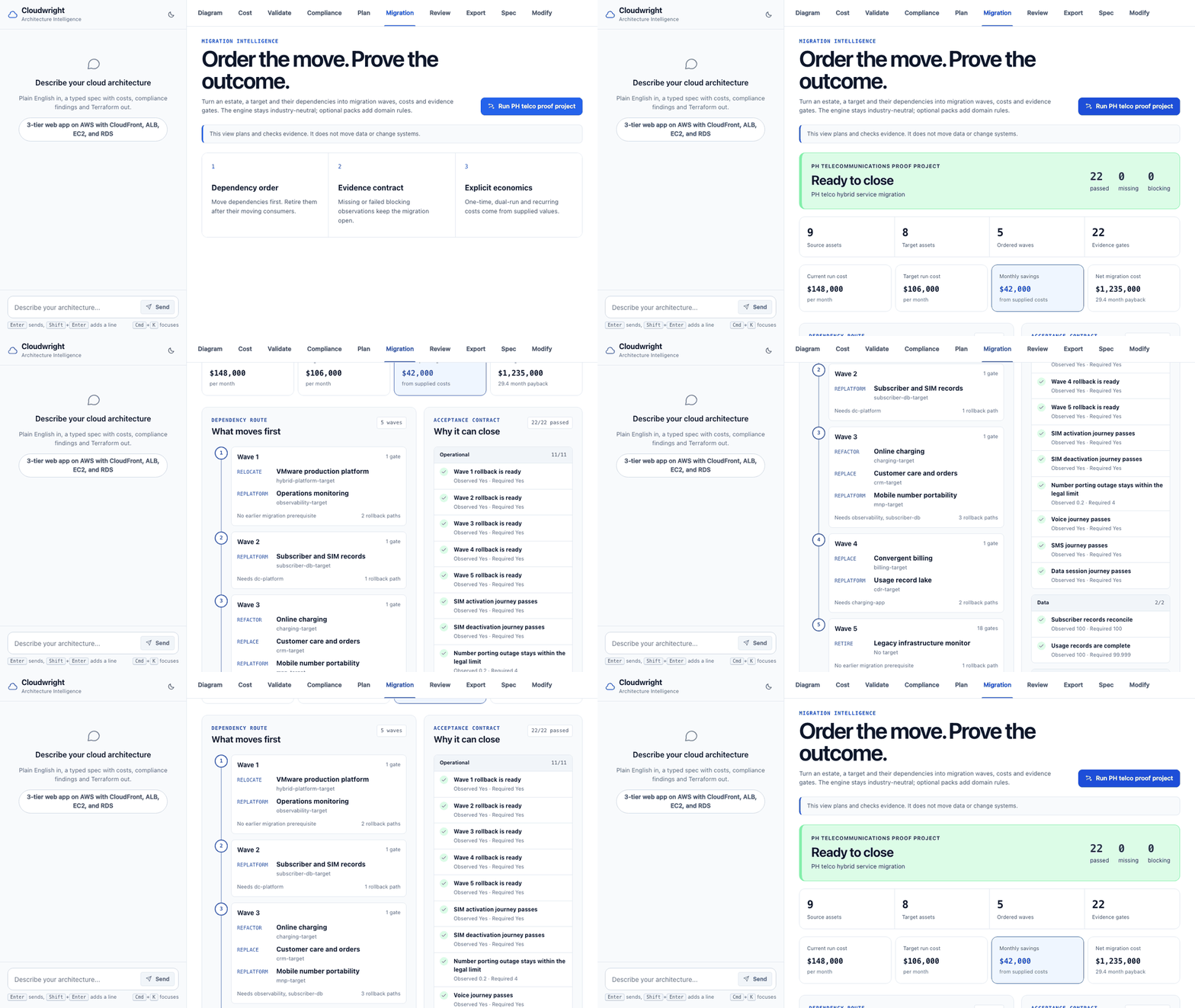
The migration model covers infrastructure, applications, data, platforms, networks, facilities, and business services in one dependency graph. It works for on-premises, cloud, cross-cloud, hybrid, data-center, and application moves. It plans and checks work. It never copies data, applies infrastructure, switches traffic, or runs a cutover.
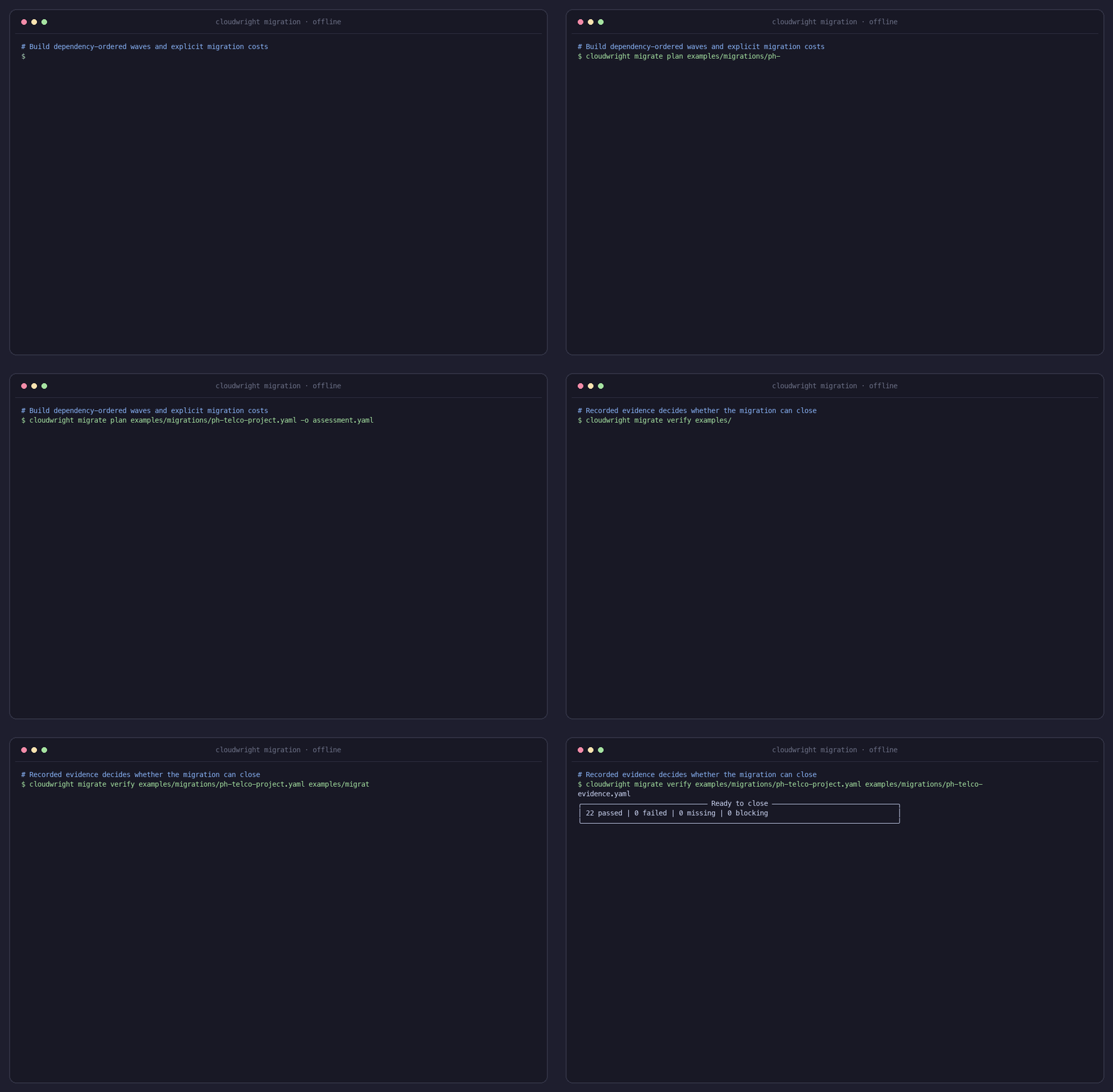
The core has no telco fields. The first proof project selects an external ph_telco pack for subscriber,
billing, usage-record, number-porting, privacy, recovery, and source-shutdown gates. A manufacturing ERP
fixture proves the same planner works without that pack. Missing blocking evidence changes the result to
closed: false and makes migrate verify exit with code 2. Each evidence file carries the deterministic
assessment ID, so observations from an older target or cutover plan cannot close a revised assessment.
MCP clients use the same engine through plan_migration and verify_migration in the migration tool group.
See Migration planning and evidence for the file contract, Python API, HTTP routes, domain-pack format, limits, and recording commands.
Every finding carries the control ID it violates
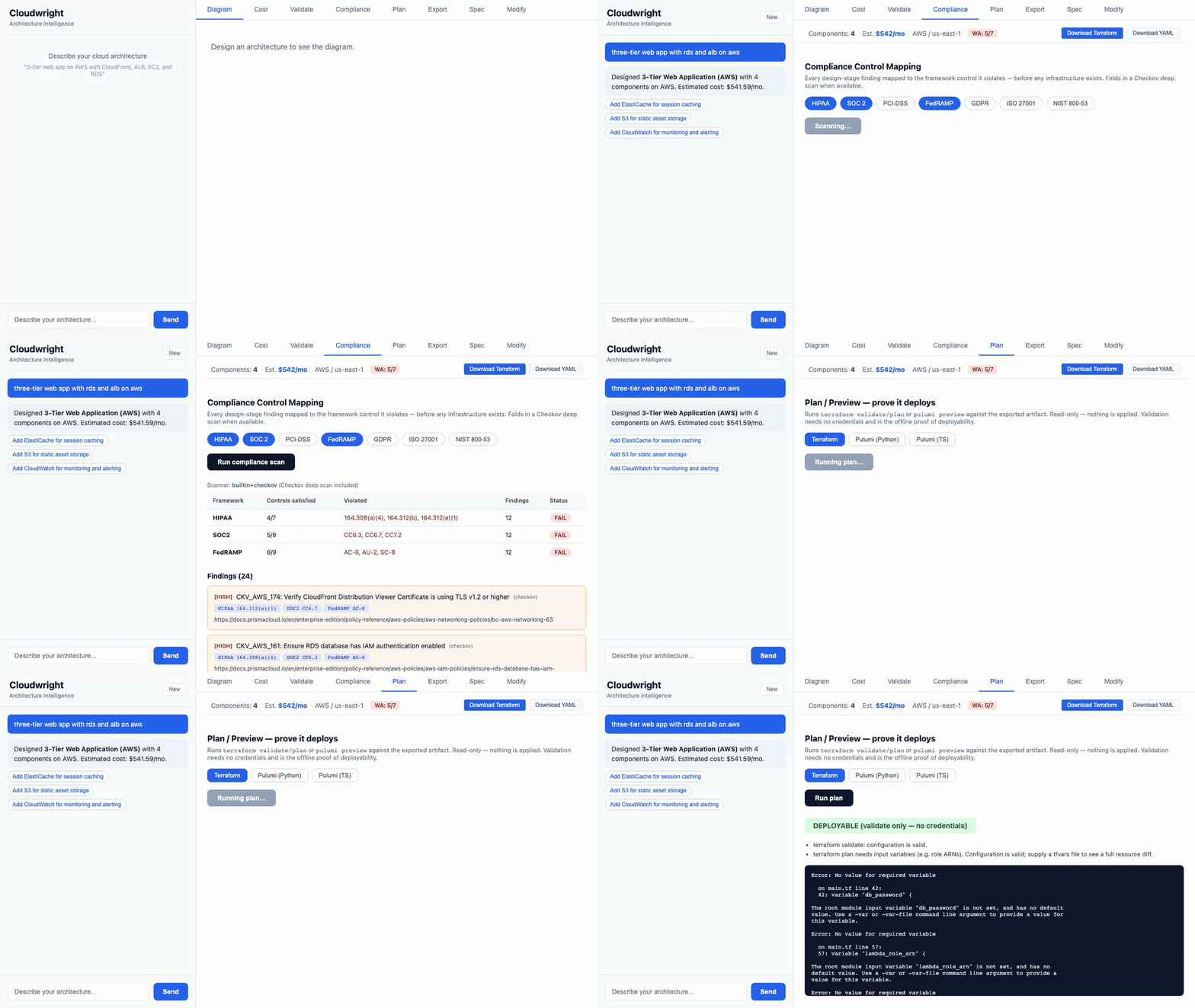
Other tools scan infrastructure after you deploy it. Cloudwright maps each finding to its control before any
resource exists. The fix then costs a spec edit instead of a change ticket. HIPAA 164.312(a)(2)(iv), SOC 2 CC6.1
and FedRAMP SC-28 come from the built-in scanner, with no extra tooling. Checkov folds into the same report
when it sits on your PATH.
--oscalwrites an OSCAL 1.1.2 component-definition with deterministic UUIDs.--traceabilityprints the chain from component to resource to control to status.cloudwright planrunsterraform validateagainst the export, and never applies.
The review needs no API key and no network

cloudwright review runs the scorer, the linter and the validator over a spec, and returns one severity-ranked
report. The same three critics run inside cloudwright design. When blocking findings survive generation, the
architect repairs the spec once and records the change in spec.metadata.critique. Pass
Architect(repair=False) to turn that off.
Canvas edits never call the model, so they are instant and free
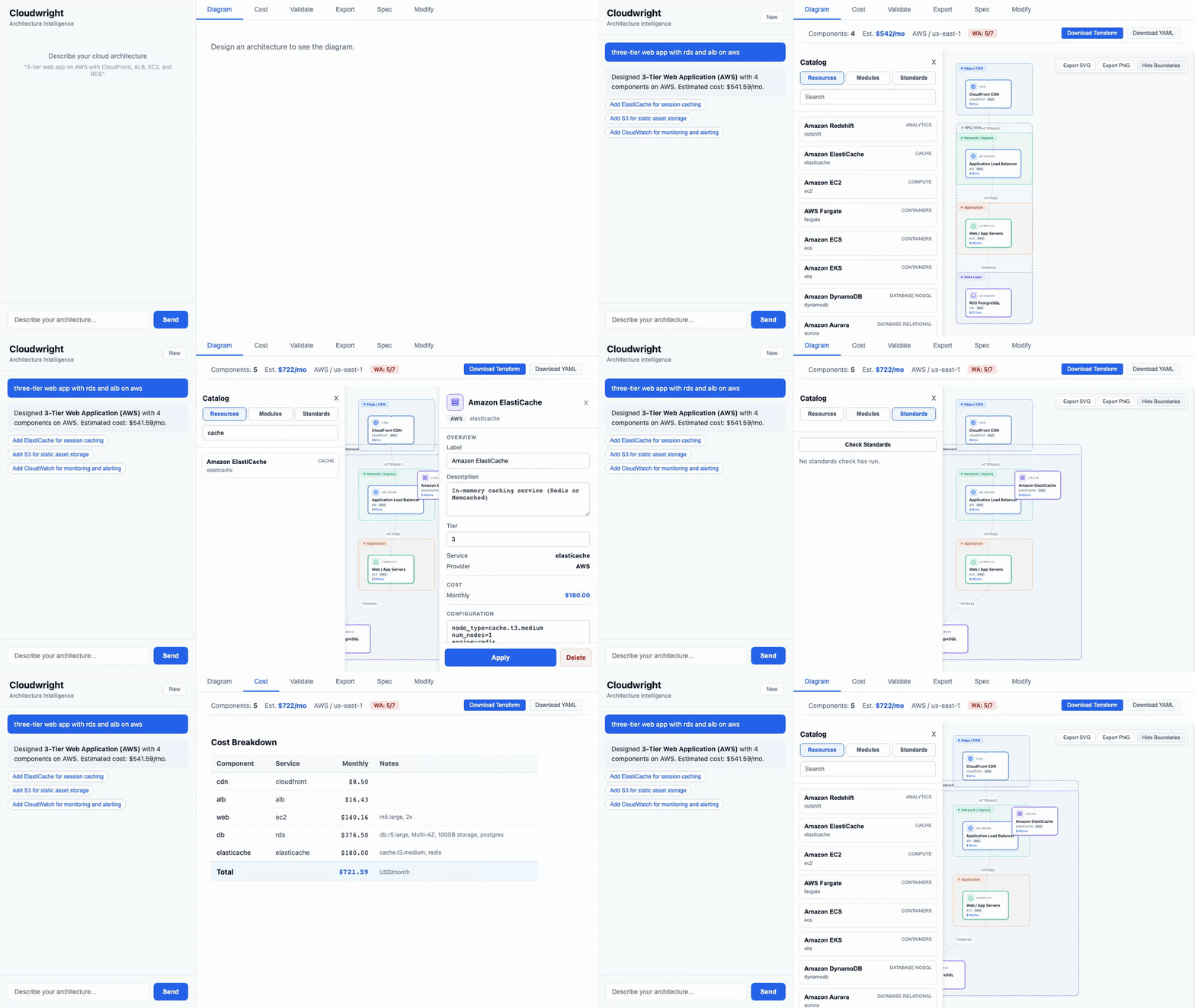
Add, drag, connect, edit and delete are deterministic frontend mutations. The Catalog drawer serves the resource
list per provider and five approved multi-resource modules. Its standards check flags orphan connections,
partial modules and missing tags. An intact module exports as a single Terraform module block, with the
catalog's pinned source and version.
One MCP server reaches 11 coding agents
Do not hand-write the config. cloudwright integrate emits it for Claude Code, Cursor, Cline, Windsurf, GitHub
Copilot, Zed, Codex CLI, Junie, Kiro and Antigravity. Aider gets a CLI-pipe recipe instead, because it speaks
no MCP. Every client wants a different shape: Zed wants context_servers, Copilot wants servers, and Codex
wants a TOML table.
The server exposes 24 tools in 10 groups: design, cost, validate, analyze, export, session, review, compliance, plan and migration. Full matrix in docs/integrations.md.
Offline commands grade, scan, compare, and plan
lint runs 10 anti-pattern checks. score grades 5 dimensions. analyze reports blast radius and single
points of failure. policy enforces policy-as-code with 9 built-in rules. security scans the spec and the
exported HCL. drift compares a design against a tfstate, and --remediate turns the gap into a cost,
compliance and plan preview.
review, compliance and plan are above. See docs/cli-reference.md.
Python API
v1.10.0 adds migration planning with evidence-based closure
Related MCP Servers
Adoption & maintenance
Factual signals from GitHub, npm, and our automated checks — not a rating.
GitHub stars
32
Stargazers on the source repository.
Last commit
1mo ago
Most recent push to the default branch.
Directory activity
2 views
Config copies, upvotes, and views on AllMCPs.
Reviews
No reviews yet — be the first to share how this listing worked for you.
Frequently Asked Questions about Cloudwright
AllMCPs Directory Badge
Showcase your server listing on GitHub or your project documentation. Embed this dynamic SVG badge to highlight official listing status and live engagement.
Badge Style:
Live Dynamic SVG Preview
Markdown (GitHub README)
[](https://allmcps.com/mcp/xmpuspus-cloudwright)HTML Embed
<a href="https://allmcps.com/mcp/xmpuspus-cloudwright"><img src="https://allmcps.com/api/badge/xmpuspus-cloudwright?style=directory" alt="Cloudwright on AllMCPs" /></a>