TouchDesigner Atlas README
The full upstream README, mirrored here for reference. Install config, tool schemas, adoption signals, and an original overview live on the TouchDesigner Atlas listing page.
td-atlas
An atomised index of TouchDesigner, a live bridge into a running instance, and an offline reader for saved projects — exposed to AI agents over MCP.
Install · Use it from an agent · Tools · Command line · Troubleshooting · Changelog




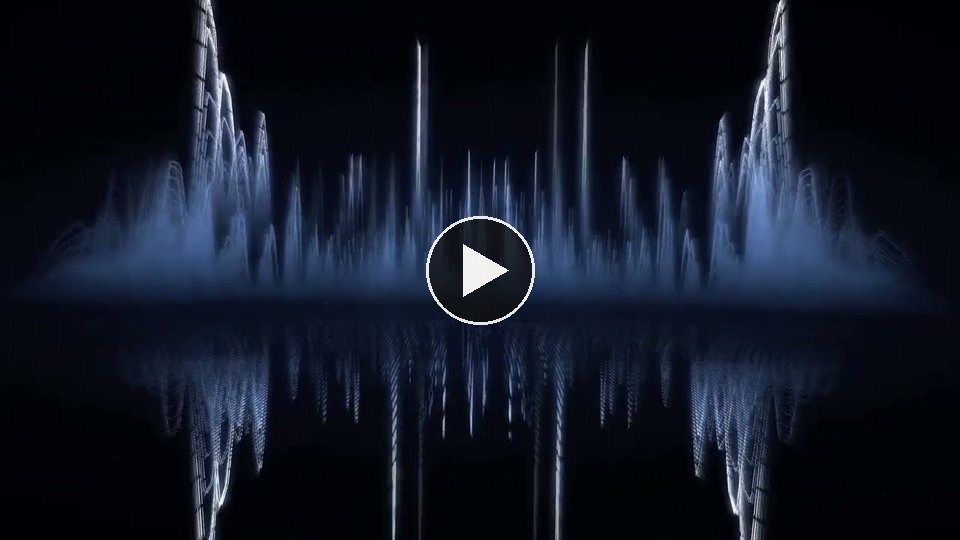
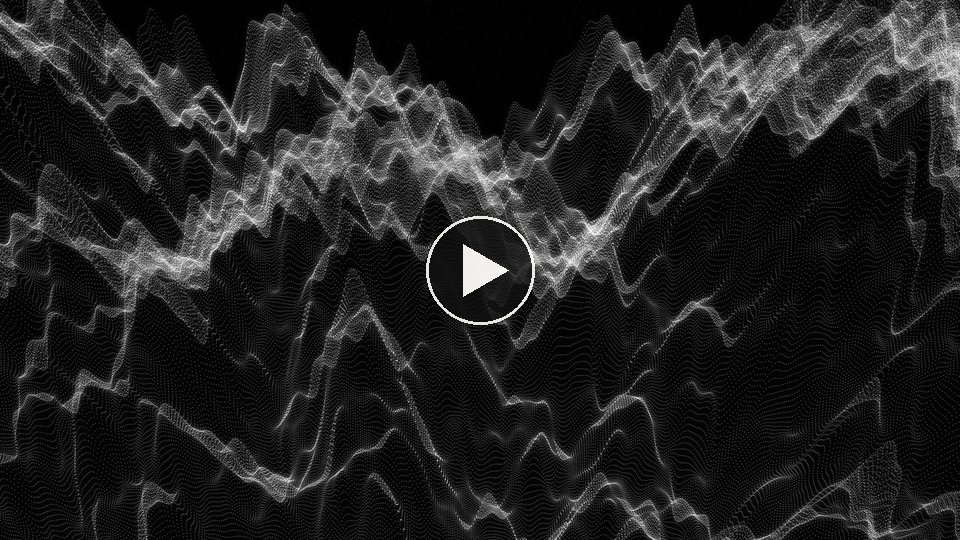
Left: an agent builds an audio-reactive scene from an empty project. Right: it works inside a finished one.
td-atlas gives an agent three things. The exact operator and parameter names from this machine. Hands inside a running instance, with one step of undo. And a way to read a saved project without opening it.
What it does
- The atom index is the name list. Two passes read every operator and parameter out of your own copy of the application into one SQLite file. The values in it are the values that copy reports.
- The bridge lets an agent change your project while TouchDesigner is running. A script builds it there out of four ordinary nodes: a Web Server DAT, a callbacks DAT, a status panel, and an Execute DAT that fires when you save. You can read it, see its changes in git, and upgrade it in place.
- What TouchDesigner does not report.
errorscovers what TouchDesigner itself calls an error, andtd_healthcovers the breakage it stays quiet about. - The call journal writes one line per bridge call to a file on disk, and it outlives the session.
- Reading projects offline inspects, searches and compares a project with TouchDesigner closed, and the original file is left alone.
- The network text, written on save is what the
bridge can put beside the
.toeon every save, so a project gets a diffable history in git.
Install
Three things have to be there first.
- TouchDesigner, already installed. The index is built from your copy of the application and holds the values that copy reports. There is nothing to download.
- Python 3.11 or newer, on the same computer as TouchDesigner.
- An AI agent that speaks MCP. The
agent is what calls these tools. td-atlas was built and measured against
Claude Code, whose
command is the
claude mcp addline further down. Any MCP client reaches the same tools.
Compatibility lists the platforms and what the connector can change in your project.
On macOS, one line from a terminal. The installer is a POSIX shell script, so Windows takes the step-by-step sequence below.
If that address does not answer, the same script comes out of the repository:
install.sh finds a Python, clones the repository, makes a
virtualenv beside it, installs the package, builds the index and stages the
bridge. Every command is printed before it runs.
It asks two questions: where to clone, and whether to build the index now.
The default answer to the first is ~/td-atlas. With no terminal to ask, it
takes the default for both.
Two directories end up on disk: the checkout, ~/td-atlas unless you named
another, and ~/.td-atlas. Besides those, uv or pip fills its own package
cache, as it does for any package. No sudo. System directories and your shell
startup files are left alone. Run it again on an existing checkout and it
updates that checkout.
By hand, or on Windows, the same sequence step by step
The block below uses uv, a fast installer
for Python packages. Each line carries a second form in the comment beside it,
and that one runs on the python3 you already have.
There is no package on PyPI. pip install td-atlas and uvx td-atlas will
find nothing. Then, from the checkout:
Commands from here on are written td-atlas for short. Unless the virtualenv
is activated, call it by path. In the checkout that path is
.venv/bin/td-atlas. From anywhere else it is the whole path,
~/td-atlas/.venv/bin/td-atlas for the default directory. On Windows it is
.venv\Scripts\td-atlas. A system Python does not see the package.
td-atlas install prints two things to paste. The curl line ran it for you,
so both are already at the end of what it printed; running it again prints them
again. First, into TouchDesigner's textport (Dialogs → Textport and DATs),
once per project:
The textport answers with [td-atlas] lines. The last one names your
TouchDesigner build and the project the bridge attached to.
Second, a claude mcp add line for your MCP client. See
As an MCP server. To also write that same entry into
DIR/.mcp.json, or merge it into one that is already there, pass
--write-mcp-json DIR.
Once the textport has answered, finish the index.
This pass adds the facts only a running instance knows.
Last, check the install. If you came in halfway, start here.
A finished install answers with every link ok, and one closing line.
The counts come off your own copy of TouchDesigner, so yours will differ.
Every link that is not ok comes with its repair, and a broken one makes the
command exit non-zero. Before the index is built you see
index : FAIL … fix: td-atlas build, and before the bridge is staged,
bridge : warn … fix: td-atlas install.
As an MCP server
Run td-atlas install and paste the claude mcp add … line it prints. That
line names the interpreter by absolute path, so it keeps working from any
working directory, with or without an activated virtualenv. Wiring it in by
hand looks like this:
From here you say what you want in plain language. Here is what the agent calls on it:
| What you say to the agent | What it calls |
|---|---|
| "Which operator displaces an image with noise? Give me the exact parameter names before you build anything." | td_search_operators, then td_operator_schema |
| "Build a noise into a blur into an out TOP in the project I have open, and check nothing is silently dead." | td_build — one undo block — then td_health |
| "It looks like nothing is happening." | td_health, then td_flags on whatever it names |
| "Show me what that looks like right now, and the motion over a second." | td_render, and a contact sheet for the motion |
"What is inside /project1 of myproject.toe? TouchDesigner is closed." | td_project_read — the file is copied to a cache and read there |
| "What did you change since we started?" | td_snapshot before and after, then td_project_diff on the two — components in ~/.td-atlas, never your own file |
| "Undo that." | td_undo — a whole td_build batch is one step |
46 tools in three groups. 9 index tools work offline, 28 live tools act
on a running instance, and 9 project-file tools read and write
.toe/.tox from disk. Each one, with its arguments and what it is for, is in
plugin/skills/touchdesigner/references/tools.md,
and a test holds that list to the code.
td_build and td_set_params check parameter names against the index before
sending, so the usual mistakes come back as corrections:
Documentation
| Document | For |
|---|---|
plugin/skills/touchdesigner/SKILL.md | Agents using the connector |
plugin/skills/touchdesigner/references/gotchas.md | Every trap that produced no error |
plugin/skills/touchdesigner/references/tools.md | All 46 MCP tools |
AGENTS.md | Agents contributing to this repository |
CONTRIBUTING.md | How to run the tests and the linter before a pull request |
CHANGELOG.md | What changed per version, and every protocol change without fail |
docs/architecture.md | How the three layers fit together, and why |
docs/cli.md | Every td-atlas subcommand and flag, and what each one needs |
docs/formats.md | The reverse-engineered .toe/.tox format, with evidence |
docs/atom-index.md | The two passes that build the index, and what each source yields |
docs/bridge.md | The component that runs inside TouchDesigner, and what it adds beyond exec |
docs/health.md | What TouchDesigner does not report, and what td_health prints instead |
docs/journal.md | The call journal: what is written, by whom, and what is kept out |
docs/offline-projects.md | Reading, searching and comparing a .toe with TouchDesigner closed |
docs/network-text.md | The diffable text written beside the .toe, and the seven known differences |
docs/compatibility.md | Builds, Python, operating systems, and what this can change in your project |
docs/skill.md | The agent skill, and installing it as a plugin |
docs/bundle.md | Building the .mcpb, and what publishing it would mean |
docs/troubleshooting.md | Every symptom, what it is, and what to run |
docs/development.md | The test suite and the invariant it holds |
docs/layout.md | Every directory in the repository and what lives there |
Licence
MIT, and the full text is in LICENSE. TouchDesigner is a product of Derivative Inc. This project is not affiliated with them and redistributes nothing from the installation. It only reads what is already on your machine.