Local-first MCP server for task tracking and coordination of autonomous AI coding agents.
Quick Install
Automated & IDE SetupCopy the AI prompt to install this server into Claude Code, Cursor, or another agent — or use 1-click editor setup below.
Not yet automatically verified
We haven't yet run this listing's install command through our automated sandbox check. This isn't a red flag — we're steadily working through the catalog.
Manual Client & Custom JSON ConfigExpand JSON ▾
Client Config & Setup
Choose your client or environment
Target File:
💡 Paste the JSON block into your client's configuration file under mcpServers, then restart the application.
Documentation Overview










When a coding agent dies mid-task, the task frees itself.
rhizome-mcp gives autonomous coding agents crash-safe task coordination over MCP: claims are renewable expiring leases, in_progress is derived — never stored — and an interrupted attempt hands its checkpoint to whichever session picks the work up next. One static Go binary, one SQLite database per project. No daemon, no accounts, no cloud.
It works with agents from different products at once — Claude Code, Codex, GitHub Copilot, VS Code, and any other MCP-compatible client — giving them one shared, durable view of project work.
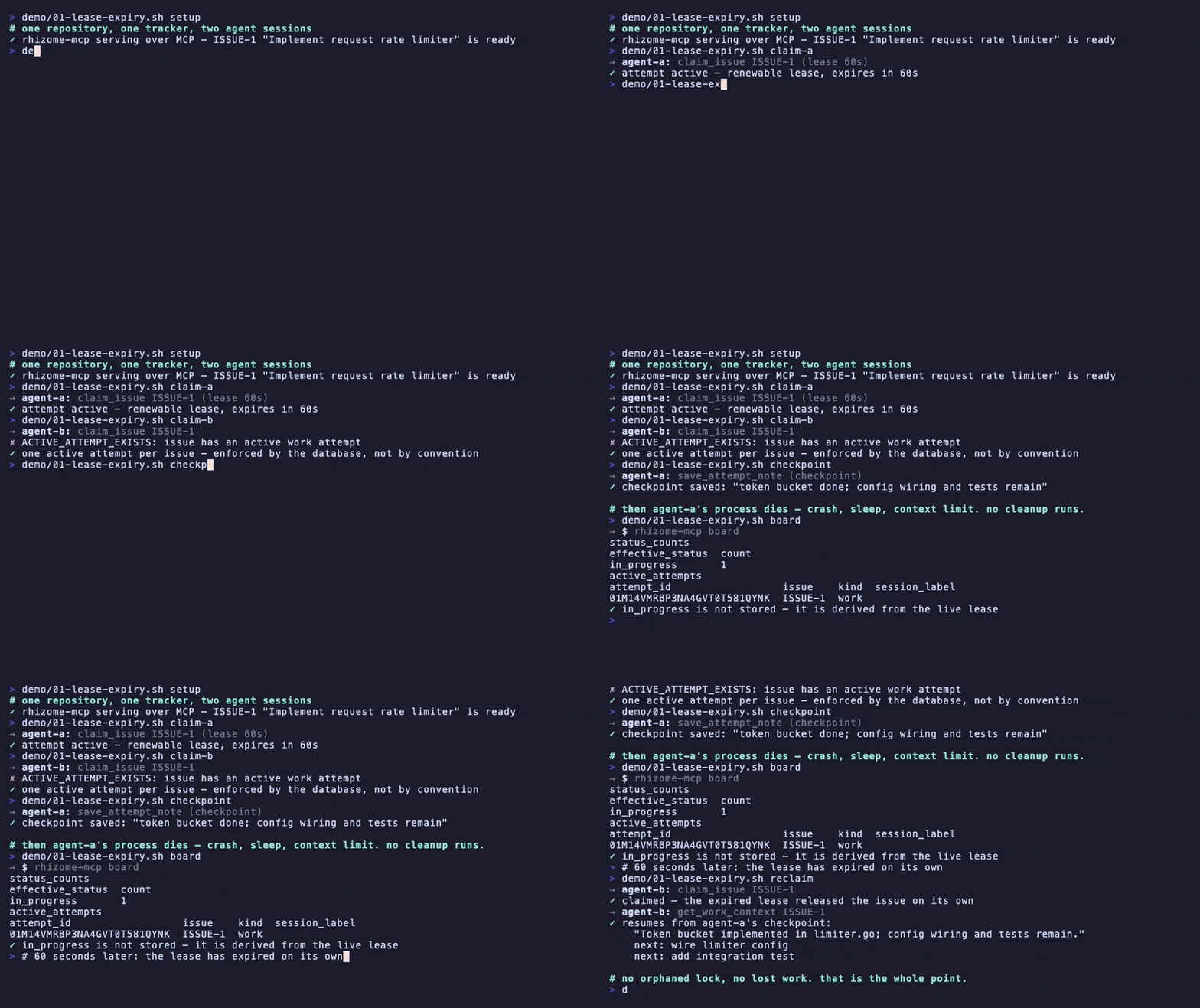
Recorded from real server output by demo/record.sh — nothing staged.
Why · How it compares · Quick start · Monitor your project · MCP surface · Documentation
Why
AI coding agents are concurrent, context-limited, and interruptible. A TODO.md or a single chat context doesn't survive that. rhizome-mcp is built around those failure modes:
-
Crash-safe claiming. Issues are claimed atomically with renewable leases.
in_progressis never a stored status — it is derived from an active lease, so a vanished agent can't lock an issue forever. When the lease expires, the issue becomes claimable again. A partial unique index guarantees at most one active attempt per issue at the database level. -
Token-efficient by contract. Compact list projections (a 100-issue page stays under 64 KB — enforced by an integration test), graph nodes that exclude free-text bodies at the SQL layer, snippet-only search, delta sync via event IDs, and a bounded single-call work-context package.
-
Durable project memory. Checkpoints with next steps, supersedable decision records, append-only event history, and FTS5 full-text search across issues, comments, decisions, and notes. A fresh session resumes from the last checkpoint instead of re-deriving state.
-
Planning and dependency graphs. Cycle-checked
blocksrelations, epics, claimable entry-point highlighting, and atomic batch planning (up to 50 issues, 100 relations, and 20 decisions in one all-or-nothing transaction). -
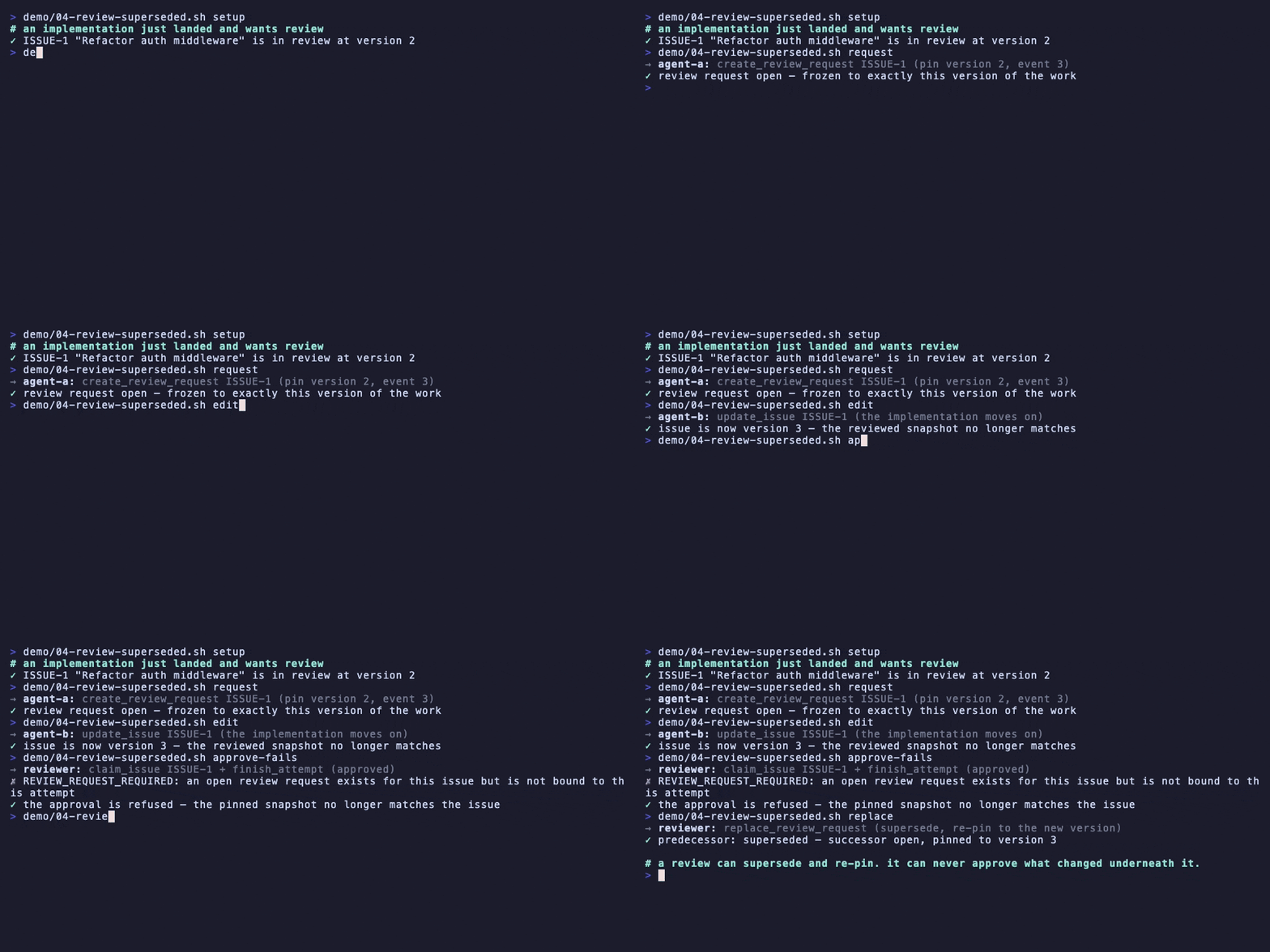
Review workflow. Review requests pin an exact issue version and event position; approving changed code is structurally impossible — a stale request can only be superseded and re-pinned.
Watch a stale approval get refused
-
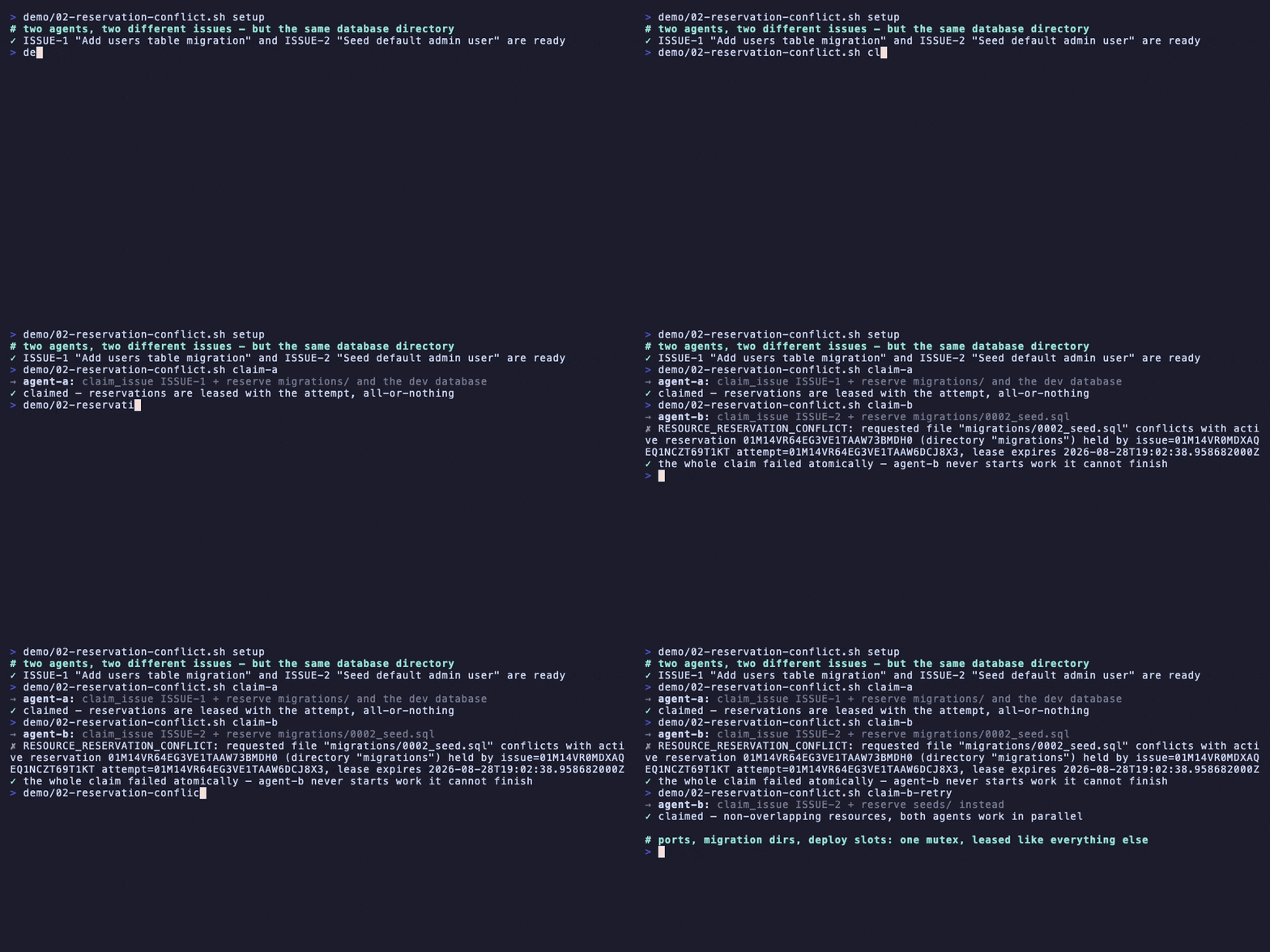
Resource reservations. A claim can atomically reserve files, directories, globs, or logical resources (a port, a migration window, a deploy slot); an overlapping claim fails fast with the holder and its lease expiry named, instead of two agents colliding later.
Watch a reservation conflict fail a claim atomically
-
Concurrency discipline throughout. Optimistic versioning on mutations, replay-safe idempotency keys, stable machine-actionable error codes.
-
Human observability without a server.
rhizome-mcp boardprints live leases, blockers, and the review queue, or writes a self-contained HTML snapshot; the CLI reads everything as tables, JSON, or Mermaid.
This repository tracks its own backlog through the server it ships — work is selected, claimed, checkpointed, and reviewed via rhizome-mcp itself (AGENTS.md).
Use it when several agent sessions (or several agent products) work the same repository over time and you need handoffs, parallel work, and recovery after crashes or context limits.
Skip it if you need a hosted multi-user tracker with auth, permissions, and a web UI — this is a local single-developer tool by design.
How it compares
Compare agent task trackers on guarantees under failure, not on feature lists — local-first SQLite storage and MCP support are table stakes in this category.
| When things go wrong | rhizome-mcp | beads | Kata | Guild |
|---|---|---|---|---|
| Task frees itself after a crash | Yes — expiring lease | No | No | No |
| Double-claim prevented at the storage layer | Yes | Atomic claim | Atomic claim | Atomic claim |
| Stale review approval impossible | Yes — version-pinned | No | No | No |
| Response sizes bounded by a tested contract | Yes — ≤ 64 KiB / 100 issues | No | No | No |
| Interrupted attempt resumable by another session | Yes — checkpoints | No | No | Note only |
Full comparison with sources, pinned versions, and honest "choose X if" guidance: How rhizome-mcp compares.
Quick start
Install and run
Choose the approach that matches your workflow:
Zero-install trial via npm
Try rhizome-mcp immediately with no separate binary install, no Go toolchain:
Works with any MCP client. See packages/npm/README.md for platform coverage. Great for quick evaluation.
Claude Code plugin
Registers the MCP server (via npx, no binary install) and adds the rhizome-task-workflow and rhizome-execution-plan skills. Each repository you track still needs a one-time npx rhizome-mcp init in its root.
VS Code
Install Rhizome MCP (odrin.rhizome-mcp) from the Marketplace or Open VSX. The extension bundles the platform binary, registers the MCP server automatically, and adds Rhizome: Initialize Project to the Command Palette. No terminal, no mcp.json editing. Details: docs/10-vscode-extension.md.
Prefer a standalone binary with a plain mcp.json entry instead? Install the binary below and use this one-click link: Add to VS Code.
Native binary installer
Download and install a release binary for your platform. Verifies checksums, installs to ~/.local/bin by default:
Official MCP Registry
Use rhizome-mcp via the official MCP Registry, available in the Model Context Protocol registry as io.github.Odrin/rhizome-mcp for clients that consume the registry.
Initialize and connect
Initialize tracking inside your repository:
Then register the server with your MCP client. Automated setup for common clients:
Related MCP Servers
Adoption & maintenance
Factual signals from GitHub, npm, and our automated checks — not a rating.
GitHub stars
1
Stargazers on the source repository.
npm downloads
1.5k
Package downloads in the last 30 days.
Last commit
8d ago
Most recent push to the default branch.
Reviews
No reviews yet — be the first to share how this listing worked for you.
Frequently Asked Questions about Rhizome MCP
AllMCPs Directory Badge
Showcase your server listing on GitHub or your project documentation. Embed this dynamic SVG badge to highlight official listing status and live engagement.
Badge Style:
Live Dynamic SVG Preview
Markdown (GitHub README)
[](https://allmcps.com/mcp/rhizome-mcp)HTML Embed
<a href="https://allmcps.com/mcp/rhizome-mcp"><img src="https://allmcps.com/api/badge/rhizome-mcp?style=directory" alt="Rhizome MCP on AllMCPs" /></a>