Scans datasets/models for PII/secrets, redacts, and packages a public-release bundle via MCP.
Quick Install
Automated & IDE SetupCopy the AI prompt to install this server into Claude Code, Cursor, or another agent — or use 1-click editor setup below.
Manual Client & Custom JSON ConfigExpand JSON ▾
Client Config & Setup
Choose your client or environment
Target File:
💡 Paste the JSON block into your client's configuration file under mcpServers, then restart the application.
Documentation Overview
ReleaseGuard




Install • Quickstart • CLI reference • Library API • Comparison • FAQ
Scan a dataset or model directory for PII and secrets with Presidio, redact what you find, and generate a public-release bundle, a Hugging Face dataset/model card plus an EU AI Act Art. 53(1)(d) training-data summary, in one command.
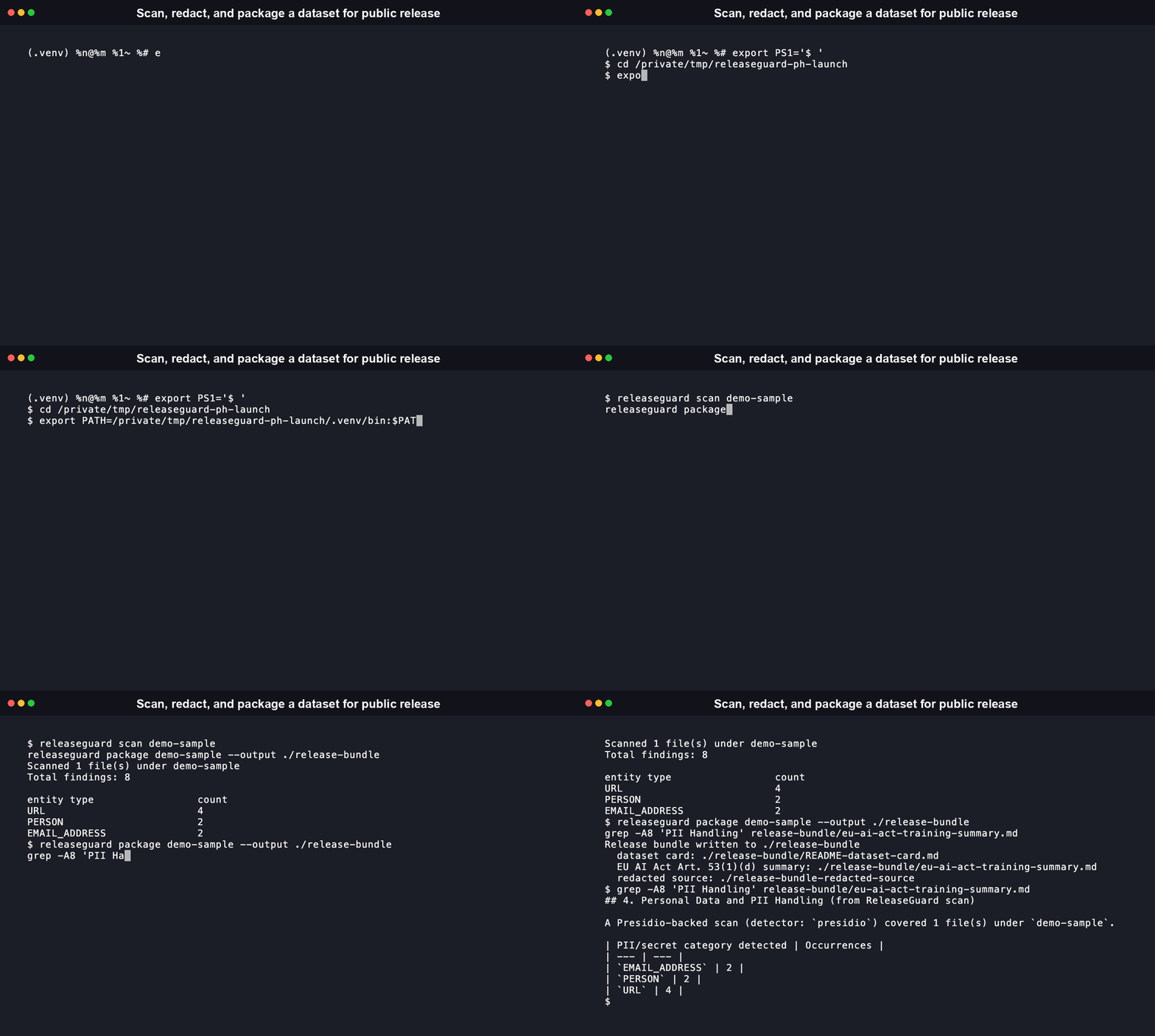
ReleaseGuard is not a PII detector. It's the glue between "I have a dataset I want to publish" and "I have a sanitized bundle with the paperwork already drafted." Detection is entirely Presidio's, an actively maintained open-source project with 10,000+ GitHub stars. ReleaseGuard chains Presidio's scan straight into redaction and into the two documents almost every public dataset/model release actually needs, instead of you writing a script to do it yourself.
Install
en_core_web_sm is spaCy's small English model and Presidio's own quickstart default. For higher-accuracy detection, install the larger model instead and pass --spacy-model:
Quickstart
This is a real, unedited run against a two-row sample CSV, not a mockup:
That URL: 3 line is a real Presidio quirk worth calling out rather than hiding: its regex-based URL recognizer also fires on the domain portion of an email address (example.com inside alice.rivera@example.com), so email-heavy text double-counts as both EMAIL_ADDRESS and URL. This is Presidio's own recognizer behavior, unmodified, and it's worth noting entity counts can shift slightly between Presidio/spaCy versions since detection is NLP-based, not a fixed lookup table (this run used presidio-analyzer 2.2.364 with en_core_web_sm 3.8.0). Filter it out with --entities if you only care about email addresses:
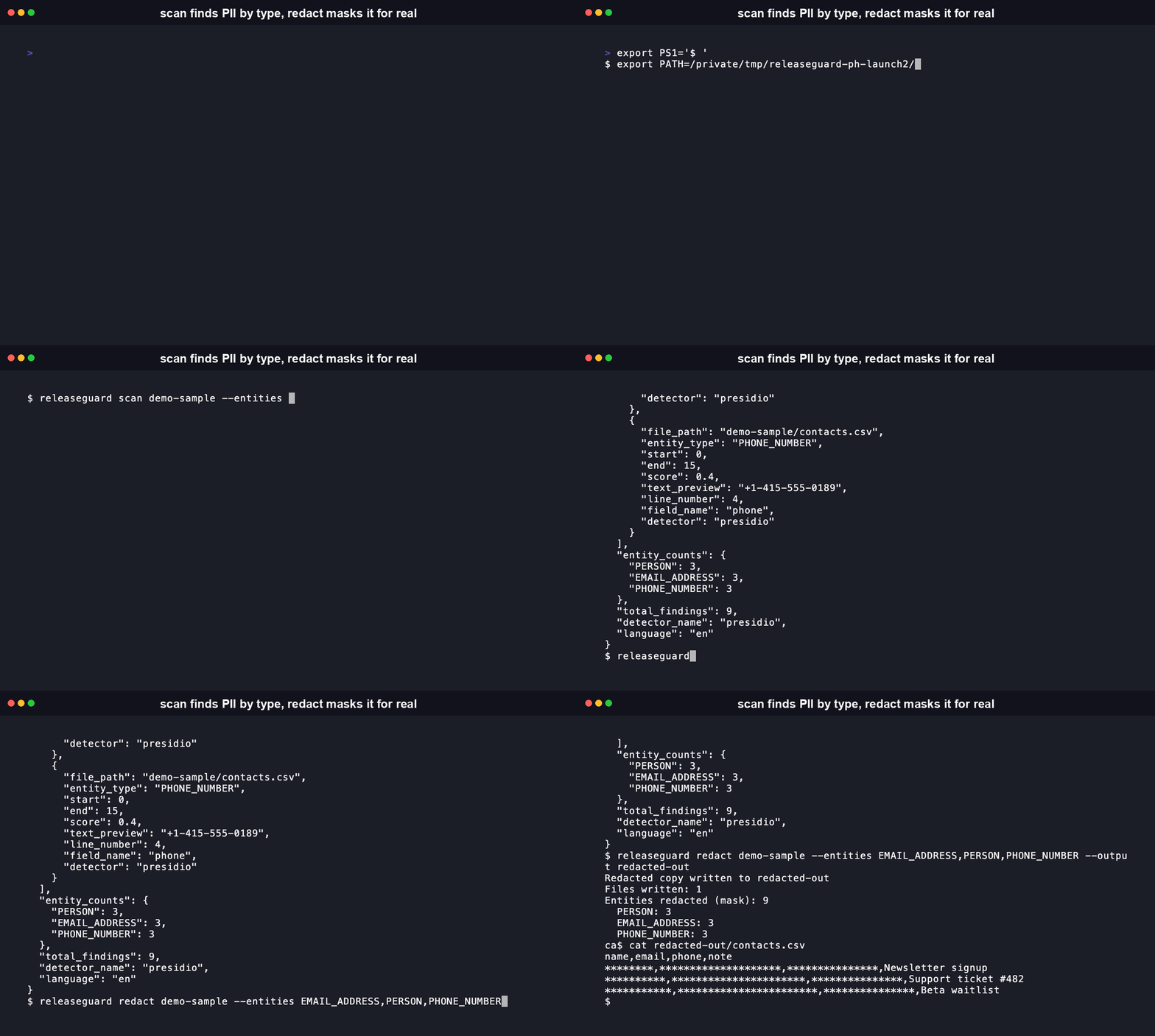
Redact, then package a release bundle in one command:
bundle/eu-ai-act-training-summary.md opens like this, real scan counts filled in, everything else left as an explicit placeholder for a human to complete:
--json on every command switches to machine-readable output for scripts and agents.
Quick summary
- Use it for: turning a Presidio scan into a redacted copy plus a dataset/model card and an EU AI Act Art. 53(1)(d) training-data summary, from one command instead of three separate tools and a hand-written template
- What it's not: a PII detector of its own, or a claim of "total transparency"/full training-data disclosure compliance. See What ReleaseGuard is not
- Runs entirely local. No dataset content, scan results, or redacted output is ever sent to a remote service.
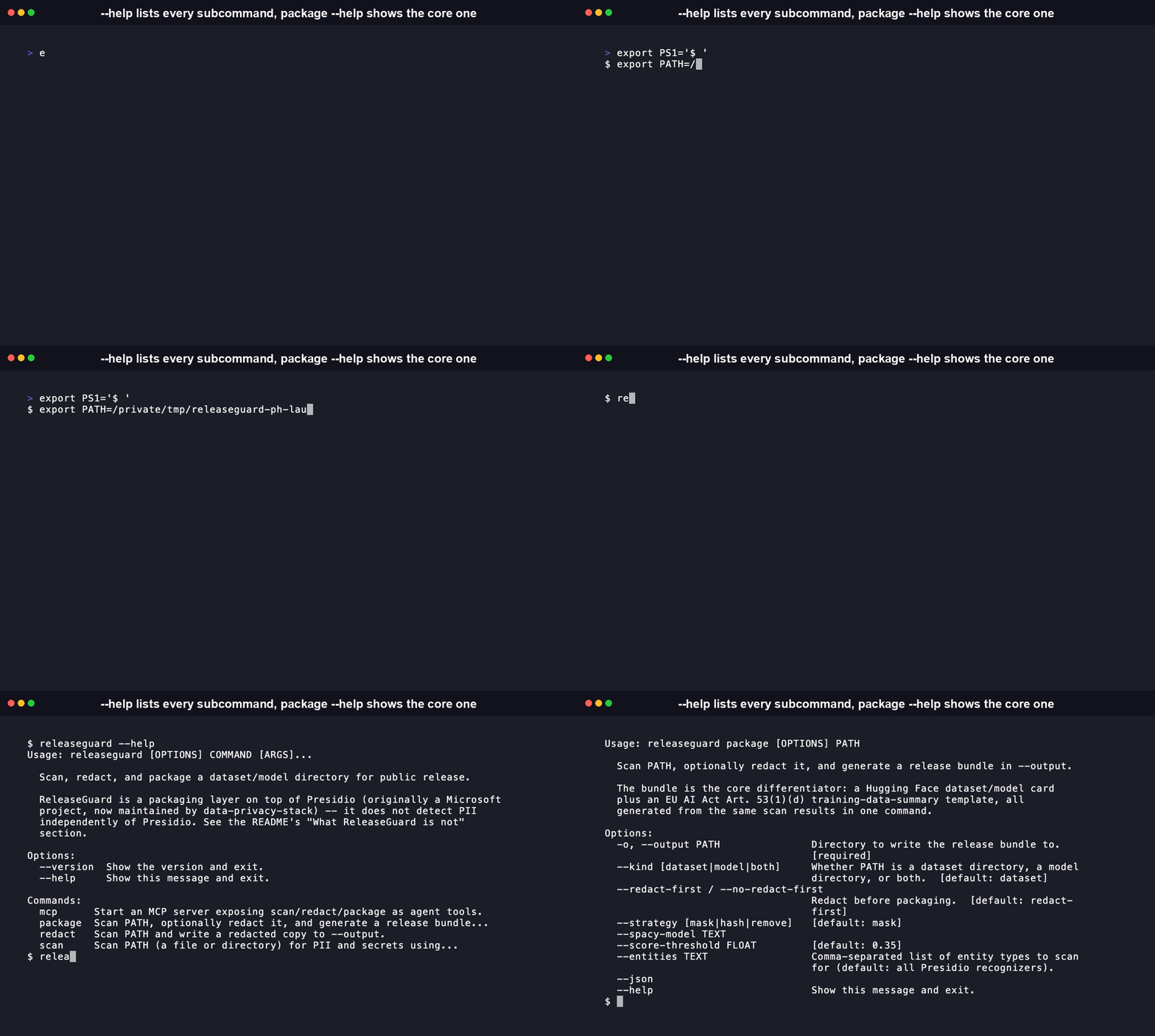
CLI reference
| Command | Purpose |
|---|---|
scan PATH | Scans a file or directory (CSV, JSON/JSONL, plain text) with Presidio. --entities, --score-threshold, --spacy-model, --json. |
redact PATH --output DIR | Scans, then writes a redacted copy to DIR. Never touches PATH. --strategy mask|hash|remove, --overwrite. |
package PATH --output DIR | Scans (and by default redacts first), then writes a Hugging Face dataset/model card plus the EU AI Act Art. 53(1)(d) summary to DIR. --kind dataset|model|both, --redact-first/--no-redact-first. |
mcp | Starts an MCP server (stdio) exposing scan_directory_tool, redact_directory_tool, package_release_tool. Requires pip install "releaseguard-cli[mcp]" on Python 3.10+. |
Every command supports --json. Full flag reference: releaseguard <command> --help.
Library API
PIIDetector (releaseguard.detectors.base) and FileReader (releaseguard.readers.base) are the two extension points. Presidio is currently the only detector shipped; CSV, JSON/JSONL, and plain text are currently the three readers shipped. Both are registries, not hardcoded calls, specifically so a new format or a second detection backend is a scoped addition later. See CONTRIBUTING.md.
MCP Server
ReleaseGuard ships a Model Context Protocol server so an AI agent (Claude, Cursor, or any MCP-compatible client) can scan, redact, and package a dataset or model directory directly, without a human invoking the CLI by hand.
Install the extra:
Start it directly with the mcp subcommand:
Add it to your MCP client's config (for Claude Desktop, claude_desktop_config.json). The server
is started via a subcommand of the published releaseguard console script, not a separate
console script of its own:
Transport is stdio, so there is nothing to host: the MCP client spawns the server as a local
subprocess. Source: src/releaseguard/mcp_server.py.
The server exposes three tools, each returning the same JSON shape as the matching CLI --json
output:
| Tool | Purpose |
|---|---|
scan_directory_tool(path, spacy_model=None, score_threshold=0.35) | Scan a directory for PII and secrets with Presidio. |
redact_directory_tool(path, output, strategy="mask", overwrite=False) | Scan, then write a redacted copy to output. Never mutates path. strategy is "mask", "hash", or "remove". |
package_release_tool(path, output, kind="dataset", redact_first=True, strategy="mask") | Scan, optionally redact, and write a release bundle (dataset/model card plus the EU AI Act Art. 53(1)(d) summary) to output. |
Related MCP Servers
Reviews
No reviews yet — be the first to share how this listing worked for you.
Frequently Asked Questions about Releaseguard
AllMCPs Directory Badge
Showcase your server listing on GitHub or your project documentation. Embed this dynamic SVG badge to highlight official listing status and live engagement.
Badge Style:
Live Dynamic SVG Preview
Markdown (GitHub README)
[](https://allmcps.com/mcp/releaseguard)HTML Embed
<a href="https://allmcps.com/mcp/releaseguard"><img src="https://allmcps.com/api/badge/releaseguard?style=directory" alt="Releaseguard on AllMCPs" /></a>Technical Specs & Signals
CategorySecurity
27Quality signal: Emerging · 27/100How this signal is calculated ▾
Server availabilityNot measured
Not scored for repo-hosted servers — we can't reach the running server, only its GitHub page. Hosted MCP endpoints are health-checked live.
Verified ownership8/20
Documentation & tools11/30
Adoption & activity1/15
Community engagement0/10
A guidance signal from public completeness & health data — not a user rating. New listings start lower and rise as they add docs, get verified, and grow adoption. Signals we can't observe for a listing are skipped, not counted against it.
Own this project?
This directory is pre-filled from public sources. Claim via GitHub README, site badge, or DNS TXT to unlock edit access and the Official badge and attach your website — proof is checked automatically, then reviewed by our team.
Free dofollow backlink: add your website and place the AllMCPs badge on it — no claim needed. We detect it automatically and keep it verified as long as the badge stays live.
Claim & get free dofollowShare & Embed
Add our SVG badge (dark/light directory styles) or embeddable widget to your site.