Posecode
by posecode-dev
Text-based language and MCP server for describing, validating, and rendering deterministic 3D human motion.
Install Posecode
Pick your client, then add it in one click or paste the config.
~/Library/Application Support/Claude/claude_desktop_config.json{
"mcpServers": {
"posecode-dev-posecode": {
"command": "npx",
"args": [
"-y",
"posecode-mcp@latest"
]
}
}
}
Settings → Developer → Edit Config, merge this into mcpServers, then fully quit and reopen Claude Desktop.
We couldn’t confirm it starts correctly
The install command started, but didn't respond the way we expected when we tried to talk to it.
npx -y posecode-mcp@latestinitialize succeeded but no response to tools/list.
This is an experimental automated check and can have false negatives — missing environment variables, a slow cold install, etc. It doesn’t necessarily mean something’s wrong. Last checked 1mo ago.
Overview
Use cases
- Generate deterministic human motion from text instructions
- Validate and critique human movement sequences programmatically
- Render anatomically constrained 3D human figures in web applications
- Edit and share movement sequences in a structured text format
- Integrate human motion descriptions into animation or AI workflows
Key features
- Text-based movement description language (.posecode format)
- Anatomically clamped joint angle constraints for safety
- Client-side parsing and rendering of 3D human motion
- Deterministic and inspectable movement generation
- MCP server exposing generation, validation, and critique endpoints
Security & health
What it can reach and how reliably it runs — from our own checks, not the maintainer’s claims.
Recent health check succeeded.
Supply-chain signal
No high-severity advisories surfaced by our automated scan.
Scanned 10d ago via OSV.dev · posecode-mcp@latest (npm)
Adoption & maintenance
Factual signals from GitHub, npm, and our automated checks — not a rating.
From the project README
Posecode
Kinematic motion as text.
An inspectable, editable movement format for animation tools, LLMs, and web products.
Like Mermaid for movement: small text documents for describing, validating, and rendering
deterministic human motion without hiding the source inside a black box.
Live Playground · Movement Library · Language Specification (SPEC.md) · LLM Authoring Guide · Examples · MCP Server


Why Posecode?
Animation clips and generated trajectories can show movement, but they often hide the semantic decisions that produced it.
Posecode keeps those decisions in readable source. A human can write the document, an animation tool can emit it, or an LLM can draft it. Parsing, validation, editing, and rendering do not require an AI model.
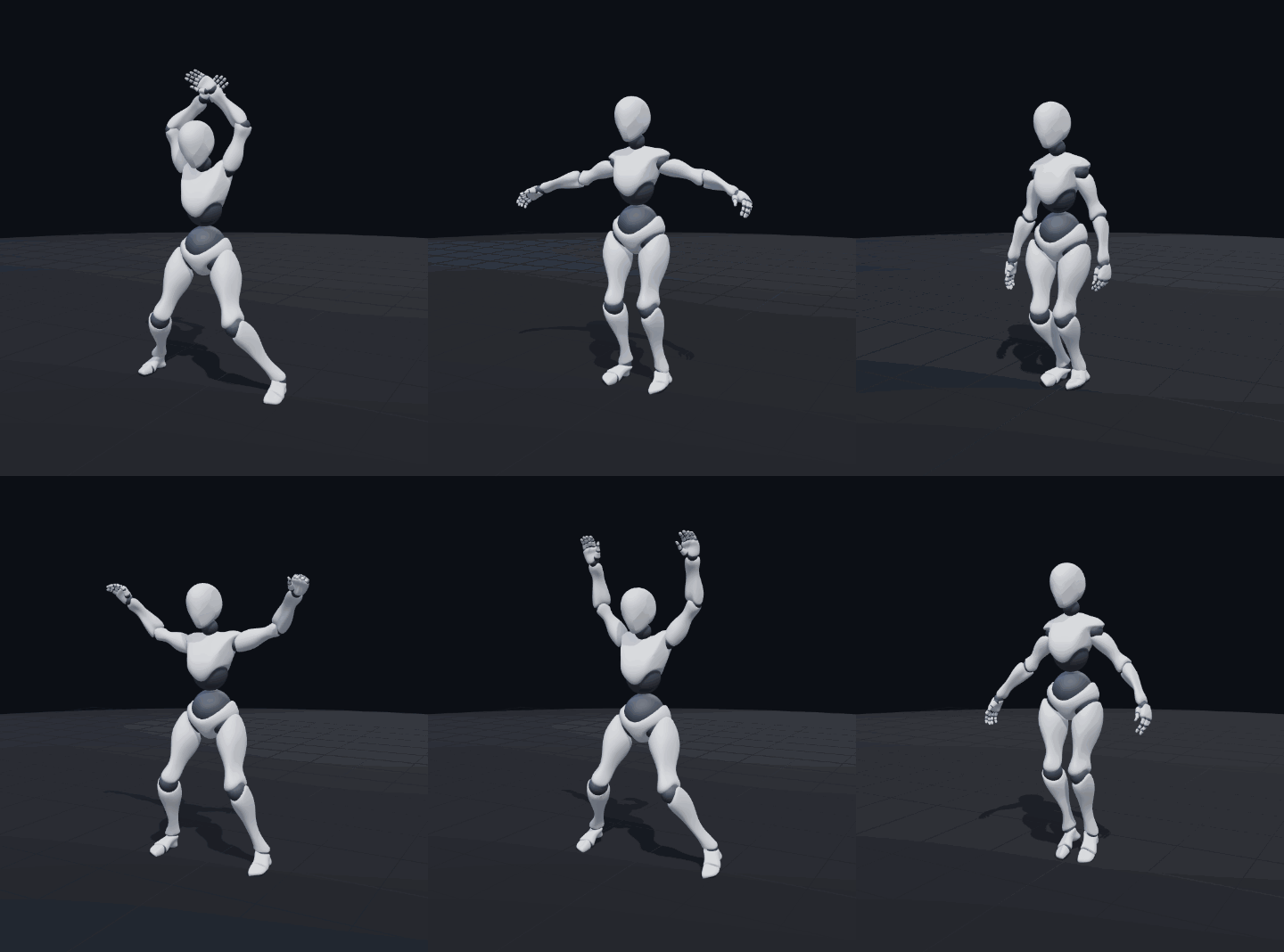
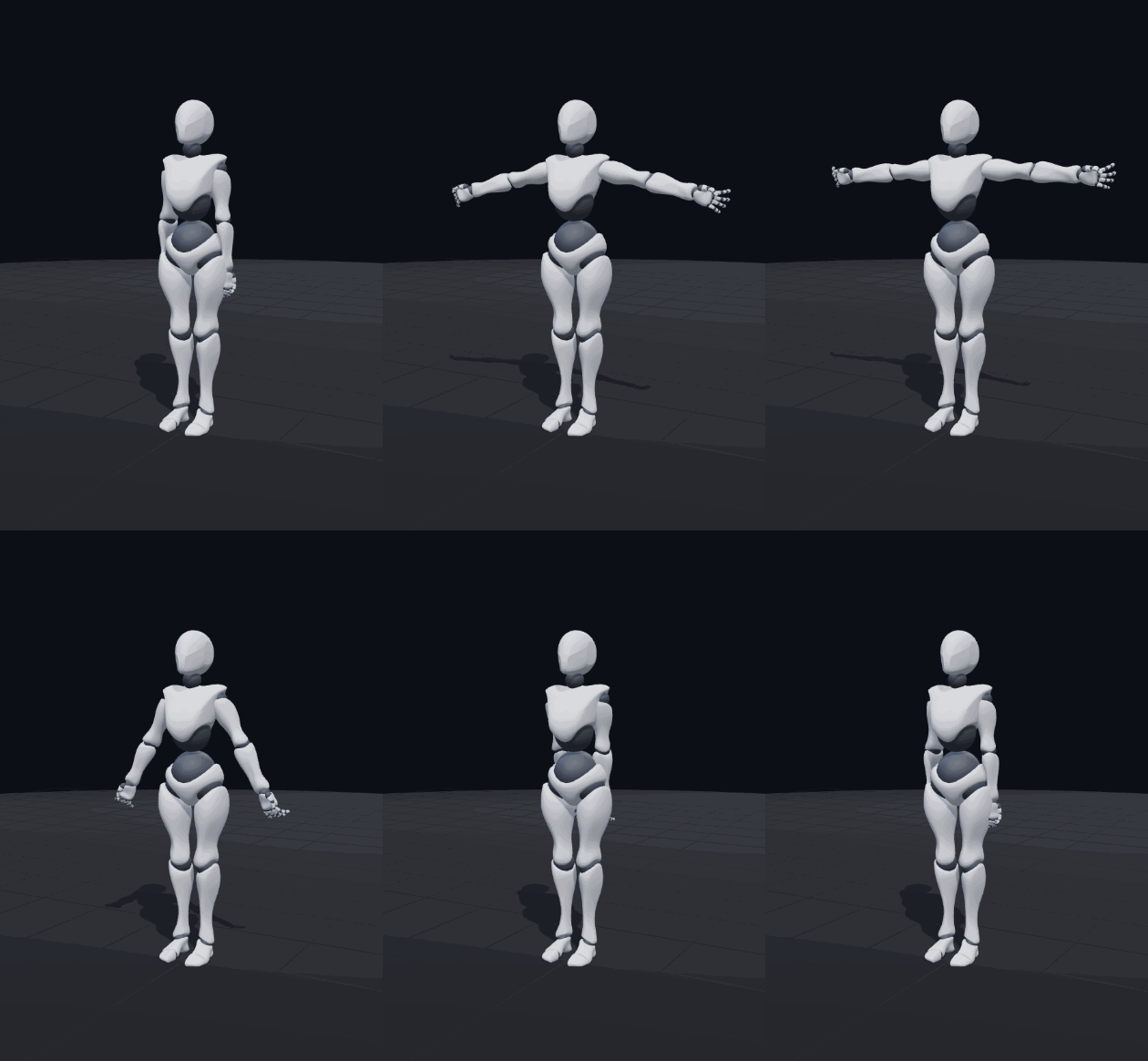
One .posecode document —
shoulders: abduct 160,
hips: abduct 30,
repeat 12 —
rendered live in the browser.
For example:
Bend your knees, move your hips backward, and keep your chest upright.
A human may understand that instruction, but a renderer cannot reliably determine:
- which joints should move,
- by how many degrees,
- in which coordinate frame,
- over what duration,
- in what sequence,
- or within which physical limits.
Humans, tools, and language models all need a shared syntax for expressing movement in a renderable and testable form.
Posecode provides that missing representation.
See Posecode in 28 seconds
From readable movement source to validated 3D rendering, MCP tools, and a one-script web embed.
▶ Watch the 28-second builder demo
Plain text in. Smooth, programmable 3D motion out.
Movement examples
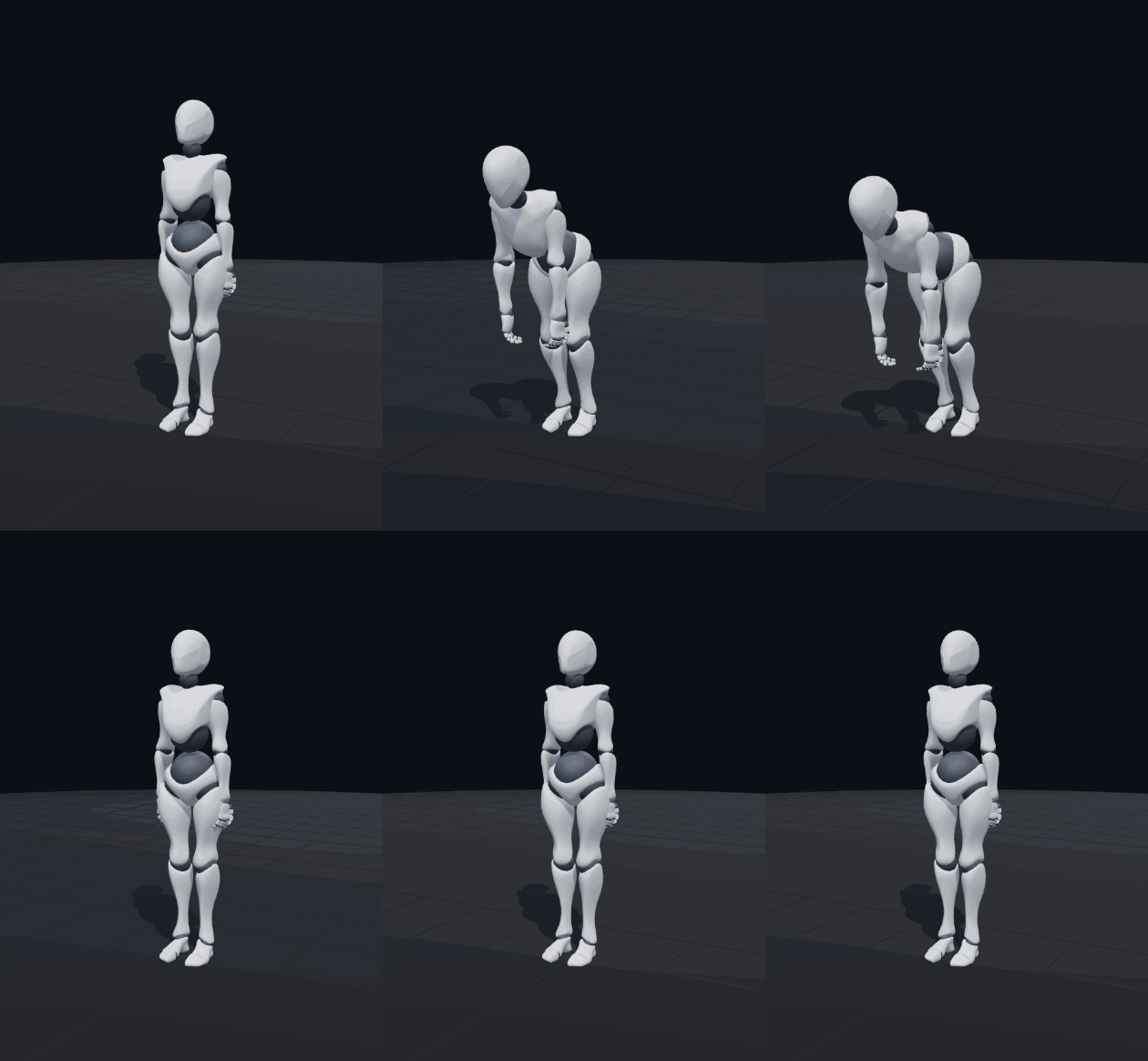
pelvis: hinge — deadlift
|
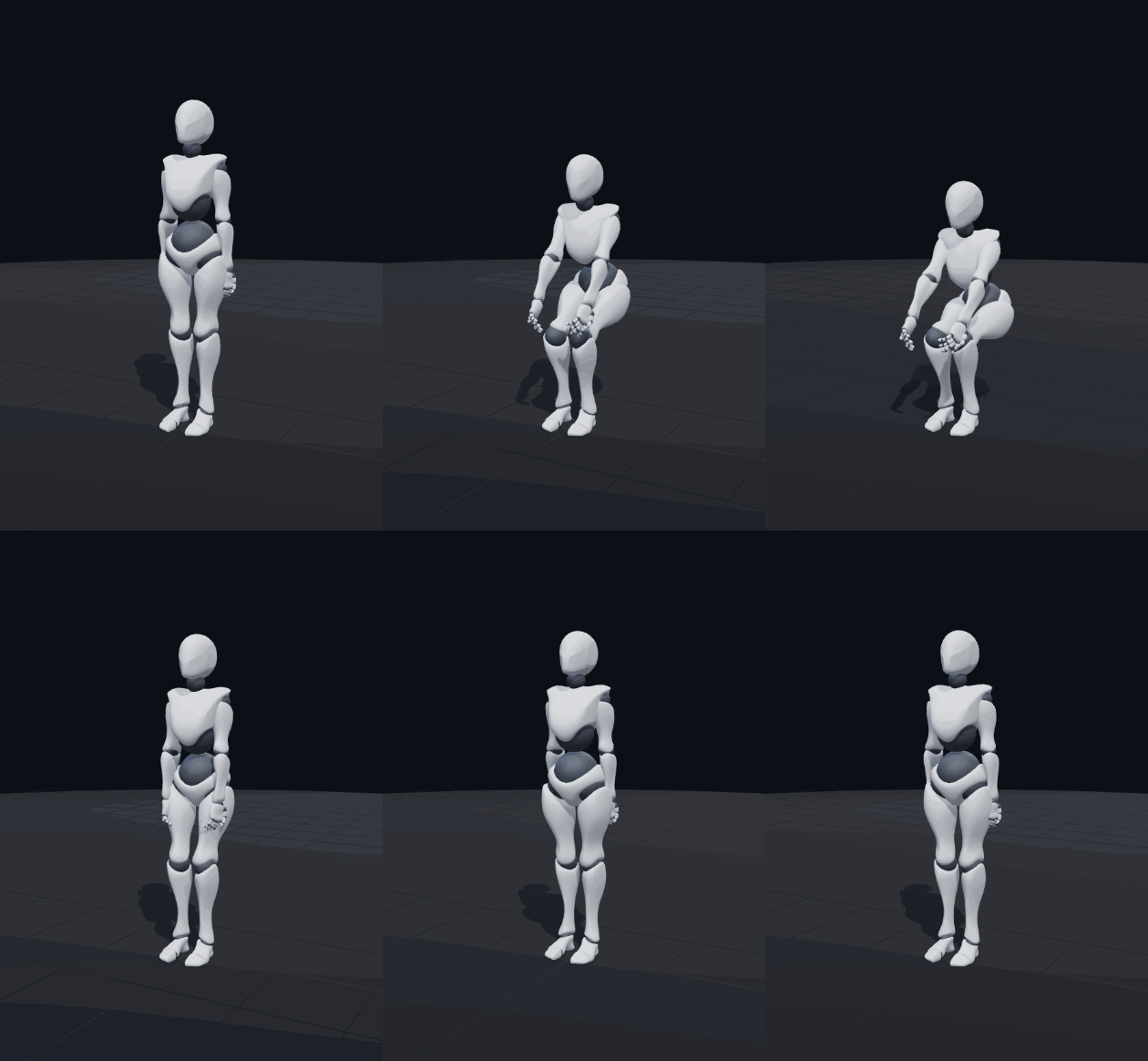
knees: flex 95 — squat
|
shoulders: abduct 90 — lateral raise
|
Why Not Diffusion Text-to-Motion?
Neural text-to-motion systems can generate impressive movement, but they introduce problems for lightweight, programmable applications.
Resource intensive
Many systems require large models and GPU-backed inference, making real-time consumer deployment expensive.
Difficult to control
They usually produce coordinate trajectories rather than editable semantic instructions.
It is difficult to request a precise change such as:
Reduce knee flexion by 10 degrees during the second phase.
Hard to validate
Black-box trajectories do not naturally expose readable joint rules, phase definitions, or range-of-motion limits.
Hard to debug
When a movement looks wrong, developers may not know which semantic instruction caused the problem.
The Posecode Approach
Posecode uses a lightweight, text-driven pipeline.
- Readable: movements are stored as small
.posecodedocuments. - Structured: joints, actions, angles, timings, and constraints are explicit.
- Editable: developers and models can modify individual movement properties.
- Fast: parsing and rendering happen client-side.
- Deterministic: the same Posecode input produces the same validated representation.
- Inspectable: parser warnings and fidelity checks explain problems.
- Agent-friendly: the MCP server exposes generation, validation, critique, and sharing tools.
- Safety-aware: authored and IK-generated angles are constrained by configured range-of-motion limits.
The Idea in 30 Seconds
A .posecode file describes movement as timed phases with targeted joint actions.
1. Write .posecode | 2. Render the movement |
|---|---|
posecode exercise "Body-weight squat"rig humanoidpose start = standingstep "Descend" 1.6s settle:hips: flex 80knees: flex 95ankles: dorsiflex 14ground-lock: feetcue "Sit the hips back"step "Drive up" 1.2s drive:hips: flex 0knees: flex 0ankles: dorsiflex 0ground-lock: feetrepeat 8 | |
OpenAI Build Week 2026: Posecode existed before the hackathon. During Build Week, the project was extended using Codex — running on GPT-5.6 — as the primary engineering tool for a real batch of shipped work: motion/grounding quality, language contract diagnostics, licensing restructuring, release automation, and product-facing pages. The sections below distinguish previous work from Build Week work using actual commit history, not a roadmap.
OpenAI Build Week Extension
What existed before Build Week
Before Build Week, Posecode already included:
- the core
.posecodedomain-specific language, - a parser and intermediate motion representation,
- basic range-of-motion validation,
- a Three.js/WebGL renderer,
- forward kinematics,
- basic inverse-kinematics and ground-lock behavior,
- a browser playground,
- example movement files,
- shareable Posecode links,
- and an MCP server foundation.
This original version was developed primarily with Claude as an AI-assisted engineering tool.
That prior work provides the foundation for the project, but it is not presented as the new hackathon contribution.
What was added during Build Week
Every item below is a merged, dated pull request built with Codex (GPT-5.6) — see Build Week Evidence for direct links.
- Motion and grounding overhaul — ROM-constrained reach IK, semantic palm/fist/sole/knee/pelvis contact surfaces, multi-contact refinement, stable support handoffs, and XBot-aware grounding (#76).
- Language contract and diagnostics — Posecode language/IR v0.3 custom start-pose blocks with ROM-checked overrides, live and clip-wide grounding/self-collision diagnostics, and an accessible metric floor guide (#92).
- Licensing restructure — split the monorepo into an Apache-2.0 standard layer (spec, parser, share, language, LSP, VS Code) and an AGPL-3.0 product layer (render, embed, MCP, eval, playground), with a commercial-license path (#84).
- Release automation — Changesets-driven npm publishing via GitHub OIDC, MCP Registry publishing, and CI validation of package versions, entry points, and tarball contents (#66).
- Third-party integration readiness — Posecode 0.2 timing vocabulary (
drive/settle/flow/snap), a parser validation CLI, and embed compatibility metadata (#62). - Ground-lock correctness — parser-owned validation for per-side foot/hand/elbow ground locks and back-contact support for supine movements, replacing silent acceptance of invalid contacts (#61, #64).
- LLM-first landing page and product page — redesigned the landing page around a prompt → Posecode → live 3D story, and added a
/for-productspage documenting the web component, parser, renderer, and MCP server for integrators (#82, #74). - Mobile and search fixes — mobile toolbar/viewer layout, natural hand orientation, and Google Search indexing corrections (#78, #65).
Build Week feature status
Reviews
No reviews yet — be the first to share how it worked for you.
Frequently Asked Questions about Posecode
Related MCP servers
Add a badge to your READMEShow it’s listed — live SVG, Markdown or HTML.
AllMCPs Directory Badge
Showcase your server listing on GitHub or your project documentation. Embed this dynamic SVG badge to highlight official listing status and live engagement.
[](https://allmcps.com/mcp/posecode-dev-posecode)<a href="https://allmcps.com/mcp/posecode-dev-posecode"><img src="https://allmcps.com/api/badge/posecode-dev-posecode?style=directory" alt="Posecode on AllMCPs" /></a>