MCP server for MyFitnessPal: log, search, and analyze your food diary.
Quick Install
Automated & IDE SetupCopy the AI prompt to install this server into Claude Code, Cursor, or another agent — or use 1-click editor setup below.
Not yet automatically verified
We haven't yet run this listing's install command through our automated sandbox check. This isn't a red flag — we're steadily working through the catalog.
Manual Client & Custom JSON ConfigExpand JSON ▾
Client Config & Setup
Choose your client or environment
Target File:
💡 Paste the JSON block into your client's configuration file under mcpServers, then restart the application.
Capabilities & Tool Schemas (12)
Inspect callable tools, capabilities, and parameters exposed to AI agents by MyFitnessPal.
fitness_get_dayNutrition totals, diary entries, the MFP daily note, and feel note for a day
fitness_search_foodCandidate matches with brand, calories, macros, serving, and ids
fitness_log_foodLog a food to the real diary (top match, or an exact search candidate)
fitness_delete_foodRemove a diary entry by name match
fitness_modify_foodReplace an entry (or change its quantity)
fitness_log_weightLog a weight measurement (updates the same day on re-log)
Documentation Overview
myfitnesspal-mcp


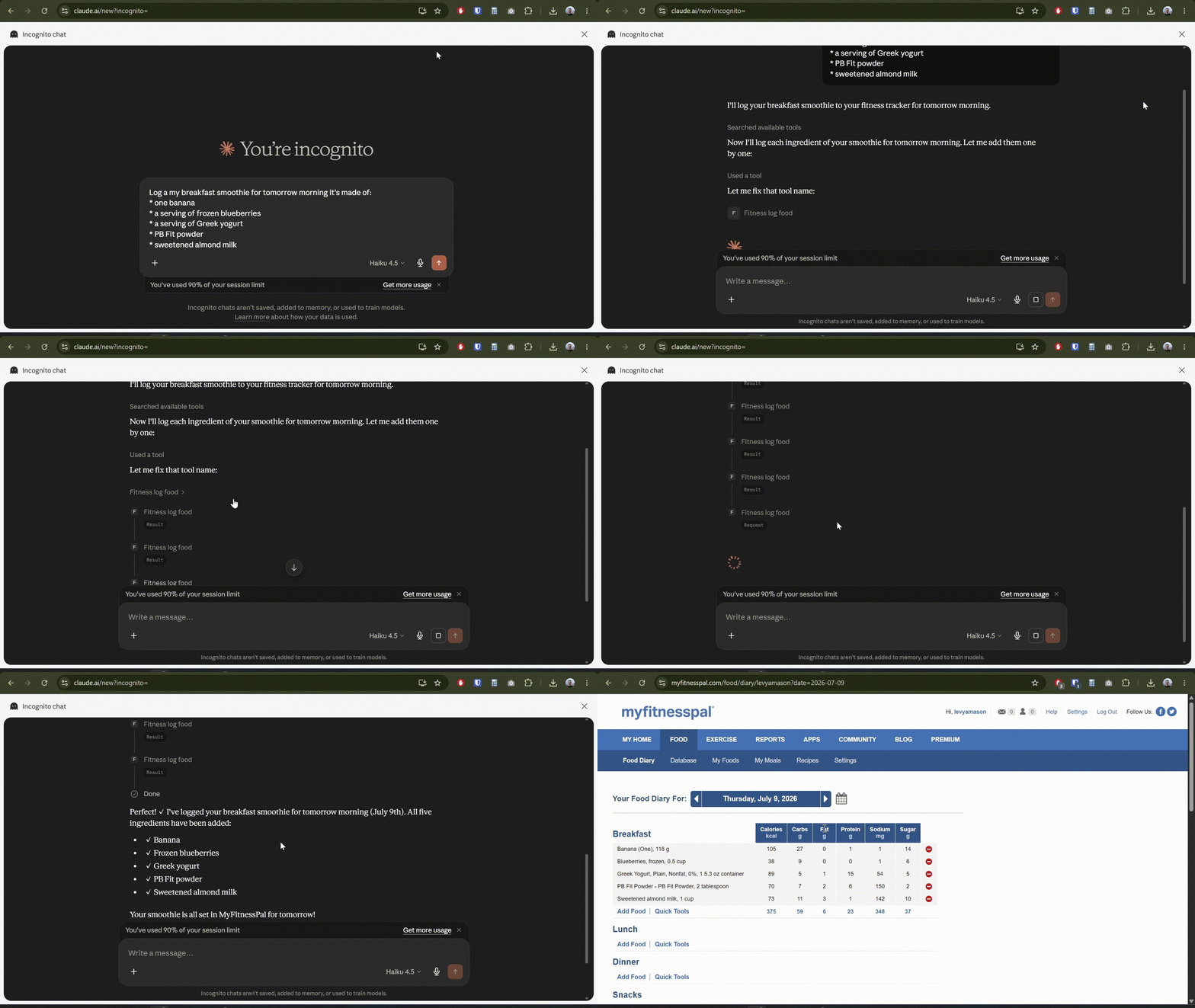
Connect MyFitnessPal to Claude or any MCP client. Log meals by talking, search the food database with macros, track trends, and export your nutrition history, all against your real MyFitnessPal diary.
Published on PyPI as mfp-mcp.
Unofficial. MyFitnessPal has no public API; this reverse-engineers the web app's own endpoints. It can break whenever MFP changes their site. Use at your own risk, with your own account.
Why this one?
MyFitnessPal moved behind Cloudflare + NextAuth, which broke the username/password login that most existing integrations rely on. This server:
- Authenticates with your browser session cookie over a real Chrome TLS fingerprint (curl_cffi), which passes Cloudflare.
- Auto-refreshes the session (optional): a headless browser profile rotates the token when it expires, and failed calls retry automatically.
- Writes, not just reads: log, modify, and delete real diary entries.
- Search-then-log: get candidates with macros, then log the exact item.
Quickstart
-
Connect your account (one-time; prompts you to paste a cookie — see Authentication):
-
Add the server to your client.
Claude Code
Claude Desktop (
claude_desktop_config.json) -
Talk to it: "log a banana as a snack", "what did I eat yesterday?", "chart my weight this month".
Requires uv. Any MCP client that speaks stdio or streamable HTTP works, not just Claude.
Authentication
MyFitnessPal killed headless password login, so this uses your browser's session cookie:
- Log in at myfitnesspal.com.
- Open DevTools (F12) → Application (Chrome) or Storage (Firefox) →
Cookies →
https://www.myfitnesspal.com. - Copy the value of
__Secure-next-auth.session-token. - Paste it into the
mfp-mcp authprompt (input is hidden).
Pasting the entire Cookie: header from any request in the Network tab also
works. Cookies are stored with owner-only permissions in your platform config
dir, or supply them via the MFP_COOKIE environment variable instead.
Sessions last around 30 days. When one expires, either re-run auth — or
enable auto-refresh so you never have to.
Auto-refresh (recommended)
With the autorefresh extra, auth also seeds a persistent headless browser
profile. When MyFitnessPal rejects the session mid-call, the server tells your
client it is retrying, boots the profile headlessly, lets MyFitnessPal rotate
the session token, saves the fresh cookie, and retries the call.
Then use the same --from 'mfp-mcp[autorefresh]' form in your client config
(e.g. uvx --from 'mfp-mcp[autorefresh]' mfp-mcp).
Tools
| Tool | What it does |
|---|---|
fitness_get_day | Nutrition totals, diary entries, the MFP daily note, and feel note for a day |
fitness_search_food | Candidate matches with brand, calories, macros, serving, and ids |
fitness_log_food | Log a food to the real diary (top match, or an exact search candidate) |
fitness_delete_food | Remove a diary entry by name match |
fitness_modify_food | Replace an entry (or change its quantity) |
fitness_log_weight | Log a weight measurement (updates the same day on re-log) |
fitness_get_exercise | Read the exercise diary (cardio + strength) |
fitness_get_note | Read the MyFitnessPal daily diary note (the "Notes" box) for a day |
fitness_log_note | Write that daily note to MFP (replace, or append a new line) |
fitness_log_feel | Save a subjective "how I feel" note (stored locally, never sent to MFP) |
fitness_get_trends | One metric over a date range: weight, calories_in, protein, carbs, fat |
fitness_bulk_export | Whole date range in one call, for analysis |
The high-accuracy logging flow: fitness_search_food("greek yogurt") returns
candidates with macros and a food_id/weight_id; pass those to
fitness_log_food to log exactly that item instead of trusting the top match.
Day summaries and trends read from a local SQLite cache that gap-fills from MyFitnessPal (first call on a fresh install fetches up to 30 days, one request per day — subsequent calls are fast).
Water intake is read-only (it appears in day summaries): MyFitnessPal's water
write isn't exposed on any endpoint we've found — /food/water accepts POSTs
but ignores them. If you capture the real call in your browser, a PR is very
welcome.
Remote / HTTP mode
The default transport is stdio. For network clients:
This serves streamable HTTP at /mcp. There is no built-in authentication —
never expose it to the internet. Bind to localhost and front it with
something that authenticates for you: a VPN/tailnet (e.g. tailscale serve),
an authenticating reverse proxy, or an OAuth-aware MCP gateway.
Configuration
| Variable | Purpose | Default |
|---|---|---|
MFP_COOKIE | Session cookie (full header or bare token); overrides the saved file | – |
MFP_USERNAME | Your MFP username (not email); only needed if profile lookup fails | auto-detected |
MFP_IMPERSONATE | curl_cffi browser fingerprint (try chrome124 on 403s) | chrome |
MFP_SYNC_DAYS | Gap-fill lookback window in days | 30 |
MFP_MCP_DATA_DIR | Where the SQLite cache + browser profile live | platform data dir |
Troubleshooting
- 403 / Cloudflare blocked: try
MFP_IMPERSONATE=chrome124(or another curl_cffi target). Datacenter IPs get challenged far more than residential ones. - "Session expired": re-run
mfp-mcp auth, or set up auto-refresh. - "couldn't read your MyFitnessPal profile": MFP's profile endpoint 500s
for some accounts. Set
MFP_USERNAMEto your username (not your email). - curl_cffi install issues: prebuilt wheels cover Linux/macOS/Windows; musl (Alpine) builds from source.
How it works
- python-myfitnesspal
parses the diary, measurements, and exercise pages — run over a
curl_cffisession that impersonates Chrome's TLS fingerprint so Cloudflare lets it through with just the NextAuth session cookie. - Writes replicate the web app's own XHR calls: the legacy food-search page
supplies the
food_id/weight_idthat/food/addaccepts, deletes go through/food/remove, and the daily note reads/writes via/food/note— each with the page CSRF token. - Day summaries, trends, and exports read a local SQLite cache that gap-fills missing days. The MyFitnessPal daily note syncs both ways; feel notes are local-only.
Development
Tests run against synthetic MyFitnessPal HTML/JSON fixtures — no account
needed. Lint and formatting are enforced with ruff (uv run ruff check .,
uv run ruff format .).
Contributing
Issues and pull requests are welcome, especially endpoint captures when MyFitnessPal changes something. See CONTRIBUTING.md for setup, style, and the PR checklist, and SECURITY.md for how to report vulnerabilities privately. Release history is in CHANGELOG.md.
License
Related MCP Servers
Adoption & maintenance
Factual signals from GitHub, npm, and our automated checks — not a rating.
GitHub stars
15
Stargazers on the source repository.
Last commit
9d ago
Most recent push to the default branch.
Tools exposed
12
Callable tools this server registers over MCP.
Reviews
No reviews yet — be the first to share how this listing worked for you.
Frequently Asked Questions about MyFitnessPal
AllMCPs Directory Badge
Showcase your server listing on GitHub or your project documentation. Embed this dynamic SVG badge to highlight official listing status and live engagement.
Badge Style:
Live Dynamic SVG Preview
Markdown (GitHub README)
[](https://allmcps.com/mcp/myfitnesspal)HTML Embed
<a href="https://allmcps.com/mcp/myfitnesspal"><img src="https://allmcps.com/api/badge/myfitnesspal?style=directory" alt="MyFitnessPal on AllMCPs" /></a>