mongodbdatabaseaggregationqueryreadonly
MCP server exposing MongoDB collections with schema inference, query, aggregation, and optional read-only mode.
Quick Install
Automated & IDE SetupCopy the AI prompt to install this server into Claude Code, Cursor, or another agent — or use 1-click editor setup below.
Not yet automatically verified
We haven't yet run this listing's install command through our automated sandbox check. This isn't a red flag — we're steadily working through the catalog.
Manual Client & Custom JSON ConfigExpand JSON ▾
Client Config & Setup
Choose your client or environment
Target File:
💡 Paste the JSON block into your client's configuration file under mcpServers, then restart the application.
Overview
Use cases
Query MongoDB collections using natural language via AI agents
Run aggregation pipelines with explain plans
Insert, update, and create indexes when not in read-only mode
Expose MongoDB data to AI clients locally or over HTTP
Convert timestamps and date strings for unambiguous queries
Key features
Automatic schema inference from document samples
Full query and aggregation pipeline support
Configurable ObjectId conversion modes
Read-only mode blocking all write operations
Progress reporting and cancellation for long operations
Two transport modes: stdio (local) and HTTP (remote)
Capabilities & Tool Schemas
Inspect callable tools, capabilities, and parameters exposed to AI agents by MCP Mongo Server.
Extracted Tool Capabilities
Automatic schema inference from document samples
Full query and aggregation pipeline support
Configurable ObjectId conversion modes
Read-only mode blocking all write operations
Progress reporting and cancellation for long operations
Two transport modes: stdio (local) and HTTP (remote)
Documentation Overview
MCP MongoDB Server



A Model Context Protocol (MCP) server that lets AI assistants work with your MongoDB databases. It exposes your collections, infers their schemas, and runs queries, aggregations, and writes through a standard interface — so tools like Claude Desktop and Cursor can read and reason about your data.
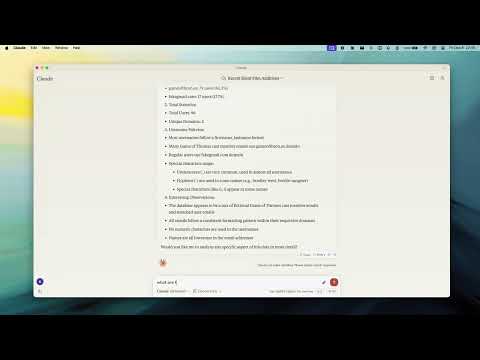
Demo
Why use it
- Talk to your database in plain language — the assistant discovers your collections and their shape automatically.
- Safe by default — turn on read-only mode to let an assistant explore without any risk of changing data.
- Works everywhere — connects to standalone, replica set, sharded, and Atlas deployments, over plain or TLS connections.
Key Features
- Read-Only Mode — blocks every write path (insert, update, index creation, and aggregation stages like
$out/$mergethat could modify data). - Smart ObjectId Handling — configurable
auto/none/forceconversion of 24-character hex strings to ObjectIds. - Schema Inference — automatic collection schema detection from document samples.
- Query & Aggregation — full query and aggregation pipeline support, with optional
explainplans. - Write Operations — insert, update, and index creation (when read-only mode is off).
- Time Conversion — a
convertTimehelper turns Unix timestamps and date strings into UTC/GMT/ISO, so date queries stay unambiguous across timezones. - Progress & Cancellation — long operations report progress and can be cancelled mid-flight.
- Two Transports — run locally over stdio, or expose an HTTP endpoint for remote access.
Requirements
- Node.js 20 or newer
Quick Start
Point the server at your database — no install step needed:
Explore safely, without any chance of changing data:
Usage
Local (stdio)
This is the default, used by Claude Desktop, Cursor, and other local clients:
Remote (HTTP)
Expose an HTTP endpoint at /mcp for remote or multi-client access:
By default, only requests without a browser Origin (CLIs, IDEs) and requests
from localhost are accepted; everything else is rejected with 403 to guard
against DNS-rebinding attacks. Allow specific browser origins with
--allowed-origins:
Options
| Flag | Description |
|---|---|
--read-only, -r | Block all write operations |
--allow-cross-db | Allow aggregation $out/$merge/$lookup to target other databases (off by default) |
--allow-server-js | Allow server-side JavaScript operators $function/$where/$accumulator (off by default) |
--transport, -t | stdio (default) or http |
--port, -p | HTTP port (default 3001) |
--allowed-origins | Comma-separated browser origins to allow in HTTP mode |
--json-limit | Max HTTP request body size (default 10mb) |
--auth-token | Require Authorization: Bearer <token> on the HTTP endpoint |
Environment Variables
| Variable | Description |
|---|---|
MCP_MONGODB_URI | MongoDB connection URI (alternative to the argument) |
MCP_MONGODB_READONLY | Enable read-only mode ("true") |
MCP_MONGODB_ALLOW_CROSS_DB | Allow cross-database aggregation stages ("true") |
MCP_MONGODB_ALLOW_SERVER_JS | Allow server-side JavaScript operators ("true") |
MCP_PORT | HTTP port |
MCP_HTTP_ALLOWED_ORIGINS | Comma-separated browser origins to allow in HTTP mode |
MCP_HTTP_JSON_LIMIT | Max HTTP request body size (default 10mb) |
MCP_HTTP_AUTH_TOKEN | Bearer token required to access the HTTP endpoint |
Security
Database scope. The server operates on the database in your connection
string. Aggregation stages that reach another database ($out, $merge,
$lookup with an explicit db) are rejected by default, so a pipeline can't
quietly read from or write to databases you didn't point it at. Enable them
with --allow-cross-db if you need them.
Server-side JavaScript. The aggregation operators $function, $where,
and $accumulator run arbitrary JavaScript on the MongoDB server. They are
rejected by default; enable them with --allow-server-js if you trust the
pipelines being run.
Read-only mode blocks every write path, including aggregation stages that
write or run server-side JavaScript ($out, $merge, $function, $where,
$accumulator).
Least privilege. Application-level checks only go so far — the strongest guarantee comes from the database. Connect with a MongoDB user scoped to just the database you need, with read-only permissions when the assistant only needs to explore. That way the database itself enforces the boundary, as defense in depth.
Documentation
- Integration Guide — Claude Desktop, Windsurf, Cursor, Docker
- Available Tools — query, aggregate, update, insert, and more
- Development — setup, scripts, and debugging
- Contributing
License
MIT — see LICENSE for details.
Related MCP Servers
Adoption & maintenance
Factual signals from GitHub, npm, and our automated checks — not a rating.
GitHub stars
284
Stargazers on the source repository.
npm downloads
1.1k
Package downloads in the last 30 days.
Last commit
1mo ago
Most recent push to the default branch.
Directory activity
2 views
Config copies, upvotes, and views on AllMCPs.
Reviews
No reviews yet — be the first to share how this listing worked for you.
Frequently Asked Questions about MCP Mongo Server
AllMCPs Directory Badge
Showcase your server listing on GitHub or your project documentation. Embed this dynamic SVG badge to highlight official listing status and live engagement.
Badge Style:
Live Dynamic SVG Preview
Markdown (GitHub README)
[](https://allmcps.com/mcp/kiliczsh-mcp-mongo-server)HTML Embed
<a href="https://allmcps.com/mcp/kiliczsh-mcp-mongo-server"><img src="https://allmcps.com/api/badge/kiliczsh-mcp-mongo-server?style=directory" alt="MCP Mongo Server on AllMCPs" /></a>Technical Specs & Signals
CategoryDatabases
PricingFree
10/10 checks healthy over the last 31d
47Quality signal: Fair · 47/100How this signal is calculated ▾
Server availabilityNot measured
Not scored for repo-hosted servers — we can't reach the running server, only its GitHub page. Hosted MCP endpoints are health-checked live.
Verified ownership10/20
Documentation & tools15/30
Adoption & activity10/15
Community engagement0/10
A guidance signal from public completeness & health data — not a user rating. New listings start lower and rise as they add docs, get verified, and grow adoption. Signals we can't observe for a listing are skipped, not counted against it.
Supply-chain signal
No high-severity advisories surfaced by our automated scan.
Critical 0High 0Medium 0Low 0
Scanned 23d ago via OSV.dev · mcp-mongo-server (npm)
Own this project?
This directory is pre-filled from public sources. Claim via GitHub README, site badge, or DNS TXT to unlock edit access and the Official badge — proof is checked automatically, then reviewed by our team.
Free dofollow backlink: add your website and place the AllMCPs badge on it — no claim needed. We detect it automatically and keep it verified as long as the badge stays live.
Claim & get free dofollowShare & Embed
Add our SVG badge (dark/light directory styles) or embeddable widget to your site.