Mockit MCP README
The full upstream README, mirrored here for reference. Install config, tool schemas, adoption signals, and an original overview live on the Mockit MCP listing page.
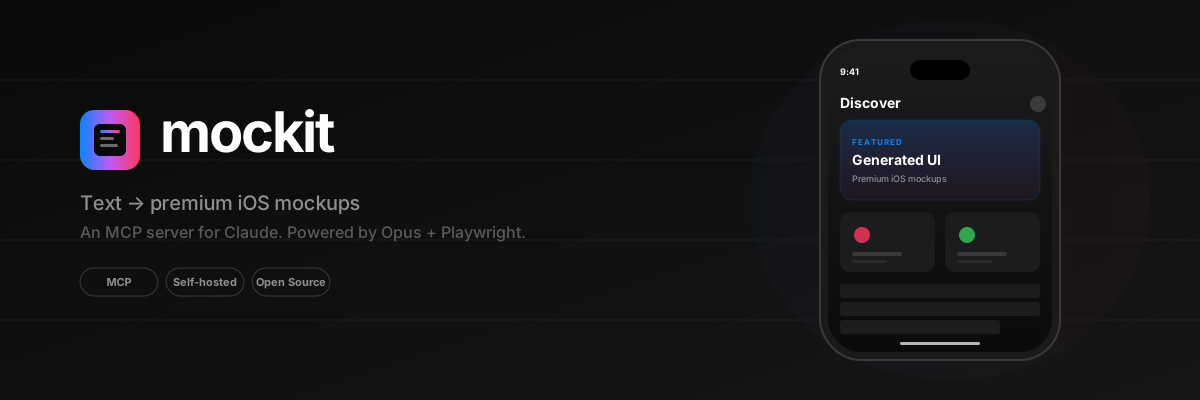
mockit-mcp
Turn text prompts into premium iOS mobile UI mockups.
An MCP server that pairs Claude (Opus 4.7 by default) with a Playwright renderer to generate screenshot-grade mobile app designs from natural language.









What it does
Ask Claude Code (or any MCP client):
Design the home dashboard for a fitness tracker. Three concentric activity rings, weekly bar chart, recent workouts list, premium dark mode with neon accents.
mockit-mcp returns a real PNG mockup (sized 390×844 at 2x device scale, an iPhone-class viewport) and the underlying HTML/Tailwind source — so you can iterate visually and port to SwiftUI when you're ready to build.
It's not a static template engine and it's not generic AI slop. The system prompt is hand-tuned for premium iOS aesthetics: real content, SVG icons (no emoji), tasteful gradients in place of stock photos, iOS HIG type scale, and tonal layering instead of heavy shadows.
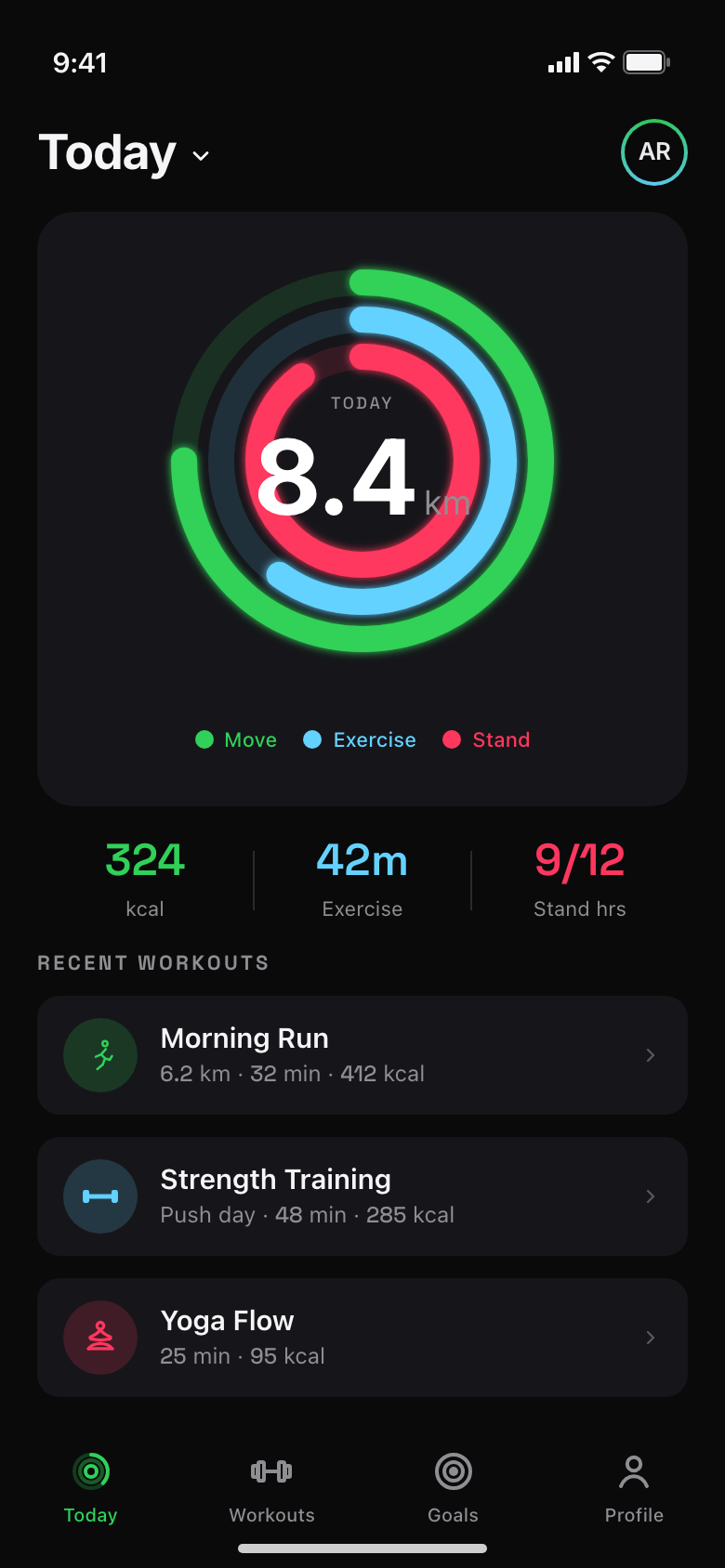 Fitness dashboard | 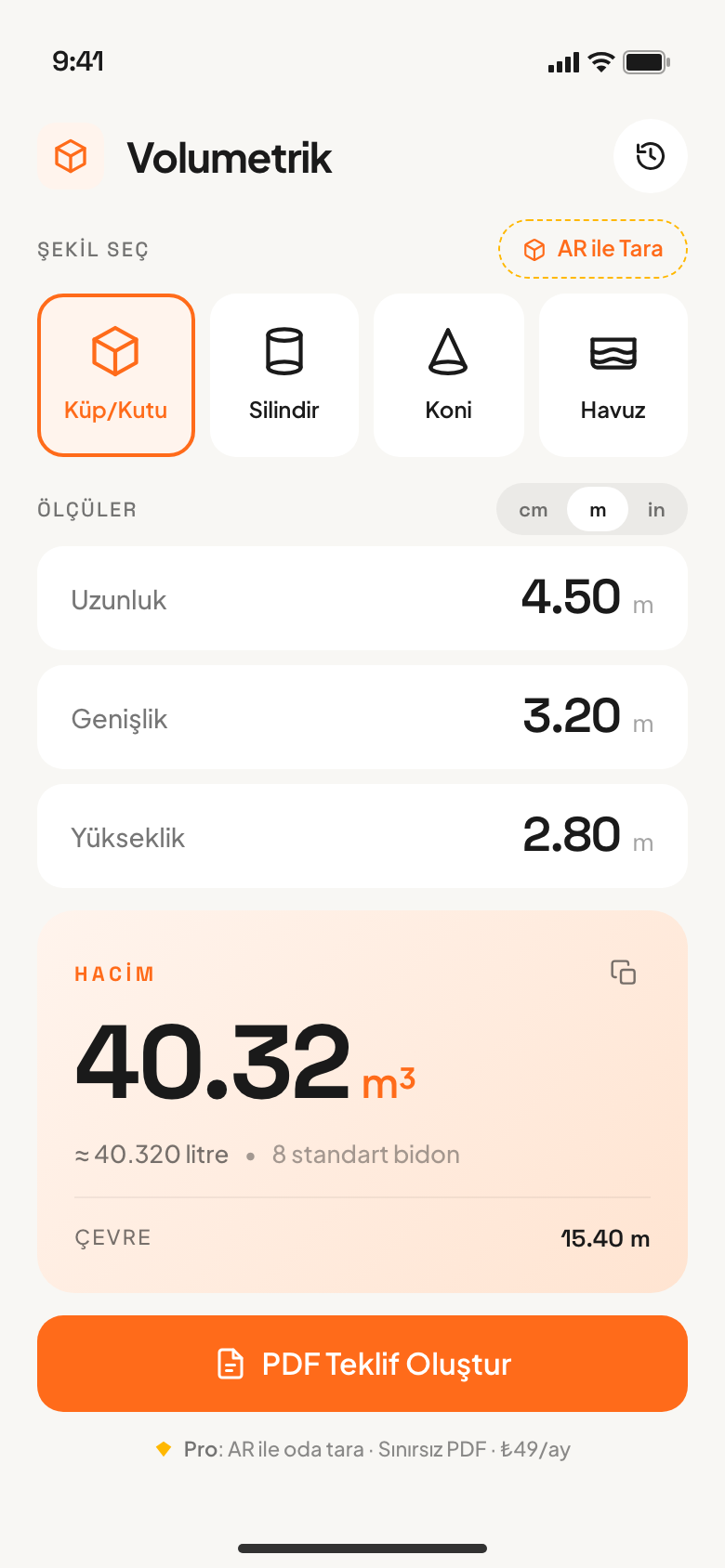 Volume calculator (Turkish) |
Generated from a single prompt each. See examples/.
Highlights
- Two backends, same tools. Use the local
claudeCLI (subscription, $0 extra) or the Anthropic API (key + per-call pricing). Switch with one env var. - Real PNG output. Headless Chromium via Playwright. Default viewport is 390×844 @2x (iPhone-class); any custom size is one env var away.
- Iterative refinement.
iterate_screentakes a screen ID + feedback ("make the hero card smaller") and produces a new version, tracking parent/child. - Disk-backed library. Every generation saves HTML + PNG + JSON metadata. Browse, filter, re-export.
- MCP standard. Works with Claude Code, Claude Desktop, Cursor, Windsurf, or any MCP client.
- Stdio + HTTP transports. Run locally for dev, or as a network service for shared / containerized use.
Tools
| Tool | Description |
|---|---|
generate_screen | Text brief → PNG + HTML. Optional design_system and project fields. |
iterate_screen | Take a previous screen_id + feedback string, produce a new version. |
list_screens | List screens, optionally filtered by project. |
get_screen | Fetch metadata (or full HTML) for a specific screen. |
Install
Prerequisites
- Node.js 20+
- Either the
claudeCLI logged in (clibackend, default) or an Anthropic API key (apibackend) - Playwright's Chromium download (~170 MB, one-time)
Quick start (CLI backend, recommended for local dev)
Add to Claude Code:
Done. No API key needed — it uses your existing claude CLI session.
API backend (no claude CLI on host)
Docker (HTTP transport, for shared deployment)
By default docker-compose.yml binds the HTTP port to 127.0.0.1 only and the server requires MCP_HTTP_TOKEN for any non-loopback request. Don't expose this server to a public network without setting a strong MCP_HTTP_TOKEN — every generation hits your Anthropic API key.
Then point any client at the loopback URL:
For remote access, change docker-compose.yml's port binding to 0.0.0.0:7821:7821 and ensure MCP_HTTP_TOKEN is set — the server refuses to start otherwise.
Usage
In any MCP client, just ask:
Design a fitness tracker dashboard. Show today's ring progress, a weekly chart, and a list of recent workouts. Dark mode, neon green accent.
The PNG appears inline. The HTML is saved to designs/{project}/{name}-{id}.html.
For follow-ups:
iterate_screen on that fitness dashboard — replace the chart with heart-rate over time, and add a "share workout" button below.
See examples/ for prompt patterns and full outputs.
Configuration
All optional. See .env.example for the full list.
| Env | Default | Notes |
|---|---|---|
CLAUDE_BACKEND | cli | cli uses the claude CLI; api uses Anthropic SDK directly |
ANTHROPIC_API_KEY | — | Required only for api backend |
ANTHROPIC_MODEL | claude-opus-4-7 | API backend only. If your account doesn't have Opus access, set to claude-sonnet-4-6 or claude-haiku-4-5 |
CLAUDE_CLI_PATH | claude | Path to the claude binary |
CLAUDE_CLI_TIMEOUT_MS | 180000 | Subprocess timeout |
MCP_TRANSPORT | stdio | stdio or http |
HTTP_PORT | 7821 | HTTP transport port |
HTTP_HOST | 127.0.0.1 | Bind interface; non-loopback requires MCP_HTTP_TOKEN |
MCP_HTTP_TOKEN | — | Bearer token for HTTP auth. Required if HTTP_HOST is non-loopback |
DESIGNS_DIR | ./designs | Where outputs are persisted |
VIEWPORT_WIDTH | 390 | Render width in CSS pixels |
VIEWPORT_HEIGHT | 844 | Render height in CSS pixels |
DEVICE_SCALE | 2 | Retina factor (final PNG is WIDTH × DEVICE_SCALE wide) |
PLAYWRIGHT_NO_SANDBOX | auto | auto = sandbox enabled outside containers; true to force-disable, false to force-enable. Disabling reduces isolation against malicious model HTML — only do so inside a container. |
Cost
Per generation: ~3K input tokens (system prompt) + ~6–12K output tokens depending on screen complexity. Output dominates the cost on Opus.
| Backend | First call | Cached follow-up |
|---|---|---|
cli | counts against your Claude Code subscription quota | same — cache only discounts the system prompt |
api | ~$0.50–0.95 (Opus 4.7) | ~$0.45–0.90 (cache discounts the system-prompt input only; output cost is unchanged) |
System-prompt caching is on by default (5-minute TTL). It saves a few cents per call but is not an order-of-magnitude discount — output tokens still bill at full rate. For real cost reduction, switch to a smaller model (claude-sonnet-4-6 or claude-haiku-4-5).
Architecture
Storage layout
Documentation
Reference and guides live in docs/:
| Topic | Page |
|---|---|
| Install, first generation, verify | Getting Started |
| Every env var, defaults, what they do | Configuration |
| The four MCP tools — schemas, examples | Tools Reference |
| Pipeline end-to-end | Architecture |
| Local, Docker, networked deployments | Deployment |
| Sandbox, network allowlist, HTTP auth | Security |
| How the design voice is encoded | System Prompt |
| Common errors and how to fix them | Troubleshooting |
Tuning the design voice
The hand-tuned system prompt lives in src/system-prompt.ts. It's where the iOS HIG enforcement, the no-stock-photo rule, the SF Pro fallback chain, and the editorial typography preferences are encoded. Want Material You instead, or a desktop dashboard voice? Edit it.
Development
Roadmap
- Watch / iPad / Android viewport presets
- Multi-screen flow generation (onboarding sequences)
- HTML → SwiftUI / Jetpack Compose port tool
- Design system import (Tailwind config, design tokens)
- Image references (use
--imagefor visual inspiration) - Variant generation (3-5 alternatives per prompt)
Contributing
Issues and PRs welcome — see CONTRIBUTING.md.
License
Acknowledgements
Built on top of:
- Anthropic Claude — the model that does the heavy lifting
- Model Context Protocol — the integration standard
- Playwright — the renderer
- Tailwind CSS — via CDN, in every generated screen
Trademarks
iPhone, iPad, Apple Watch, and iOS are trademarks of Apple Inc. Claude is a trademark of Anthropic, PBC. mockit-mcp is an independent open-source project and is not affiliated with, endorsed by, or sponsored by Apple Inc. or Anthropic, PBC. All other product names, logos, and brands are property of their respective owners.