Fail-closed deterministic checks and hash-chained receipts for AI agent outputs via MCP.
Quick Install
Automated & IDE SetupCopy the AI prompt to install this server into Claude Code, Cursor, or another agent — or use 1-click editor setup below.
Manual Client & Custom JSON ConfigExpand JSON ▾
Client Config & Setup
Choose your client or environment
Target File:
💡 Paste the JSON block into your client's configuration file under mcpServers, then restart the application.
Documentation Overview
HaltProof
Emergency-shutdown orchestration for Slurm, Kubernetes, and IPMI clusters, with an Ed25519-signed, hash-chained attestation record of exactly what ran.


Signed, dry-run-by-default shutdown orchestration for Slurm, Kubernetes, and IPMI clusters, with a tamper-evident audit trail.
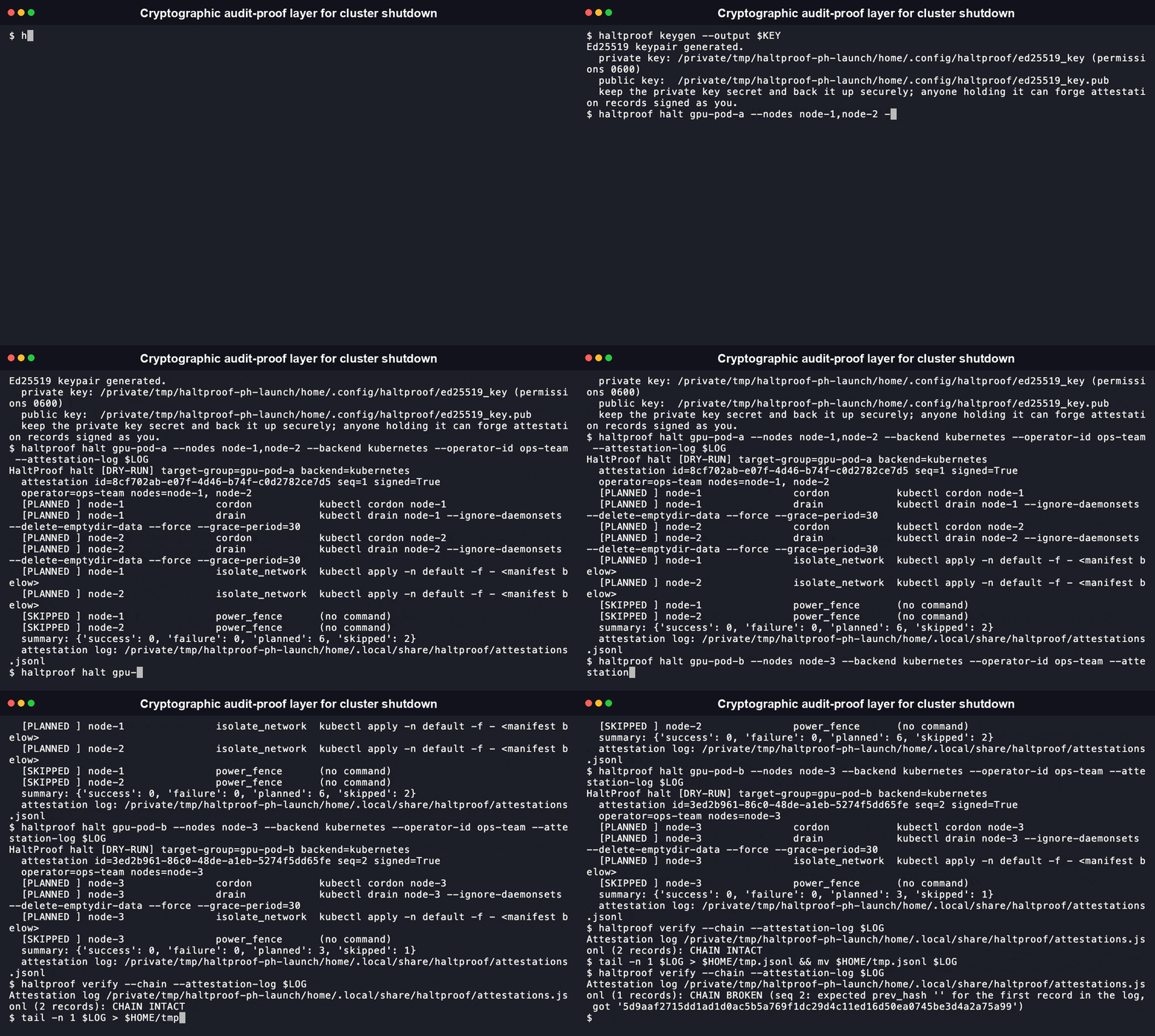
HaltProof is an emergency-shutdown orchestration and cryptographic audit-proof layer for compute clusters. It does not implement a new low-level shutdown mechanism. It coordinates cluster primitives you already trust (Slurm, Kubernetes, IPMI/BMC) and produces a signed, tamper-evident record of exactly what was targeted, what ran, and who authorized it.
(Full install options, including the npm wrapper, are in Install below.)
Why
Operators already have the tools to drain a Slurm partition, cordon a Kubernetes node pool, or power-fence a physical host over IPMI. What's usually missing is:
- One consistent interface across those tools during an incident, instead of three different command sets under pressure.
- A dry-run-by-default safety rail, so a mistyped target group doesn't take down the wrong nodes.
- A signed, tamper-evident record of what happened: who ran it, what commands were issued, against which nodes, whether each step succeeded, and whether the record itself has been altered or has a piece missing.
HaltProof is that layer. It calls out to scontrol, kubectl, and
ipmitool (or mcp-invokable equivalents) and wraps every invocation in an
Ed25519-signed, hash-chained attestation.
Install
An npm wrapper is also published for Node.js-based tooling and agent runtimes:
[!WARNING] The npm package requires the Python
haltproof-clipackage to already be installed and onPATH. It is a thinexecFileSyncwrapper, not a reimplementation. If it can't find the Python CLI, it prints an actionable error and exits non-zero rather than silently doing something else.
Table of Contents
- Features
- Quickstart
- Commands
- Architecture
- Security model
- MCP server (for AI agents)
- Comparison
- What Is HaltProof, and Why Does It Exist
- FAQ
- Contributing
- License
Features
- Dry-run required by default.
haltproof haltprints exactly which commands it would run, against which nodes, and still writes a signed attestation of that plan, unless you pass--confirm. The gate lives at a single chokepoint (haltproof.backends.runner.run_step) that all three backends route through, so it can't be quietly bypassed by one backend's code path. - One interface across three real backends.
kubernetes(viakubectl),slurm(viascontrol), andipmi(viaipmitool) each implement the same four-operationClusterBackendinterface:drain,isolate_network,power_fence,status. A backend that doesn't support an operation, for example Kubernetes has no physical power-fencing primitive, returns aSKIPPEDresult with an explanation instead of raising, so a halt across a mixed environment still produces one complete attestation. - Ed25519-signed, hash-chained attestations. Every halt, dry-run or executed, appends one signed record to a local append-only NDJSON log. Each record embeds
prev_hash, the content hash of the record before it, sohaltproof verify --chaincan catch a deleted or reordered entry that a single record's own signature check would miss. - Structured output on every command.
--json(or--format json) is available onhalt,verify,status, andkeygen, so a script or an agent can parse the result without screen-scraping human-formatted text. - A real MCP server, built for agents.
haltproof mcp-serverexposeshalt,verify,verify_chain,status, andkeygenas MCP tools over stdio, built on the officialmcpPython SDK. It calls the samehaltproof.corefunctions the CLI calls, so an agent invoking the MCP tool gets the identical dry-run-by-default behavior a human gets from the CLI. - Tested. 76 tests, 90% overall line coverage, run and confirmed in this audit with
pytest -v --cov=haltproof --cov-report=term-missing. Backend tests mocksubprocesscalls; none of them require a real cluster.
Quickstart
[!IMPORTANT]
haltproof haltis a no-op without--confirm. It prints the plan and writes a signed dry-run attestation, but nothing destructive runs until you pass--confirmexplicitly.
Every command also supports --json for agent-parseable output:
Config file (optional)
Target groups, the preferred backend, and default paths can live in a haltproof.toml file (checked in the current directory, then ~/.config/haltproof/config.toml, or at a path given by --config / HALTPROOF_CONFIG):
Every config value has a matching CLI flag, and an explicit flag always wins over the config file.
Commands
Reference below is regenerated from the CLI's actual --help output.
haltproof halt TARGET_GROUP
Drain, isolate, and power-fence TARGET_GROUP. Dry-run is the default; nothing destructive runs without --confirm.
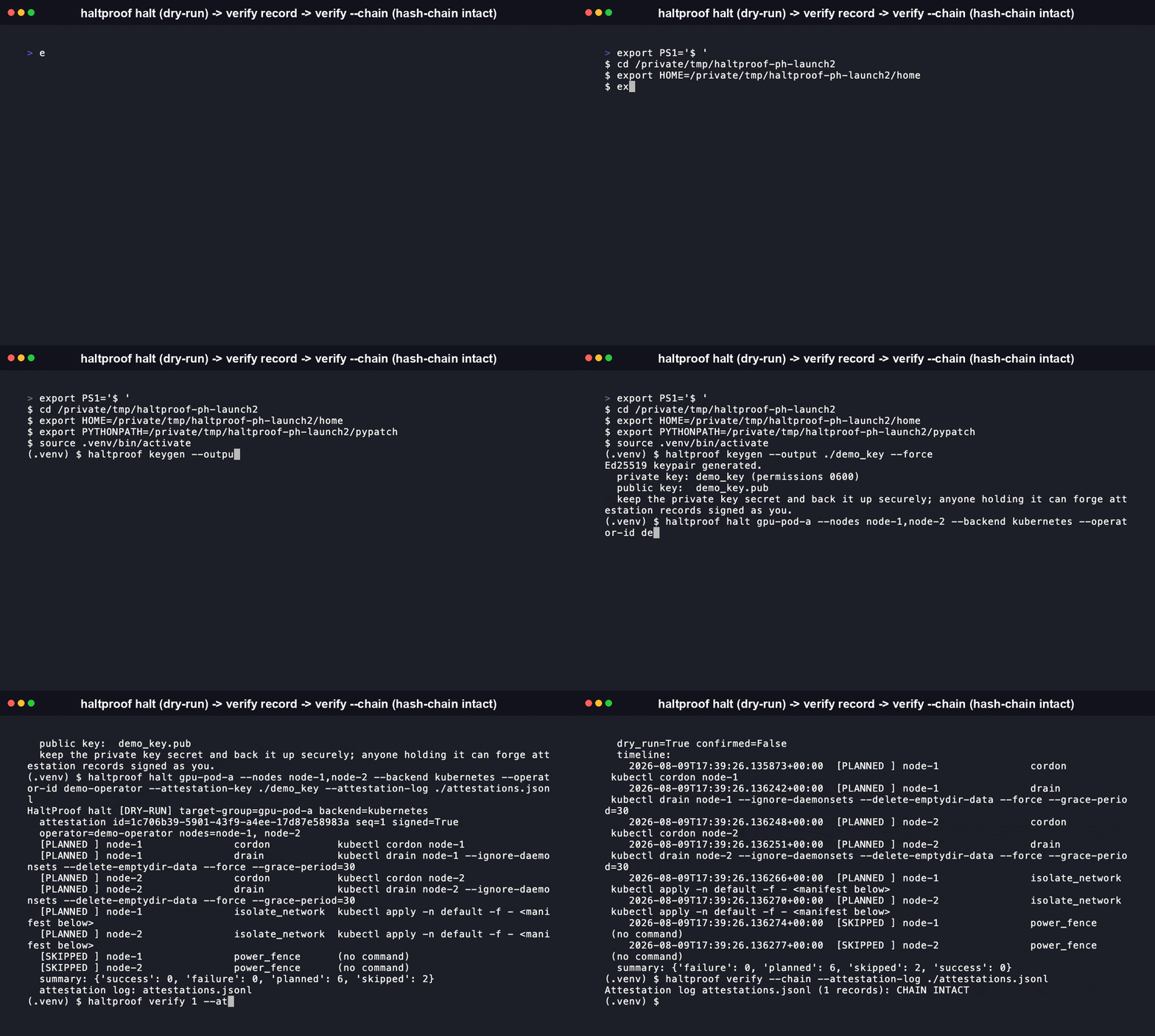
haltproof verify [ATTESTATION_REF]
Verify one attestation record's signature, or an entire log's hash chain. ATTESTATION_REF is a path to a record file, or an attestation id / sequence number to look up in the log. Pass --chain instead of ATTESTATION_REF to verify a whole --attestation-log: every record's signature holds, and none has been deleted or reordered.
| Flag | Description |
|---|---|
--attestation-log TEXT | Log to search when ATTESTATION_REF is an id/sequence number, or to verify with --chain. |
--trusted-key TEXT | Path to a trusted Ed25519 public key; if given, the record's signing key must match it. |
--chain | Verify the full hash chain of --attestation-log instead of a single record. |
--format [human|json] | Output format. |
--json | Shorthand for --format=json. |
haltproof status
Show backend auto-detection results and, optionally, target-group health.
| Flag | Description |
|---|---|
--backend TEXT | Backend to check status for; defaults to the auto-detected/configured backend. |
--nodes TEXT | Comma-separated node list to report health for. |
--group TEXT | Named target group (from config) to report health for. |
--config TEXT | Path to a haltproof.toml config file. |
--format [human|json] | Output format. |
--json | Shorthand for --format=json. |
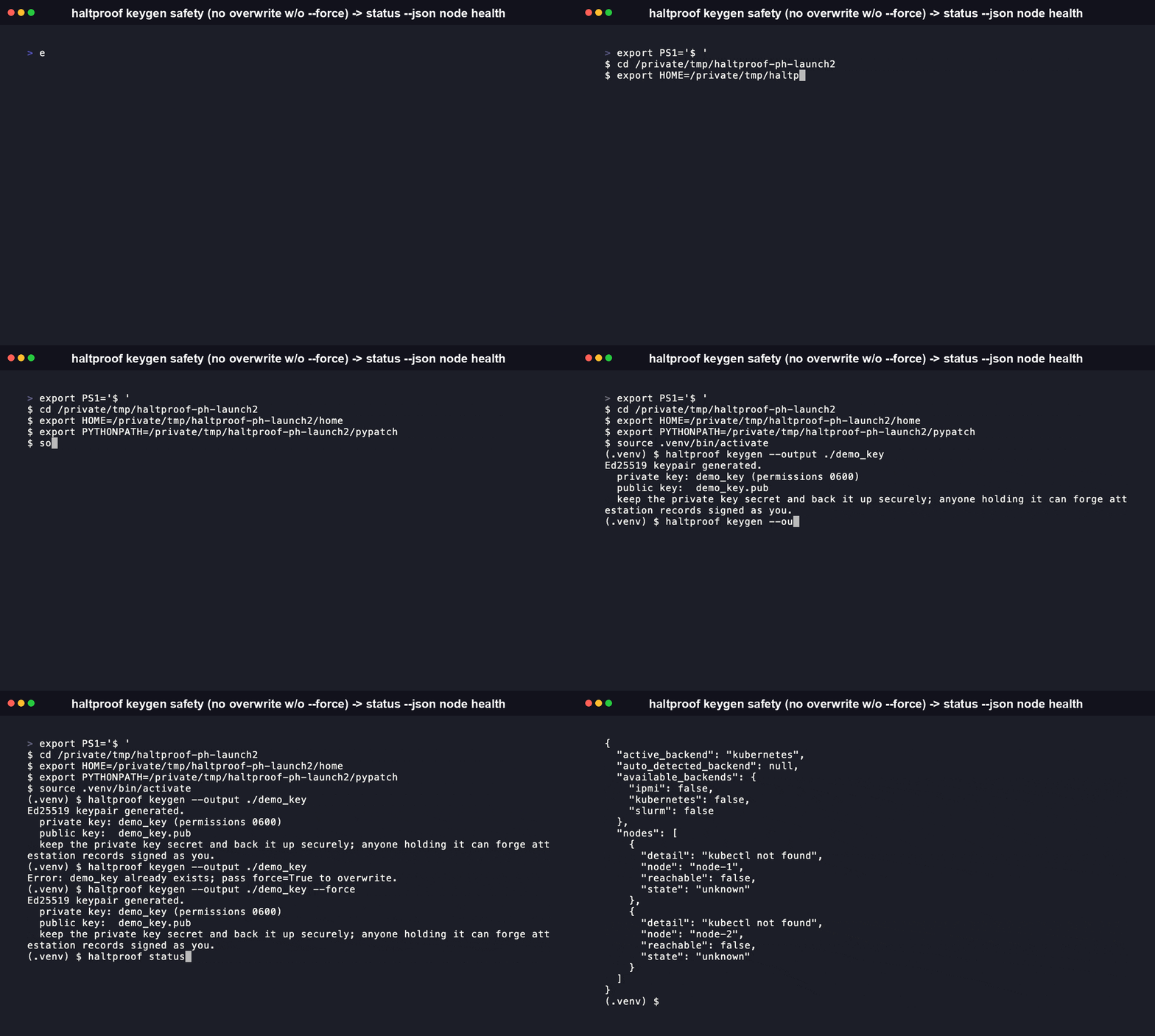
haltproof keygen
Generate an Ed25519 keypair for attestation signing. The private key is written with 0600 permissions and is never printed or logged.
haltproof mcp-server
Related MCP Servers
Reviews
No reviews yet — be the first to share how this listing worked for you.
Frequently Asked Questions about Haltproof
AllMCPs Directory Badge
Showcase your server listing on GitHub or your project documentation. Embed this dynamic SVG badge to highlight official listing status and live engagement.
Badge Style:
Live Dynamic SVG Preview
Markdown (GitHub README)
[](https://allmcps.com/mcp/haltproof)HTML Embed
<a href="https://allmcps.com/mcp/haltproof"><img src="https://allmcps.com/api/badge/haltproof?style=directory" alt="Haltproof on AllMCPs" /></a>