Gate README
The full upstream README, mirrored here for reference. Install config, tool schemas, adoption signals, and an original overview live on the Gate listing page.
gate
One ship/no-ship verdict from your whole nugehs toolchain.


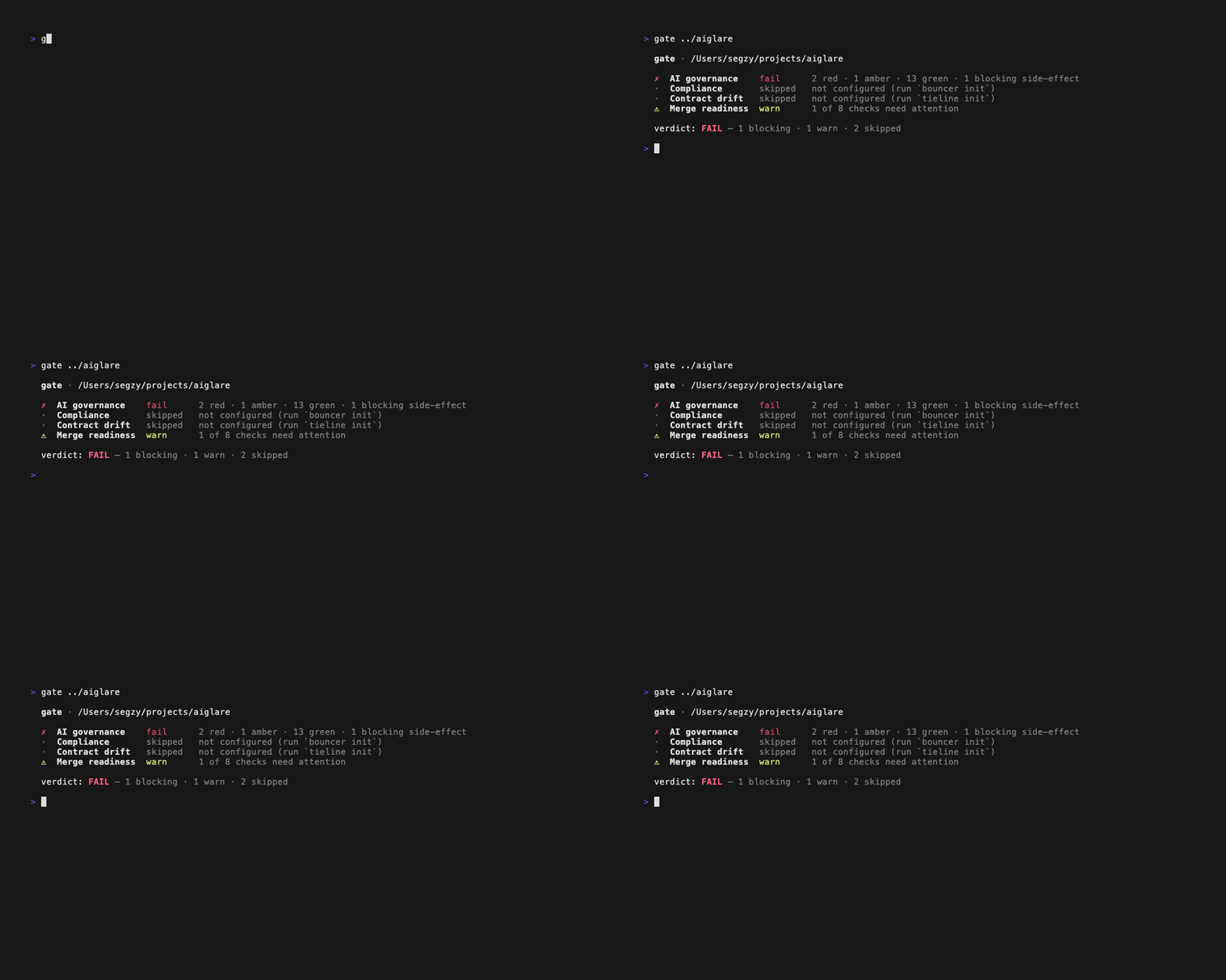
gate runs aiglare,
bouncer,
tieline and
repoctx against a repo and
merges their four dialects into one normalized verdict. Each tool already
answers a different "can this ship?" question — gate is the place they finally
agree on the answer.
What it reports
Each tool's native result is normalized onto one status vocabulary:
| Status | Meaning |
|---|---|
pass | the check ran and is clean |
warn | ran, found something worth a look — not blocking |
fail | ran, found a blocking problem |
unknown | ran, but couldn't determine — explicitly not a pass |
skipped | not applicable / not configured for this repo |
error | the tool couldn't be run, or returned garbage |
The top-level verdict is the worst across the domains that actually ran
(skipped never counts). unknown and error roll up to warn so nothing
slips through as a silent pass.
How each dialect maps
| Tool | Native signal | → gate |
|---|---|---|
| aiglare | a red surface on a side-effectful sink | fail; any red/amber → warn |
| bouncer | a fail finding (missing required control) | fail; any unknown control → unknown |
| tieline | drift > 0 (FE call with no BE route) | fail; unverifiable > 0 → warn |
| repoctx | FAIL/BLOCK merge verdict | fail; WARN → warn |
gate runs aiglare without
--ciand derives the blocking verdict itself, so a tool thatprocess.exit()s before flushing its pipe can't truncate the report it feeds us.
A run that checked nothing is not a pass. If every domain is skipped or
deselected (e.g. --skip them all, or a typo'd --only), gate reports NO
CHECKS RAN (ok:false) and fails under --ci — a misconfiguration can't
silently turn the gate green.
On repoctx + local mode. repoctx's merge-readiness gate can only verify
review state (approvals, CODEOWNERS, required checks) against a host like
GitHub. Run locally it reports those as a WARN, so on a clean local repo gate
will often show merge readiness: warn. That's repoctx being honest about what
it can't see locally — not a problem with your change.
CLI
By default only a fail verdict blocks under --ci — safe to adopt without
drowning a team in warnings. Add --strict when you want warnings to gate too.
Tool resolution
gate doesn't bundle the four tools; it finds each one at runtime. Per tool, first hit wins:
GATE_<TOOL>_BINenvironment variable (explicit override)- the installed
@nugehs/<tool>package (fromnode_modules) - a sibling checkout at
../<tool>(local development)
A tool that can't be resolved is reported as skipped, never a hard failure —
so gate is safe to run in a repo that only uses some of the toolchain.
In CI
For a machine-readable record, --json emits the full verdict (schema version,
per-domain results, counts, and the blocking reasons) for dashboards or audit
evidence.
MCP
gate is also an MCP server, so an agent can ask "can this ship?" in one call — the unified verdict, not four separate tools.
Tools:
| Tool | Returns |
|---|---|
gate_check | the unified verdict for a repo (path, optional only/skip/ci/strict) |
list_checks | the four checks gate runs, each with its domain and what it answers |
Registry manifest: server.json (io.github.nugehs/gate).
Editor extension
The same normalized verdict drives a VS Code / Cursor extension
(clients/vscode) — the gates, shifted left from CI into the
editor:
- a verdict cockpit and a checks tree in gate's own Activity Bar container;
- inline diagnostics, hovers, Quick Fixes (mute / open docs) and CodeLens on located findings;
- AI-native gating — an
@gatechat participant, agate_checktool agent mode can call before it says "done", and an MCP server provider — so the assistant writing the code is checked by the same gate as CI; - debounced run-on-save with in-flight cancellation, and multi-root support.
Roadmap
gate is the shared spine. The same JSON already drives the CLI, the --ci gate,
the MCP server, and the editor extension above. Next client on the same JSON:
- Web cockpit — a repo/PR verdict board over the JSON, unifying the four
*-websites.
License
MIT © Oluwasegun Olumbe