Gadschain README
The full upstream README, mirrored here for reference. Install config, tool schemas, adoption signals, and an original overview live on the Gadschain listing page.
GadsChain
The AI layer between your Google Ads account and your marketing decisions.
Battle-tested. Six tools cover the daily-ops loop — campaign listing, search-term review, budget tuning, pause/enable, and negative-keyword grooming. All responses are strict Pydantic models. No raw protobuf reaches the agent.
☁️ Moving to production?
The open-source server runs locally with your own API keys. For hosted infrastructure with multi-account failover, SLA guarantees, and webhook alerts — join the managed cloud waitlist.
The Problem
Raw Google Ads API returns thousands of rows. One bad campaign structure bleeds budget silently. GadsChain reads, sanitizes, and acts on your ad data before waste compounds.
Installation
Or with Docker:
Configuration
Usage
Three example prompts to send to Claude (or any MCP-compatible agent):
Use get_campaigns to show me which campaigns are bleeding budget this monthRun get_search_terms for the last 30 days and tell me which queries are wasting spendAdd "free", "cheap", "jobs" as negative keywords to campaign 12345
Run it in two terminals
How it works
Three layers between raw Google Ads output and your model:
- Fetch: Targeted GAQL queries — only the columns the daily-ops loop actually needs. No
SELECT *, no protobuf pagination footguns. - Transform: Currency micros divided to dollars, CTR scaled to percent, enums to human strings, every nested attribute lookup tolerates missing fields without crashing.
- Act: Mutations route through guard rails —
REMOVEDblocked on status changes, shared budgets refused (shared_budget_refused), match types validated before any mutate call. The agent never gets an exception; it gets a structured{"error": ..., "message": ...}it can reason about.
Real numbers from a live Franka Pizzeria account (28-day window)
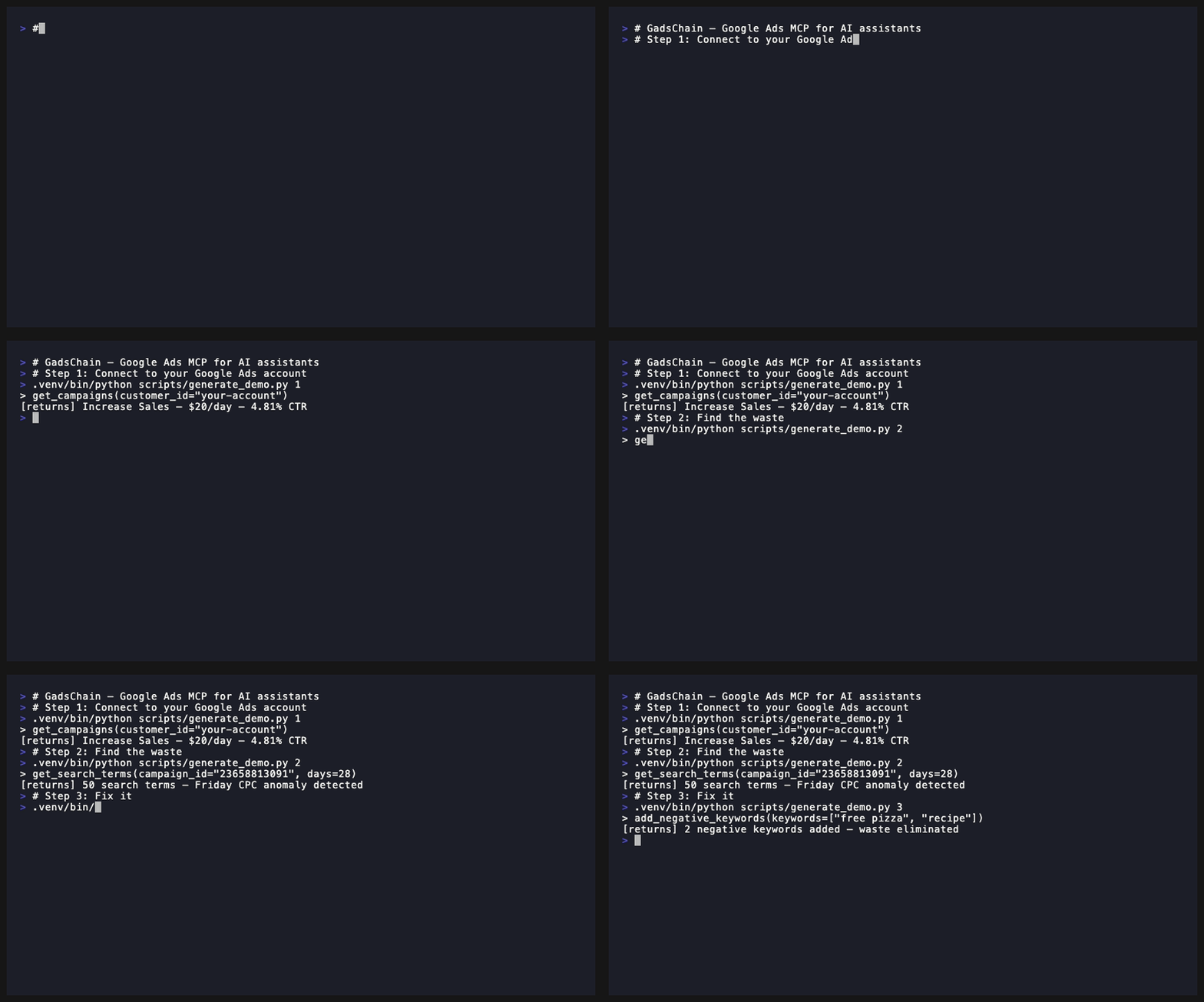
In one read of a real account, GadsChain surfaced $51.41 spent over 28 days for 3 conversions at $17.14 each — a 1.84% conversion rate hidden inside a 4.81% CTR that looks healthy on paper. The Display Network was the silent culprit, with Friday clicks averaging $0.11 CPC vs the $0.44 search-side average — cheap junk traffic inflating CTR while contributing nothing to conversions. The agent saw it because the transformed payload made channel attribution legible instead of buried in protobuf.
Roadmap
- Managed cloud tier (hosted, multi-tenant, webhook alerts)
- Phase 2: ChatGPT REST shim (FastAPI surface over the same six tools)
- Bid-strategy tuning tools (target CPA, target ROAS)
- Anomaly alerts on cost-per-conversion drift
Contributing
PRs welcome. Run pytest before submitting.