AllMCPs
BrowseBestCategoriesStackCompareToolsGuidesBlog
Log in Submit MCP

Stay in the loop

Get new MCP servers and top picks in your inbox.

AllMCPs

The open directory for discovering and installing Model Context Protocol servers.

AllMCPs on GitHub (opens in a new tab)
Explore
  • Browse servers
  • Best MCP servers
  • Categories
  • MCP clients
  • Agent prompts
  • Stack Builder
  • Compare servers
  • Random discovery New
  • Submit a server
  • Pricing & Boost Boost
Learn
  • Guides hub
  • What is MCP?
  • Install guide
  • Build an MCP server
  • Deploy an MCP server
  • Security guide
  • Troubleshooting
  • MCP for SEO & AEO
  • Protocol versioning
  • Transports: stdio vs HTTP
  • State of MCP (stats)
  • Blog & updates
Tools
  • All developer tools
  • Config generator
  • Config validator
  • Config auditor
  • MCP playground
  • Token calculator
  • OpenAPI → MCP
  • Badge generator
For agents
  • REST API docs
  • Trust & traffic Live
  • Remote MCP server SSE ↗ (opens in a new tab)
  • llms.txt ↗ (opens in a new tab)
  • Catalog JSON ↗ (opens in a new tab)
Company
  • About
  • Advertise Sponsor
  • Contact
  • GitHub ↗ (opens in a new tab)
  • Status ↗ (opens in a new tab)
  • Terms
  • Privacy
AllMCPs VerifiedAllMCPs VerifiedFeatured on Nick LaunchesFeatured on Nick LaunchesLaunch Llama NewsletterLaunch Llama NewsletterVerified DR - allmcps.comVerified DR - allmcps.comFeatured on SaaSGrowFeatured on SaaSGrowFeatured on Twelve ToolsFeatured on Twelve ToolsFeatured on Saaspa.geFeatured on Saaspa.geFeatured on Findly.toolsFeatured on Findly.toolsFeatured on Startup FameFeatured on Startup FameFeatured on LaunchKiwiFeatured on LaunchKiwiFeatured on ScrollLaunchFeatured on ScrollLaunchFeatured on DailyPingsFeatured on DailyPingsFazier badgeFazier badgeFeatured on NewTool.siteFeatured on NewTool.siteFeatured on saasfame.comFeatured on saasfame.comDR Checker - Domain RatingDR Checker - Domain RatingListed on Turbo0Listed on Turbo0Launched on LaunchBoard - Product Launch PlatformLaunched on LaunchBoard - Product Launch PlatformList on SimilarlabsList on Similarlabshttps://codetrendy.comhttps://codetrendy.comListed on DevTool.ioFeatured on BuildlistFeatured on BuildlistLaunched on Tiny StartupsFeatured on ShowMeBestAIFeatured on ShowMeBestAIFind us on LaunchZoneFind us on LaunchZoneAllMCPs VerifiedAllMCPs VerifiedFeatured on Nick LaunchesFeatured on Nick LaunchesLaunch Llama NewsletterLaunch Llama NewsletterVerified DR - allmcps.comVerified DR - allmcps.comFeatured on SaaSGrowFeatured on SaaSGrowFeatured on Twelve ToolsFeatured on Twelve ToolsFeatured on Saaspa.geFeatured on Saaspa.geFeatured on Findly.toolsFeatured on Findly.toolsFeatured on Startup FameFeatured on Startup FameFeatured on LaunchKiwiFeatured on LaunchKiwiFeatured on ScrollLaunchFeatured on ScrollLaunchFeatured on DailyPingsFeatured on DailyPingsFazier badgeFazier badgeFeatured on NewTool.siteFeatured on NewTool.siteFeatured on saasfame.comFeatured on saasfame.comDR Checker - Domain RatingDR Checker - Domain RatingListed on Turbo0Listed on Turbo0Launched on LaunchBoard - Product Launch PlatformLaunched on LaunchBoard - Product Launch PlatformList on SimilarlabsList on Similarlabshttps://codetrendy.comhttps://codetrendy.comListed on DevTool.ioFeatured on BuildlistFeatured on BuildlistLaunched on Tiny StartupsFeatured on ShowMeBestAIFeatured on ShowMeBestAIFind us on LaunchZoneFind us on LaunchZone
© 2026 Jackalope Digital LLC. All rights reserved.
  1. Home
  2. Developer Tools
  3. CHAP Coordinator
  4. README

CHAP Coordinator README

The full upstream README, mirrored here for reference. Install config, tool schemas, adoption signals, and an original overview live on the CHAP Coordinator listing page.

Back to CHAP Coordinator View source on GitHub

Collaborative Human-Agent Protocol (CHAP)

Latest release PyPI package npm package CI status Specification licensed CC BY 4.0 Code licensed Apache 2.0

The open protocol for humans and agents doing accountable work together.

CHAP gives approvals, overrides, handoffs and escalations one shared, auditable shape across MCP and A2A.

Start here · Concepts · Install · 90-second tour · MCP quickstart · Scenarios · Implementations · Wiki · Discussions · Paper
Star CHAP on GitHub to help more implementers find and test the protocol


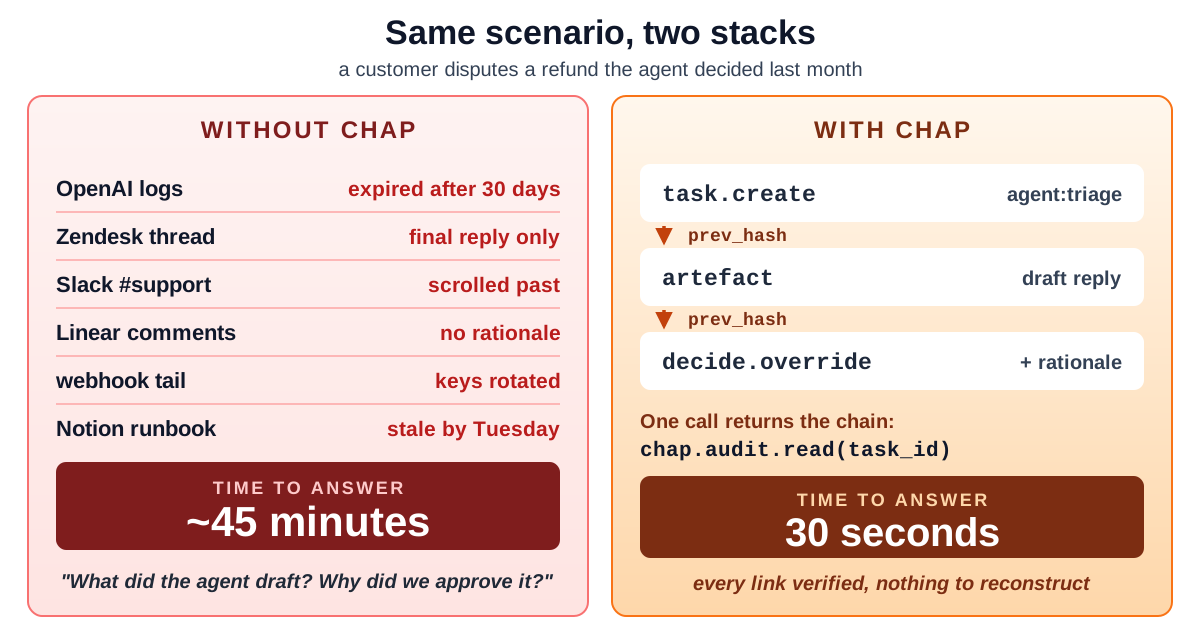
Same scenario, two stacks. Without CHAP: six tools holding fragments of one decision (OpenAI logs expired, Zendesk thread, Slack scrolled past, Linear comments, webhook tail, Notion runbook), 45 minutes across four UIs to answer 'what did the agent draft and why did we approve it?'. With CHAP and its hash chain switched on: three hash-linked envelopes (task.create → artefact → decide.override) joined by prev_hash, one audit.read call, 30 seconds.


Work is moving towards teams in which hundreds of agents and hundreds of people take part. Agents draft, triage and recommend; people approve, correct, overrule and escalate. Those human decisions make the work accountable, yet they are usually recorded only in chat threads, ticket comments and memory.

CHAP gives those decisions a defined structure and an auditable record: what the agent produced, what the person decided and why, in one log that can be queried and verified.

  • Structured overrides. When a person edits an agent's work, the edit is recorded with a diff, a rationale and tags your team defines, so corrections can be analysed later.
  • A tamper-evident log. Every change is recorded in order. With the hash chain on, an altered entry is detected on verification, provided a recent chain head is kept out of the operator's reach (SECURITY.md §5). The history survives key rotation, expired vendor logs and staff changes.
  • Signatures and identity. Optional extensions, called profiles, require every call to be signed, bind signing keys to verified identities, and submit entries to a transparency log.
  • Alongside MCP and A2A. MCP connects agents to tools and A2A connects agents to each other; CHAP records the work agents share with people.

Concepts

CHAP is a protocol: a set of calls that agents, people and their tools send to a coordinator, the service that mediates a workspace. The coordinator checks each call against the workspace's rules, answers it, and records each accepted change in the workspace's audit log. The TypeScript and Python packages below are coordinators, to embed in your own process or run as a server.

TermWhat it is
WorkspaceA named context for one body of work: its members, its tasks, and the profiles it uses
ParticipantA member, named by a URI such as human:alice@example.org or agent:triage; group: names a set of members
TaskA unit of work, assigned to a participant
ArtefactWhat a participant produces in a task: a draft, a decision, an override
EnvelopeOne call, as a JSON-RPC 2.0 message; its method is the verb, such as task.create or decide.approve
Audit logThe ordered record of every change to the workspace; with the hash chain on, each entry carries the hash of the one before it

The verbs read as their names. A task is created, completed and sent for review (task.create, task.complete, review.request). A reviewer approves, rejects or overrides it (decide.approve, decide.reject, decide.override). Work is handed off or escalated (handoff.propose, escalate.raise), and audit.read returns the record.

Core and profiles. Every coordinator implements Core (core/1.0): workspaces, participants, tasks and the audit log. Everything else is an optional profile, named with its version. review/1.0 adds review requests and decisions. Others add quick questions to a person (whisper/1.0), group votes (deliberation/1.0), handoffs (handoff/1.0), pausing and rollback (control/1.0), routing (routing/1.0), shadow and trial modes (modes/1.0), signed calls (security-signed/1.0), verified identities (identity-oidc/1.0, identity-vc/1.0) and a transparency log (audit-scitt/1.0). A workspace advertises the profiles it uses, and the coordinator refuses calls that belong to any other profile. core/SPEC.md fits Core on one page, profiles/PROFILES.md lists the profiles, and GLOSSARY.md defines every term.

Install

Libraries. Each package implements Core and every profile; a new workspace advertises core/1.0 and review/1.0 unless you name others.

TypeScriptPython
Terminal
npm install @brightbeamai/chap-coordinator
Terminal
pip install chap-coordinator

A new project. create-chap-app generates one with a review desk, one profile setting and a diff-profiles command:

Terminal
npx create-chap-app my-gate
cd my-gate && npm install && npm run demo

The default template is the code gate: each change a coding agent makes in a git repository is reviewed as a diff, approved with the reviewer's signature, and committed with the evidence beside it for CI to verify. The other templates are an MCP gate for Claude Desktop, Cursor and Claude Code, a support desk, an outbound approval gate and a production set. docs/profile-explorer.md shows what each profile changes.

From a clone of this repository. START_HERE.md runs a local review desk on the Python coordinator, with Python 3.10 or later and nothing else to install:

bash
git clone https://github.com/BrightbeamAI/chap.git && cd chap
python3 start-here/start.py

examples/00-five-minute-start.md sends envelopes to the Core reference server with curl and reads back the audit log. The libraries are in packages/coordinator/ and packages/coordinator-py/, the reference implementations in reference/ and reference/python/.

The 90-second tour

A solo developer reviews pull requests with Cursor, and the bot flags a warning the developer disagrees with. The clip shows the exchange in six steps, in about 23 seconds.
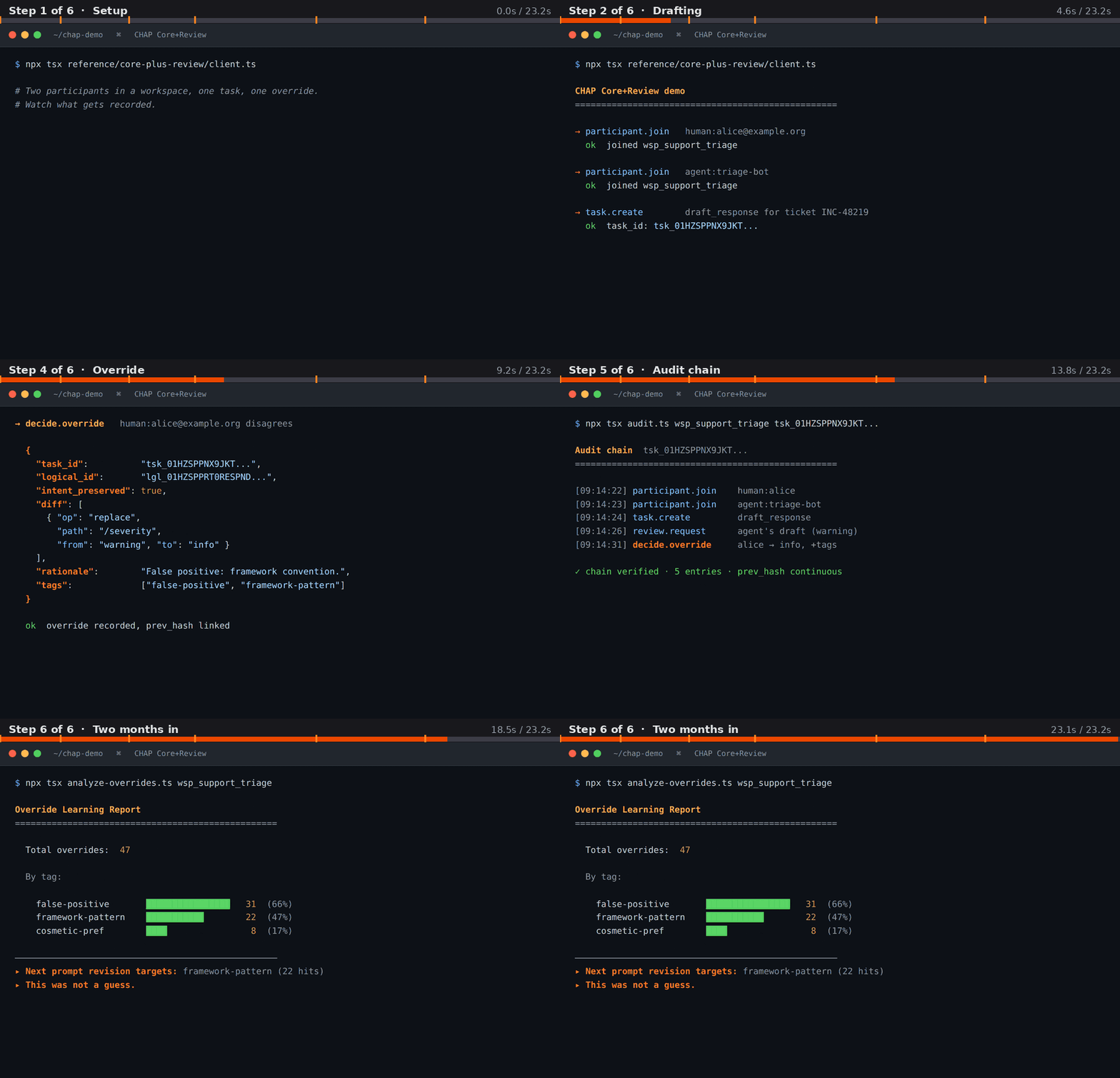
Six-step CHAP Core+Review walkthrough with a progress bar and step indicator across the top. Step 1: Setup (workspace, two participants, a task). Step 2: Drafting (agent drafts a response). Step 3: Pending review (review.request with the draft artefact). Step 4: Override (human disagrees: diff, rationale, tags). Step 5: Audit chain (hash-linked replay, prev_hash continuous). Step 6: Two months in (override learning report shows framework-pattern as the top tag, pointing the next prompt revision at the right problem).

The code for each step follows, in TypeScript and Python.

1. Spin up a workspace: a coordinator with SQLite and the hash chain, and two participants
TypeScriptPython
server.ts
import { Coordinator } from "@brightbeamai/chap-coordinator";
import { SqliteStore } from
  "@brightbeamai/chap-coordinator/storage/sqlite";

const coord = new Coordinator({
  store: new SqliteStore("./chap.db"),
  enableChain: true,
});

coord.api.workspace.create({
  workspace: "wsp_pr_reviews",
  profiles:  ["core/1.0", "review/1.0"],
});

coord.api.participant.join({
  workspace: "wsp_pr_reviews",
  from:      "human:me@local",
  type:      "human",
});

coord.api.participant.join({
  workspace: "wsp_pr_reviews",
  from:      "agent:cursor#v1",
  type:      "agent",
});
server.ts
from chap_coordinator import Coordinator
from chap_coordinator.storage.sqlite \
    import SqliteStore

coord = Coordinator(
    store=SqliteStore("./chap.db"),
    enable_chain=True,
)

def send(method, params):
    return coord.dispatch({
        "jsonrpc": "2.0", "id": method,
        "method": method, "params": params,
    })

send("workspace.create", {
    "workspace": "wsp_pr_reviews",
    "profiles":  ["core/1.0", "review/1.0"],
})

send("participant.join", {
    "workspace": "wsp_pr_reviews",
    "from":      "human:me@local",
    "type":      "human",
})

send("participant.join", {
    "workspace": "wsp_pr_reviews",
    "from":      "agent:cursor#v1",
    "type":      "agent",
})
2. The bot drafts, you override: your Cursor integration emits the envelopes
TypeScriptPython
server.ts
// The review Cursor returned.
const cursorReview = {
  comments: [{ severity: "warning",
               body: "Unused parameter." }],
};

// The bot's review is the output of a task.
const { task_id } = coord.api.task.create({
  workspace: "wsp_pr_reviews",
  from:      "agent:cursor#v1",
  assignee:  "agent:cursor#v1",
  kind:      "code_review",
  input:     { pr_id: "PR-482" },
});

coord.api.task.complete({
  workspace: "wsp_pr_reviews",
  from:      "agent:cursor#v1",
  task_id,
  output:    cursorReview,
});

coord.api.review.request({
  workspace: "wsp_pr_reviews",
  from:      "agent:cursor#v1",
  task_id,
  artefact:  cursorReview,
  to:        "human:me@local",
});

// You disagree with one comment. Override it.
coord.api.decide.override({
  workspace:        "wsp_pr_reviews",
  from:             "human:me@local",
  task_id,
  intent_preserved: true,
  diff: [{ op: "replace",
           path: "/comments/0/severity",
           value: "info" }],
  rationale: "False positive. Framework " +
             "convention, not a bug.",
  tags: ["false-positive",
         "framework-pattern-misread"],
});
python
# The review Cursor returned.
cursor_review = {
    "comments": [{"severity": "warning",
                  "body": "Unused parameter."}],
}

# The bot's review is the output of a task.
r = send("task.create", {
    "workspace": "wsp_pr_reviews",
    "from":      "agent:cursor#v1",
    "assignee":  "agent:cursor#v1",
    "kind":      "code_review",
    "input":     {"pr_id": "PR-482"},
})
task_id = r["result"]["task_id"]

send("task.complete", {
    "workspace": "wsp_pr_reviews",
    "from":      "agent:cursor#v1",
    "task_id":   task_id,
    "output":    cursor_review,
})

send("review.request", {
    "workspace": "wsp_pr_reviews",
    "from":      "agent:cursor#v1",
    "task_id":   task_id,
    "artefact":  cursor_review,
    "to":        "human:me@local",
})

# You disagree with one comment. Override it.
send("decide.override", {
    "workspace":        "wsp_pr_reviews",
    "from":             "human:me@local",
    "task_id":          task_id,
    "intent_preserved": True,
    "diff": [{"op":    "replace",
              "path":  "/comments/0/severity",
              "value": "info"}],
    "rationale": "False positive. Framework "
                 "convention, not a bug.",
    "tags": ["false-positive",
             "framework-pattern-misread"],
})

The two surfaces. TypeScript ships a typed facade, coord.api.*, so every method has autocomplete and compile-time checks. Python keeps the JSON-RPC envelope on the surface, coord.dispatch({...}), wrapped here in a send() helper, the idiom the Python tests use. Both send the same parameters in the same envelope, so the audit chain reads the same whichever client made the call.

3. Two months in: a script groups your overrides by tag, intent and reviewer

The repository ships the script in both languages. It reads the audit chain over HTTP or straight from your SQLite file:

bash
# TypeScript reference, against the SqliteStore from step 1:
$ npx tsx reference/core-plus-review/analyze-overrides.ts --db ./chap.db wsp_pr_reviews

# Python reference, same idea:
$ python3 reference/python/analyze_overrides.py --db ./chap.db wsp_pr_reviews

Override Learning Report
========================================
Workspace:       wsp_pr_reviews
Total overrides: 47

By tag:
  false-positive                       ████████████████████   31  (66%)
  framework-pattern-misread            ██████████████          22  (47%)
  cosmetic-pref                        █████                    8  (17%)

Intent breakdown:
  refining (same decision, better wording)   41
  substituting (different decision)          6

Top reviewers:
  human:me@local                            47

Hint: the most common tags are your next prompt revision targets.

The most common tags name what the next prompt revision for Cursor should fix.

chap-analytics (pip install chap-analytics) loads the whole chain into documented pandas tables, from a SQLite file, a JSON export, a live coordinator or an audit.read: overrides, decisions, reviewers, whispers and handoffs. A notebook works through a week of review data, and ANALYTICS_ROADMAP.md describes the planned work.

The override envelope

The override envelope records a reviewer's change to an agent's output. Each field is annotated below:
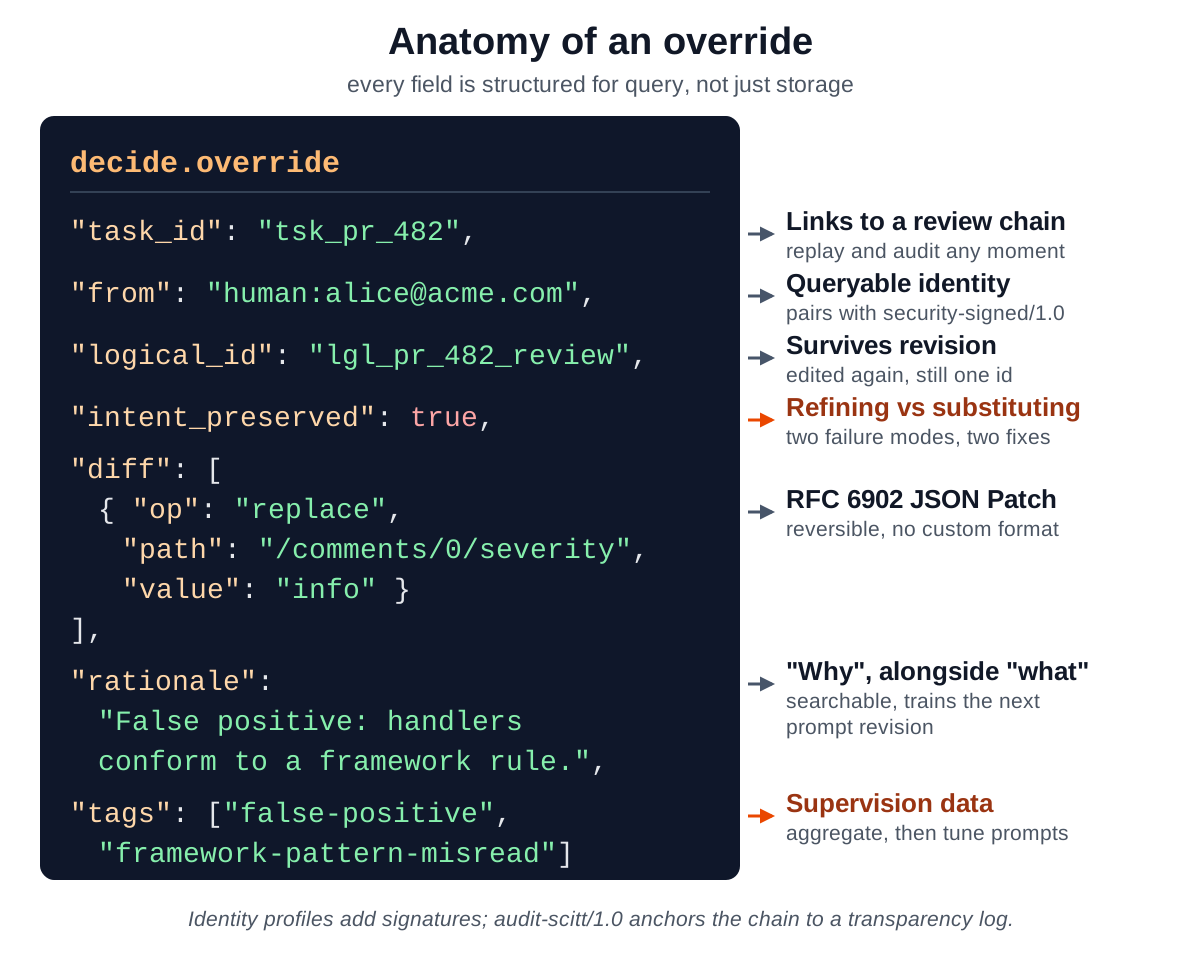
Anatomy of a decide.override envelope, with each field annotated: task_id links to the review chain, from carries queryable identity, logical_id survives revision, intent_preserved separates refining from substituting overrides, diff is RFC 6902 JSON Patch, rationale is the 'why' alongside the 'what', tags are structured supervision data.

Two fields matter most for analysis:

  • intent_preserved tells a refining override, where the person kept the agent's decision and rewrote its wording, from a substituting one, where the person decided differently. Each points at a different fix: many refining overrides around one policy clause point at the agent's retrieval; many substituting ones point at an ambiguous policy, or at the agent's task context.
  • tags are the small, controlled vocabulary your team agrees on. They are what you will count by three months from now, to answer which prompts need work? and which paths does the bot keep getting wrong?

Status

CHAP 0.3 is a public draft: a small Core and optional profiles (SPECIFICATION.md).

  • Two reference coordinators, in TypeScript and Python, implement the same methods, and a differential fuzzer checks that they answer and log alike.
  • The conformance harness covers Core and review/1.0, and runs against the Python coordinator and a standalone TypeScript server.
  • A coordinator can present itself as an MCP server or an A2A agent.
  • Framework bridges put LangGraph, Pydantic AI, AG2, LlamaIndex Workflows and Google ADK human-in-the-loop decisions on the audit log.

Before 1.0, a minor release may break things, and its changelog lists each break with a migration; from 1.0 the specification follows Semantic Versioning. For strict stability, wait for 1.0: ROADMAP.md sets out what it will promise and the milestones on the way.

Read this next

ReadFor
START_HERE.mdA local review desk on the Python coordinator, with nothing to install beyond Python
IN_PRACTICE.mdScenarios, from a solo developer with Cursor to GMP-regulated manufacturing
ABOUT.mdThe repository's contents, how CHAP relates to MCP and A2A, the standards it reuses, and contributing
core/SPEC.mdCore, on one page
The technical reportThe architecture, profile semantics and threat model, with the scenarios as JSON traces

Cite

If you reference CHAP in academic or technical work, please cite the technical report.

BibTeX
bibtex
@techreport{chap2026,
  author      = {Shahid, Arsalan and Suttie, Gordon and Black, Philip},
  title       = {Collaborative Human-Agent Protocol (CHAP): An open protocol for auditable, structured multi-human and multi-agent collaboration},
  institution = {Brightbeam AI},
  year        = {2026},
  type        = {Technical Report},
  number      = {arXiv:2606.09751},
  url         = {https://arxiv.org/abs/2606.09751}
}

CC BY 4.0 (specification text, see LICENSE-SPEC.md) · Apache 2.0 (everything else) · Any language, any deployment.