Open-source MCP server that converts team chats into a typed knowledge graph and auto-generated wiki with cited answers.
Quick Install
Automated & IDE Setup
Copy the AI prompt to install this server into Claude Code, Cursor, or another agent — or use 1-click editor setup below.
One-click editor setup isn’t available for this listing yet — we don’t have a confirmed install command, and we’d rather show nothing than point your editor at the wrong package or host. Follow the project’s own setup instructions, linked above.
Manual Client & Custom JSON ConfigExpand JSON ▾
No confirmed setup config for this listing yet. We only publish a config block when the install details come from the project itself — its README, its docs, or a verified owner. We haven’t found those for Beever-AI/beever-atlas, and we’d rather show nothing than a guess you’d paste into your client. Follow the project’s own setup instructions for the current steps.
Overview
This server ingests conversations from Slack, Discord, Microsoft Teams, and Mattermost, extracting atomic facts and clustering them into topic pages with citations. It maintains a typed knowledge graph linking people, decisions, and projects, supporting natural language queries with cited answers. The system includes a multi-tier semantic store and a graph store, powering an auto-maintained wiki and QA agents accessible via a dashboard or MCP clients like Claude Code and Cursor. It is designed for teams wanting a self-updating knowledge base derived from their existing chat history.
Use cases
•Ingest and sync team chat history from multiple platforms
•Generate and maintain a wiki automatically from chat data
•Query knowledge base with natural language and receive cited answers
•Link entities such as people, projects, and decisions in a knowledge graph
•Integrate with AI agents via MCP for enhanced knowledge retrieval
Typed knowledge graph linking entities and relationships
Auto-generated, auto-maintained wiki per channel
Natural language QA with cited source messages
28-tool native MCP server with per-agent authentication
Documentation Overview
Beever Atlas
Turn your team's Slack, Discord, Teams & Mattermost chats
into a self-maintaining wiki — automatically.
Beever Atlas pulls the conversations your team already has on Slack, Discord, Microsoft Teams, and Mattermost, extracts atomic facts, deduplicates them, and clusters them into topic pages with citations. A graph store links the people, decisions, and projects mentioned across channels. Ask questions in natural language and get answers cited back to the source messages — through the dashboard, or through MCP into Claude Code and Cursor.
If you want a knowledge base that grows on its own from the chats your team already has, this is it.
✨ Features in action
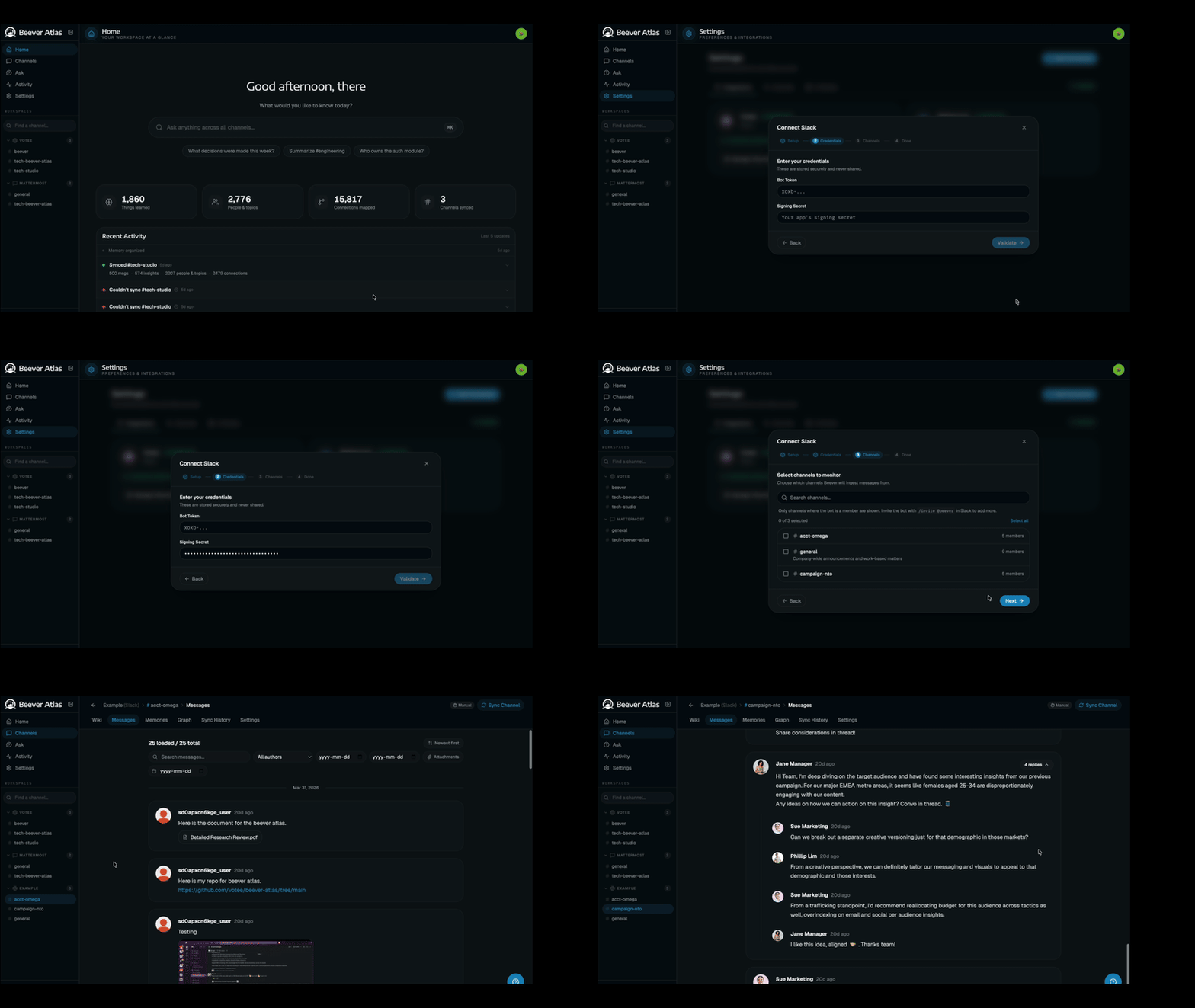
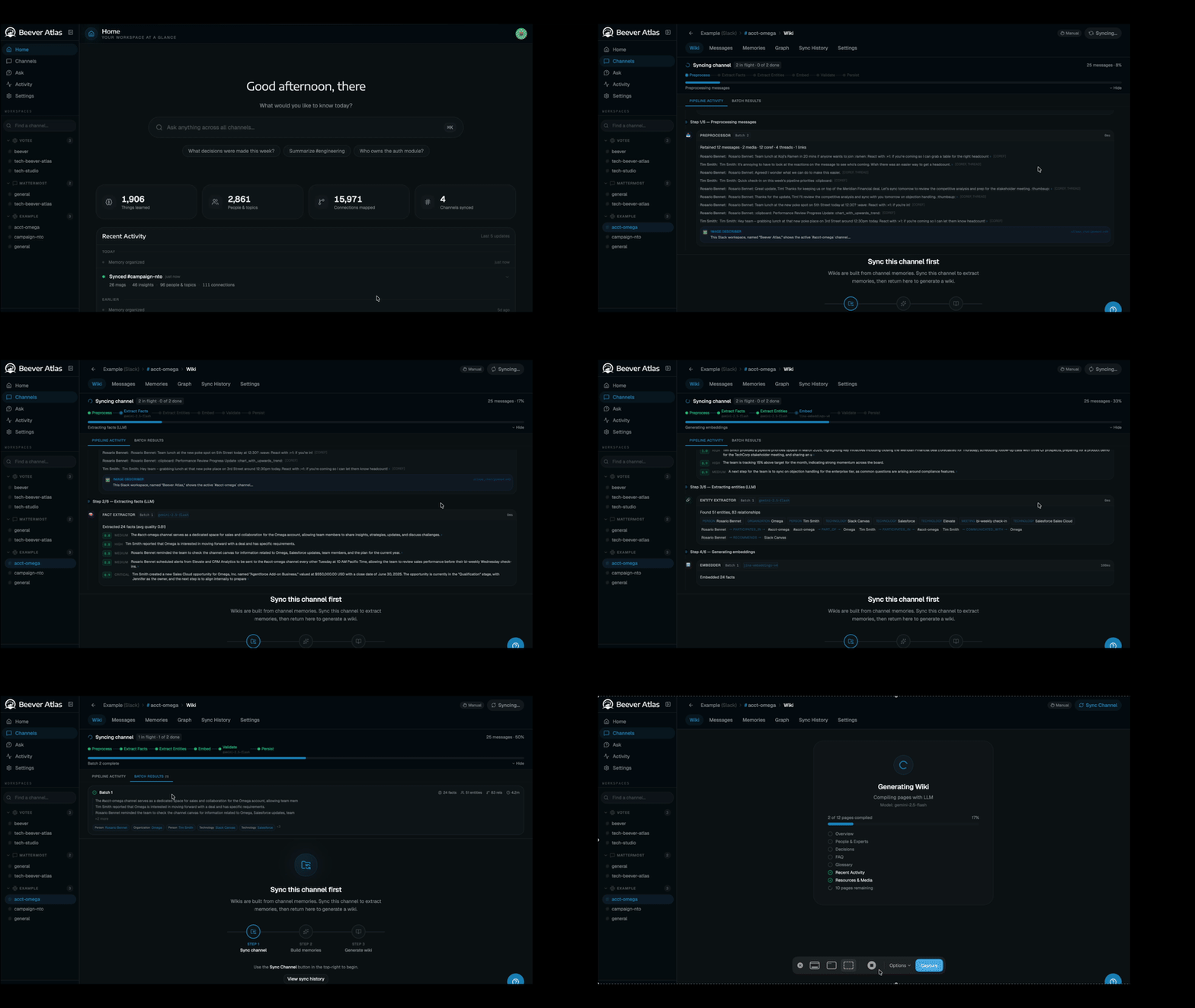
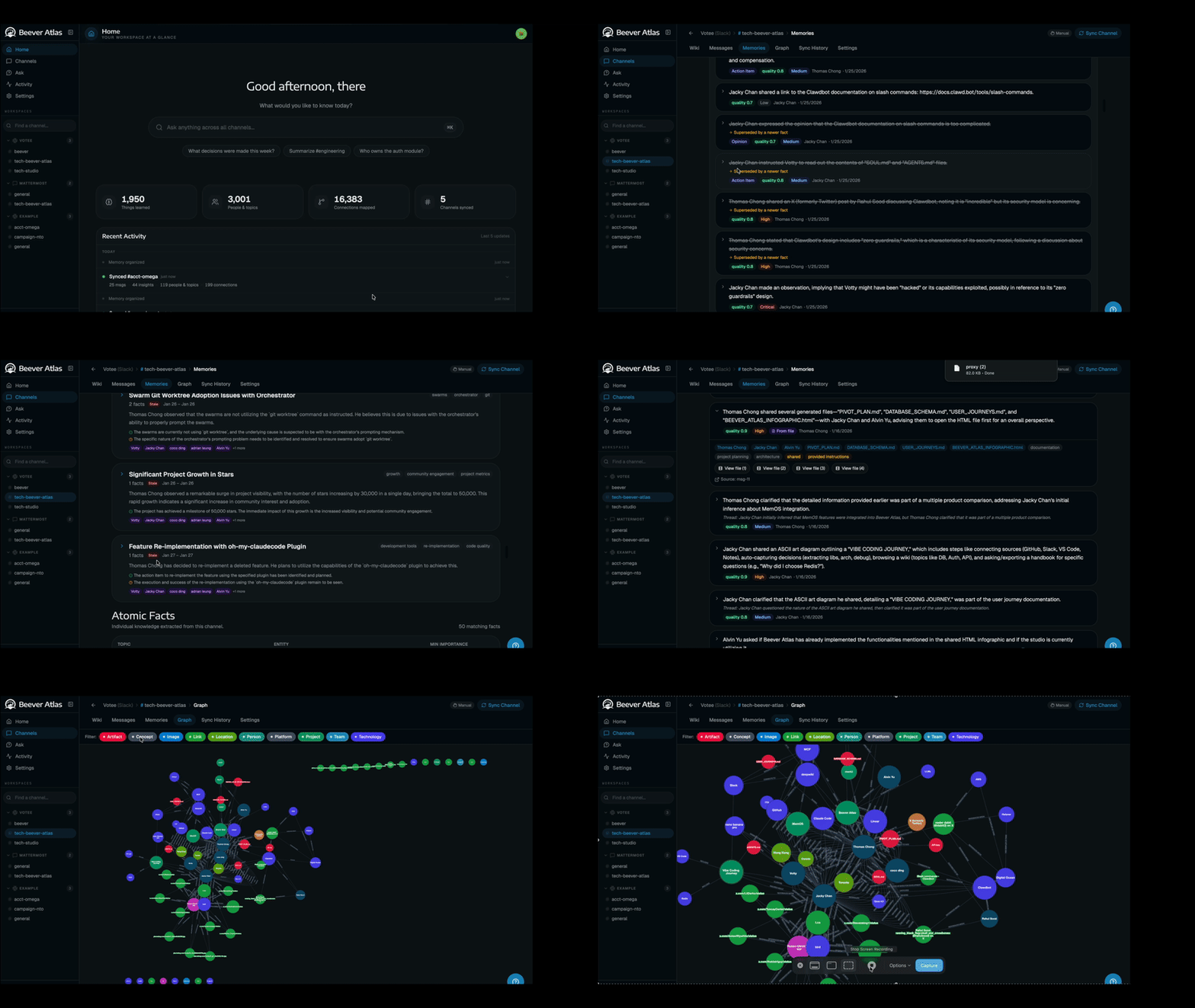
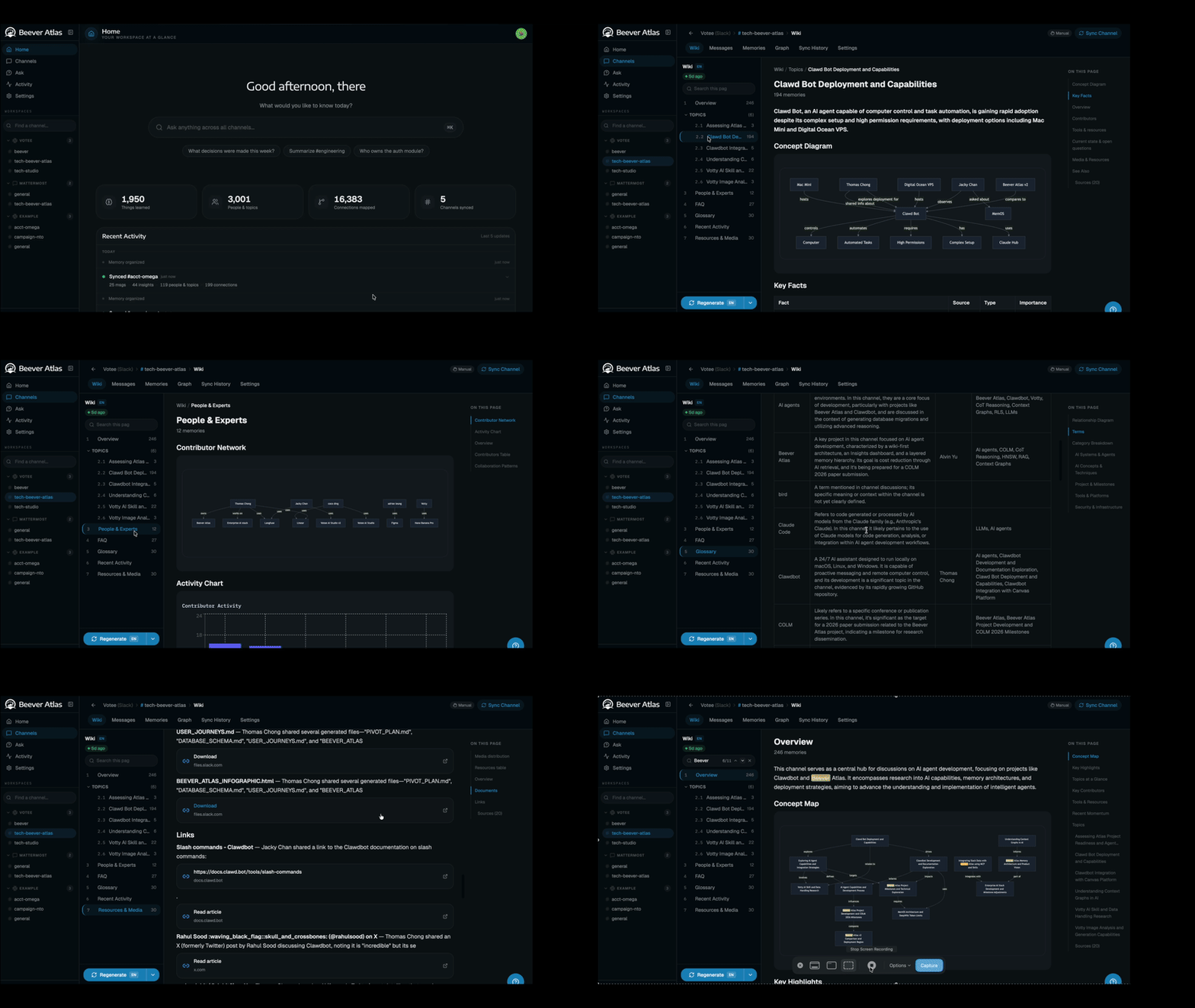
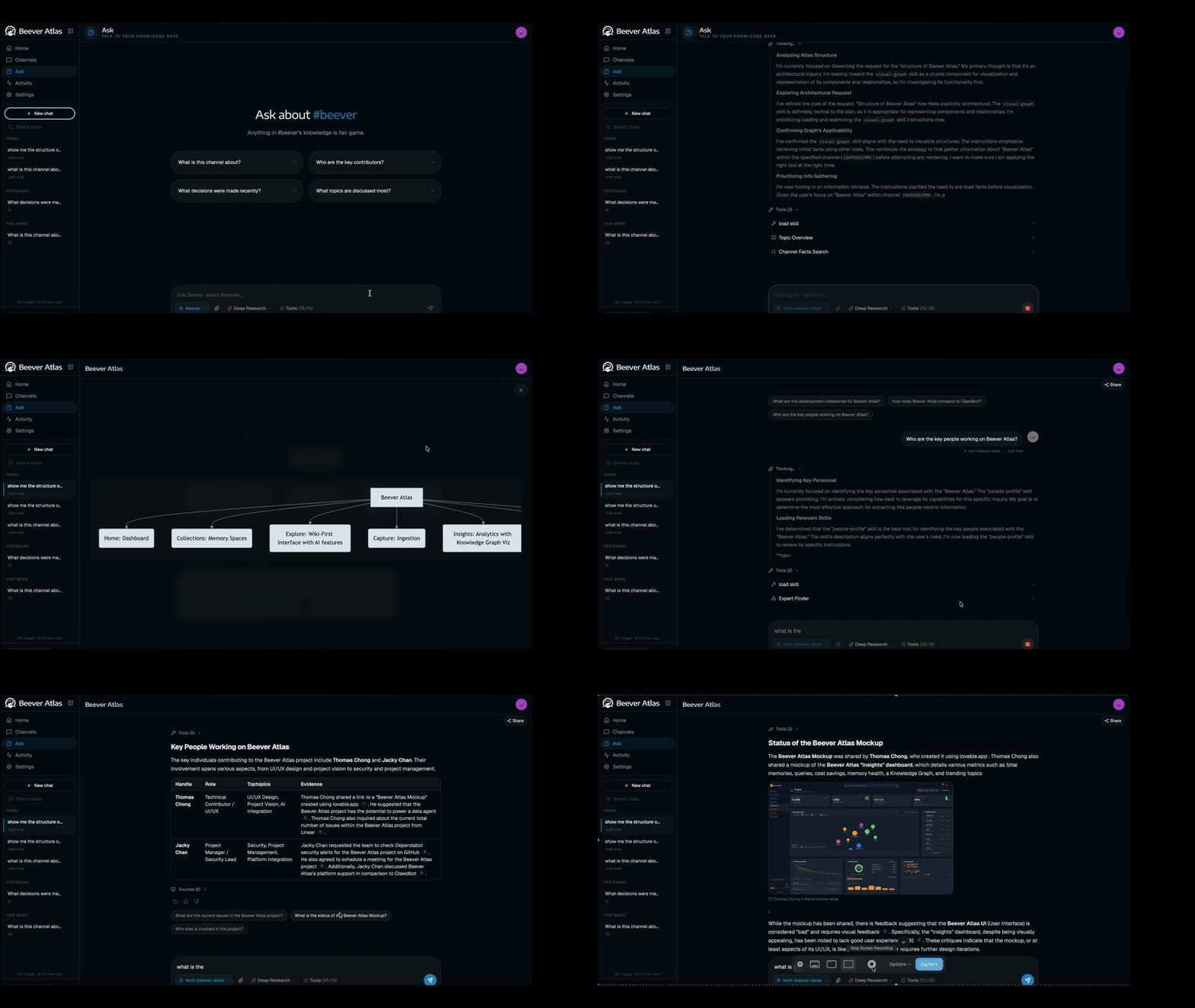
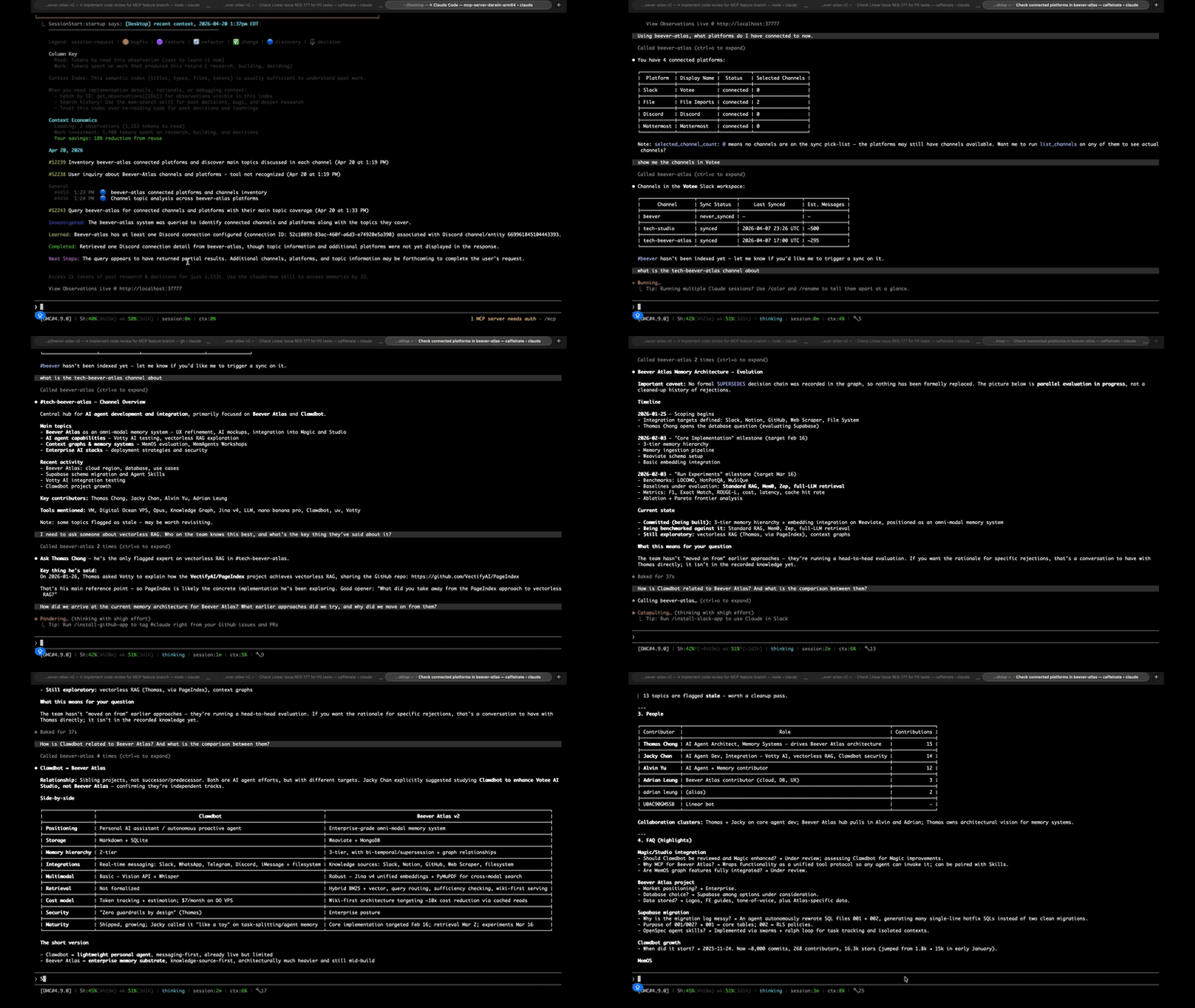
Six short clips — connect a workspace, sync history, watch memory build, browse the auto-generated wiki, ask questions, plug external AI agents in via MCP.
Multi-Platform
Connect Slack, Discord, Teams, Mattermost, or file imports. One bot, every workspace.
Message Sync
Pull channel history on demand or on a schedule. Resumable and rate-limit aware.
Memory Ingestion
6-stage ADK pipeline distils messages into atomic facts, entities, and relationships.
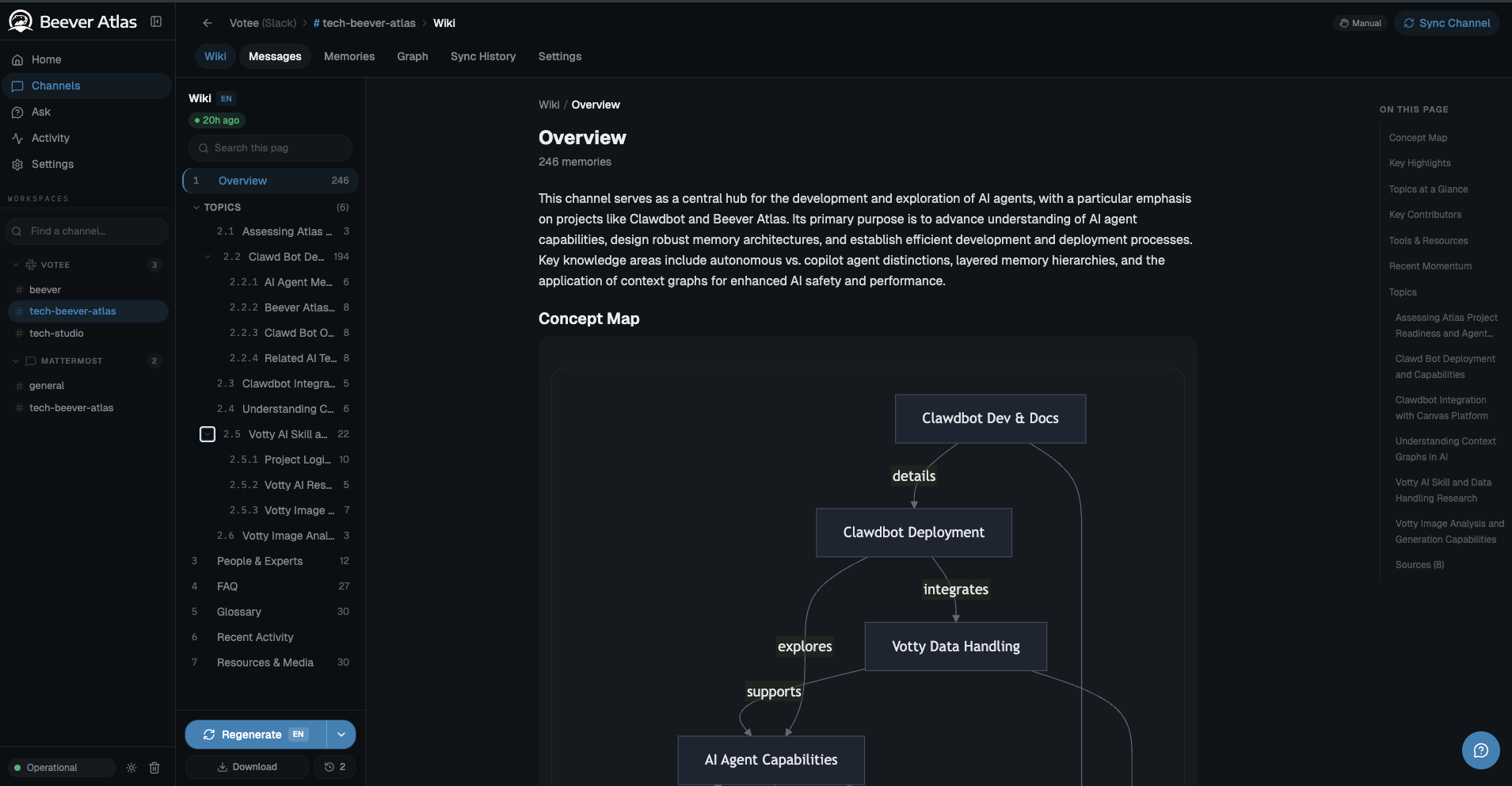
LLM Wiki
Auto-maintained wiki per channel — overview, topics, people, decisions, citations.
QA Agent
Streams cited answers over SSE. Smart router picks semantic or graph per question.
MCP Server
Plug Claude Code / Cursor into your knowledge base — 28 tools, per-agent auth.
🏗️ Architecture
Conversations from any supported platform flow into a unified ingestion pipeline that produces two complementary memory systems — a 3-tier semantic store (channel / topic / atomic fact) for fast hybrid search, and a graph store that extracts entities and their relationships. Those memories fuel two consumer surfaces: the LLM Wiki (distilled, auto-maintained) and QA Agents (served through the dashboard directly, or through MCP into Claude Code / Cursor).
From chat platforms to MCP agents — one ingestion path, two memory systems, two delivery surfaces.
Under the hood, three services (backend, bot, frontend) are backed by four data stores (Weaviate, Neo4j, MongoDB, Redis). See the architecture overview on the documentation site for the full design — component responsibilities, dual-memory internals, and the smart query router.
💡 Why Wiki-First RAG?
Most RAG systems answer questions by retrieving raw message snippets and feeding them straight to an LLM. Beever Atlas takes a different approach: it continuously distils conversations into a structured, auto-maintained wiki — with topic pages, entity graphs, decisions, and citations — before any query is issued. When you ask a question, the retrieval layer works against clean, deduplicated knowledge rather than noisy chat history. This means answers are more consistent, citations are traceable to source messages, and the wiki itself becomes a useful artifact your team can browse independently of the Q&A interface. The dual-memory architecture (semantic + graph) lets the query router pick the right retrieval strategy per question, keeping latency low and context precise.
A live auto-generated channel wiki: overview, concept map, topics, FAQ, glossary — distilled from 246 Slack messages, not hand-written.
The inspiration: LLMs read wikis, not chat logs
The per-channel wiki concept is directly inspired by Andrej Karpathy's observation that LLMs are far better at reasoning over curated, encyclopedic content (books, docs, wikis) than over raw conversational transcripts. Chat history is noisy, redundant, temporally scattered, and full of implicit context that only humans resolve. A wiki, by contrast, is the already-distilled form of that knowledge — deduplicated, structured, citation-bearing, and organised by topic rather than by timestamp.
Beever Atlas operationalises this insight: every synced channel gets its own auto-generated, continuously-updated wiki — sections for topics, entities, decisions, open questions, and timelines — rebuilt incrementally as new messages arrive. The QA agent retrieves against this wiki first, falling back to raw messages only when a fact hasn't been distilled yet.
What this unlocks in practice
Better answers, fewer hallucinations — retrieval operates on fact-dense prose with explicit entity relationships, not on fragmented turn-by-turn chat.
Traceable citations — every wiki claim links back to the source messages that produced it, so answers are auditable all the way down to the original Slack/Discord/Teams thread.
A browsable artifact, not just a Q&A box — the wiki is useful on its own. New teammates onboarding to a channel can read the distilled wiki instead of scrolling three months of history.
Cheaper inference at query time — the expensive distillation work happens once, at ingestion. Queries hit compact, pre-digested context instead of re-summarising raw logs on every request.
Graph-aware reasoning — the entity graph built alongside the wiki lets the query router answer relational questions ("who worked on X with Y?") that pure vector RAG struggles with.
For a detailed comparison with other LLM knowledge tools, see the comparison page on the documentation site.
🚀 Quick Start
Beever Atlas ships as a Docker Compose stack (backend + bot + web + 4 datastores). You can try a seeded demo in 30 seconds with zero keys, then pick one of three deployment options to install it for real.
1. Get the code
bash
git clone https://github.com/beever-ai/beever-atlas.git
cd beever-atlas
2. Try the demo first (optional, no keys needed for seeding)
Showcase your server listing on GitHub or your project documentation. Embed this dynamic SVG badge to highlight official listing status and live engagement.
Unique ViewsTotal visits recorded for this listing page on AllMCPs.
Installs0
Installs & Copy ActionsTotal times users copied install commands or configuration snippets for this server.
GitHub stars445
GitHub Star CountTotal stargazers on GitHub representing community popularity (445 stars).
Last commit8d ago
Last Repository CommitThe most recent commit or push recorded for this server's GitHub repository.Last commit on Sep 2, 2026
52Quality signal: Good · 52/100How this signal is calculated ▾
Server availabilityNot measured
Not scored for repo-hosted servers — we can't reach the running server, only its GitHub page. Hosted MCP endpoints are health-checked live.
Verified ownership10/20
Documentation & tools20/30
Adoption & activity9/15
Community engagement0/10
A guidance signal from public completeness & health data — not a user rating. New listings start lower and rise as they add docs, get verified, and grow adoption. Signals we can't observe for a listing are skipped, not counted against it.
★ Featured
AllMCPs Server
The official MCP server for AllMCPs.com - submit and manage tools directly from your AI. The open directory for MCP servers. Connect Claude, Cursor, Windsurf, and AI agents to databases, tools, files, and APIs. Explore 10,000+ servers. AllMCPs is the premier, open directory for discovering, evaluating, and installing Model Context Protocol (MCP) servers to equip AI agents and LLMs with real-world superpowers.
This directory is pre-filled from public sources. Claim via GitHub README, site badge, or DNS TXT to unlock edit access and the Official badge — proof is checked automatically, then reviewed by our team.
Free dofollow backlink: add your website and place the AllMCPs badge on it — no claim needed. We detect it automatically and keep it verified as long as the badge stays live.