Arxivsub MCP vs CvLAC (MinCiencias)
A side-by-side look at the Arxivsub MCP and CvLAC (MinCiencias) MCP servers: transport, auth, tools, quality signals, and the config to install either one in Claude, Cursor, Windsurf or VS Code.
Verdict: choose Arxivsub MCP for research work as a local process; choose CvLAC (MinCiencias) for research as a local process. You can also run both side by side in one mcpServers block.
Which MCP server should you choose?
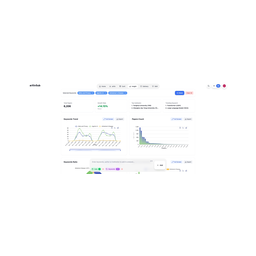 Choose Arxivsub MCP when
- You need dedicated capabilities in the Research domain.
- You prefer a local stdio subprocess transport.
- You have the keys it needs:
ARXIVSUB_SKILL_KEY. - You want tools like
search_papers, find_similar_papers, research_insight.
 Choose CvLAC (MinCiencias) when
- You need dedicated capabilities in the Research domain.
- You prefer a local stdio subprocess transport.
- You want tools like
login, read_cvlac, read_cvlac_detail.
Feature & specification comparison
Rows where the two servers differ are marked.
| Spec | ||
|---|---|---|
| Category | Research | Research |
| Quality signal | 55/100 · Good | 63/100 · Good |
| Install command | Confirmed | Confirmed |
| Transport | Local subprocess (stdio) | Local subprocess (stdio) |
| Auth | Not declared | Not declared |
| Pricing | Not declared | Not declared |
| Required env vars | ARXIVSUB_SKILL_KEY | None listed |
| Verified owner | Community listing | Community listing |
| GitHub stars | 0 | 1 |
| Directory activity | 2 views 0 installs 0 upvotes | 1 views 0 installs 0 upvotes |
| Tools | 5 | 13 |
| Full listing | View Arxivsub MCP | View CvLAC (MinCiencias) |
Tools & capabilities
Arxivsub MCP tools 5
search_papersSearch academic papers from arXiv and major AI/CV/ML/robotics/NLP conferences via arXivSub (semantic + keyword search over a structured, summarized corpus). Use for 'find papers on X', 'latest research about Y', 'recent conference work on Z', or to start a literature review. Returns each paper with a 6-part summary (what it's about, innovations, techniques, datasets, results, limitations), authors + affiliations, pdf_url, and github_url when code is available.find_similar_papersGiven ONE paper you already have (from a prior search result), return the most similar papers from the same corpus — semantic nearest neighbours, each with the full summary and code link. Use for 'more like this', 'related work', 'what else is in this line of work', or to expand a literature review. You can chain it: search -> pick a seed -> find_similar_papers -> repeat on a strong neighbour.research_insightBuild aggregate pivot statistics over the arXivSub corpora — the same engine as the website's Custom Chart. Use for trends, rankings, breakdowns and comparisons: 'how has interest in diffusion models trended', 'top institutions in RL', 'papers per month by keyword', 'avg citations by affiliation'. Returns rows of {dim, breakdown, value} for you to interpret and visualize. Requires Pro or active trial days.library_saveSave (or update) a paper in the user's personal arXivSub library. Use for 'save this', 'bookmark that paper', 'add it to my <X> collection', 'note that ...', 'mark as read'. Idempotent: saving the same paper again updates only the fields you pass and never duplicates. Cannot delete — removals are done on the website.library_listList the user's personal arXivSub library — collections and saved items, optionally filtered. Use for 'what have I saved', 'show my library', 'which papers are in my <name> collection', 'what am I reading'.
CvLAC (MinCiencias) tools 13
loginAuthenticate in CvLAC and persist the browser session.read_cvlacRead current CvLAC sections, including articles, books, chapters, theses, juries and five kinds of technical production. Returns existing items for comparison; list results include every JMesa page.read_cvlac_detailRead the full record page of one CvLAC item. The list views only show a couple of columns, so this is the only way to see the fields a write actually stored (role, dates, institution, financing). Finds the row by label, case- and accent-insensitive.read_portfolioRead and parse the configured portfolio site (PORTFOLIO_URL), merged with the curated proyectos/software/eventos from data/portfolio-extra.json.diffCompare CvLAC vs portfolio. Returns four buckets: missing, toUpdate, similar (close to an existing entry — a human decides) and upToDate.update_sectionApply a single change to a CvLAC section. Takes a screenshot for confirmation. An "add" whose item resembles an existing entry returns status "needs_confirmation" and writes nothing; resolve it with action:"update" or repeat with confirm_duplicate:true. A "delete" also writes nothing until it is repeated with confirm_delete:true. A picker whose search matched several rows — a common university name can match close to 200 institutions in CvLAC — also returns needs_confirmation, with the candidates in "choices"; repeat with the chosen id in data.institucionId. For articles provide title, year and issn/revista; for books provide title, isbn, year, editorial and area; for chapters provide title, bookTitle, year and area; for theses provide title, tipo, year, institution and programme; for juries provide title, nivel, year, orientado, institution and programme; technical sections require title and year, with section-specific fields. Catalogue choices are answered by repeating the call with revistaId, libroId, editorialId, programaId, areaId or institucionId in data. Coauthors, keywords, recognitions and linked thesis students are completed from the CvLAC website. For books, certificateCLCDO and certificateCLRI accept local PDF paths (maximum 2 MiB each).lookup_doiRead-only: look up a DOI in Crossref and return an article draft. Review it, then pass it to update_section with section:"articulos"; this tool does not write to CvLAC.complete_productComplete the post-save CvLAC phase for an existing product. It manages ordered keywords, knowledge areas, coauthors and recognitions; for theses it also links students with their participation. It reads current values, resolves catalogue names, and never removes an existing value without confirm_delete:true. Use dry_run:true to preview catalogue resolution and removals without writing.read_profileRead the two CvLAC pages that hold one record instead of a list: the researcher profile text (txt_desc_perfil), the table of academic social networks (Google Scholar, ORCID, LinkedIn, Scopus...) and the áreas de actuación. None of them appears in read_cvlac.update_profileWrite the researcher profile text and/or the academic social networks. Networks are MERGED over what CvLAC already stores — its form rewrites the whole table, so this reads it first and posts everything back. Pass url:null to remove one. A network CvLAC does not list goes in "otro" with its name in "label". Removing one needs confirm_delete:true. The profile text cannot be blanked: CvLAC marks it required. The areas list is replaced whole, so dropping one also needs confirm_delete:true.syncRun a full diff and apply the unambiguous items (missing + toUpdate). Items that resemble existing CvLAC entries are never written; they are listed for a human to resolve. It previews by default; pass dry_run:false to apply changes explicitly.screenshotCapture a CvLAC page for debugging: the given url, or else the last list, record or form page a tool visited, reloaded as it is now. Action links (delete, save) are refused, because in CvLAC opening one performs it.- +1 more on the listing page
Ready-to-paste client configs
Paste either block (or both) into your client config, e.g. claude_desktop_config.json or ~/.cursor/mcp.json. We only show a config when the install command is confirmed.
Arxivsub MCP
{
  "mcpServers": {
    "arxivsub-mcp": {
      "command": "npx",
      "args": [
        "-y",
        "arxivsub-mcp"
      ],
      "env": {
        "ARXIVSUB_SKILL_KEY": "YOUR_ARXIVSUB_SKILL_KEY_HERE"
      }
    }
  }
}
CvLAC (MinCiencias)
{
  "mcpServers": {
    "cvlac-minciencias": {
      "command": "npx",
      "args": [
        "-y",
        "cvlac-mcp@1"
      ]
    }
  }
}
Frequently asked questions
Arxivsub MCP is categorized under Research and uses a local stdio subprocess. CvLAC (MinCiencias) belongs to Research and uses a local stdio subprocess. Pick Arxivsub MCP for research work and CvLAC (MinCiencias) for research.
Copy the mcpServers block from the config section on this page into your client's config (for example claude_desktop_config.json or ~/.cursor/mcp.json), then fully restart the client.
Arxivsub MCP has no declared pricing — check the project's own site. CvLAC (MinCiencias) has no declared pricing — check the project's own site. If a server needs environment variables such as API keys, define them under the env key in your client's MCP config.
Yes. MCP clients support multiple servers: add arxivsub-mcp and cvlac-minciencias as separate keys in the same mcpServers object, and your assistant will call tools from either one.
On AllMCPs, Arxivsub MCP has a quality signal of 55/100 (Good) with 2 views, 0 installs and 0 GitHub stars. CvLAC (MinCiencias) has 63/100 (Good) with 1 views, 0 installs and 1 GitHub stars.