Side-by-Side Model Context Protocol Comparison
Aapl Ads MCP vs Makers Page MCP
In-depth architectural comparison of the Aapl Ads MCP and Makers Page MCP MCP servers. Compare execution transports, security boundaries, tool capabilities, quality scores, and ready-to-paste client installation snippets for Claude, Cursor, Windsurf, and VS Code.
At a Glance & Executive Verdict
Aapl Ads MCP
Marketing · Local stdio
Quality: 41/100 (Fair) | Auth: other
Makers Page MCP
Marketing · Local stdio
Quality: 53/100 (Good) | Auth: No auth required
Verdict Summary: Choose Aapl Ads MCP if you need specialized Marketing tools running via a local process. Choose Makers Page MCP if your workspace requires Marketing integration with local subprocess execution. Both servers can be configured concurrently in your client's
mcpServers manifest.Which MCP Server Should You Choose?
Choose Aapl Ads MCP when:
- You need dedicated capabilities in the Marketing domain.
- You prefer local stdio subprocess transport architecture.
- Your security boundary fits: other (Free / Open Source).
- You have access to required keys:
ASA_CLIENT_ID, ASA_TEAM_ID, ASA_KEY_ID, ASA_ORG_ID, ASA_PRIVATE_KEY_PATH, ASA_PRIVATE_KEY. - Primary tools included: Read-only Apple Search Ads API v5 access, Campaign, ad group, and keyword listing, Campaign, ad group, and keyword performance reports.
M
Choose Makers Page MCP when:
- You need dedicated capabilities in the Marketing domain.
- You prefer local stdio subprocess transport architecture.
- Your security boundary fits: No auth required (Free / Open Source).
- Primary tools included: create_draft, list_drafts, get_draft.
Feature & Specification Comparison
Tools & Capabilities Breakdown
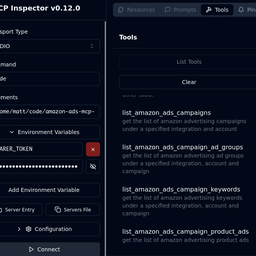
Aapl Ads MCP Tools (6)
Read-only Apple Search Ads API v5 access
Campaign, ad group, and keyword listing
Campaign, ad group, and keyword performance reports
Search terms reports
Hourly, daily, weekly, and monthly granularity
30-day default reporting window
Makers Page MCP Tools (34)
create_draft
Ready-to-Paste Client Configurations
Paste either (or both) of these JSON server blocks into your client config file (e.g. claude_desktop_config.json or ~/.cursor/mcp.json).
Aapl Ads MCP Configuration
Makers Page MCP Configuration