obsidianknowledge-managementsearchtasksmemory
MCP server providing hybrid search, task management, memory, and read/write access for Obsidian vaults with OAuth protection.
Quick Install
Automated & IDE SetupCopy the AI prompt to install this server into Claude Code, Cursor, or another agent — or use 1-click editor setup below.
We couldn’t automatically confirm this listing starts correctly
We ran the install command below but it didn't respond within our test window — this can mean a slow first-time install rather than a real problem.
npx -y vault-cortex@latestNo response to initialize.
This is an experimental automated check and can have false negatives — missing environment variables, a slow cold install, etc. It doesn’t necessarily mean something’s wrong. Last checked 1mo ago.
Manual Client & Custom JSON ConfigExpand JSON ▾
Client Config & Setup
Choose your client or environment
Target File:
💡 Paste the JSON block into your client's configuration file under mcpServers, then restart the application.
Overview
Use cases
Search and retrieve notes and files from an Obsidian vault
Manage and update tasks within the vault using AI agents
Recall and reason over personal knowledge with structured memory
Write back updates and new content to the vault
Access the vault remotely via OAuth-secured MCP clients
Key features
Hybrid search using FTS5 keyword matching and vector similarity with reranking
Structured, append-only memory with topic recall and history
Kanban-aware task queries and updates supporting Tasks plugin and Dataview formats
Read and render non-markdown files including images, PDFs, and canvases
Obsidian-native support for frontmatter, wikilinks, tags, headings, and daily notes
OAuth 2.1 authentication for secure remote access
Capabilities & Tool Schemas
Inspect callable tools, capabilities, and parameters exposed to AI agents by Vault Cortex.
Extracted Tool Capabilities
Hybrid search using FTS5 keyword matching and vector similarity with reranking
Structured, append-only memory with topic recall and history
Kanban-aware task queries and updates supporting Tasks plugin and Dataview formats
Read and render non-markdown files including images, PDFs, and canvases
Obsidian-native support for frontmatter, wikilinks, tags, headings, and daily notes
OAuth 2.1 authentication for secure remote access
Documentation Overview








Vault Cortex is a standalone MCP server that gives any AI agent hybrid search, task management, structured memory, and read/write access to your Obsidian vault. No plugins, no running Obsidian, no separate bridge. One Docker container, your vault folder, a full tool suite + guided prompts. Run it on a remote server with Obsidian Sync, and the same vault is accessible from your phone, claude.ai, or any remote MCP client, secured with OAuth 2.1. Deploy it with one click or self-host it; either way, the vault is always yours.
Contents — What you get · Quick Start · How It Works · Hybrid Search · Memory · Tasks · Files · Tools · Prompts · Properties · Config · Daily Notes · Data Integrity · Auth · Deployment · One-click Deploy · Community Deployments
What you get
| Search the vault | Reason over notes | Write back to Obsidian |
 | 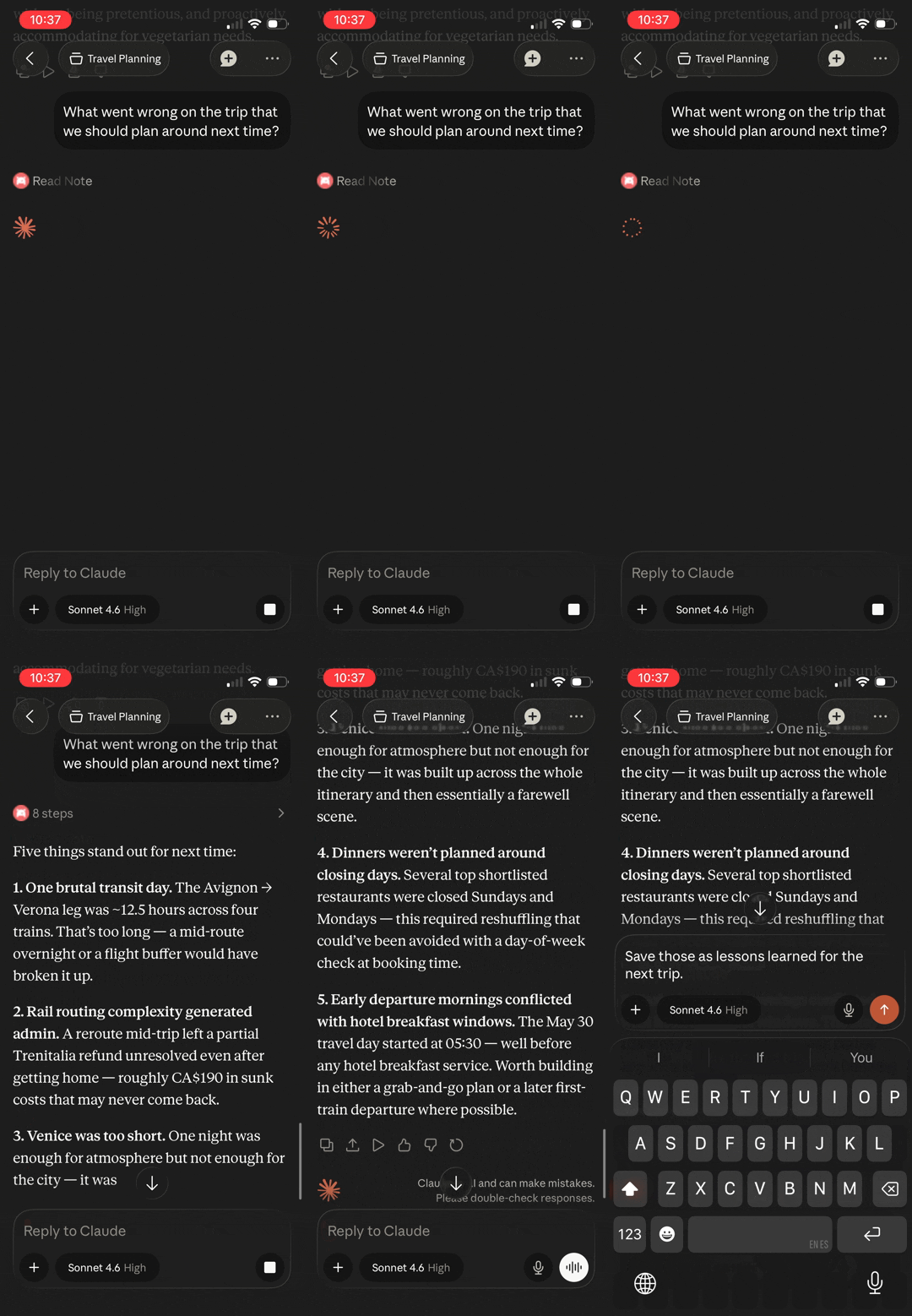 | 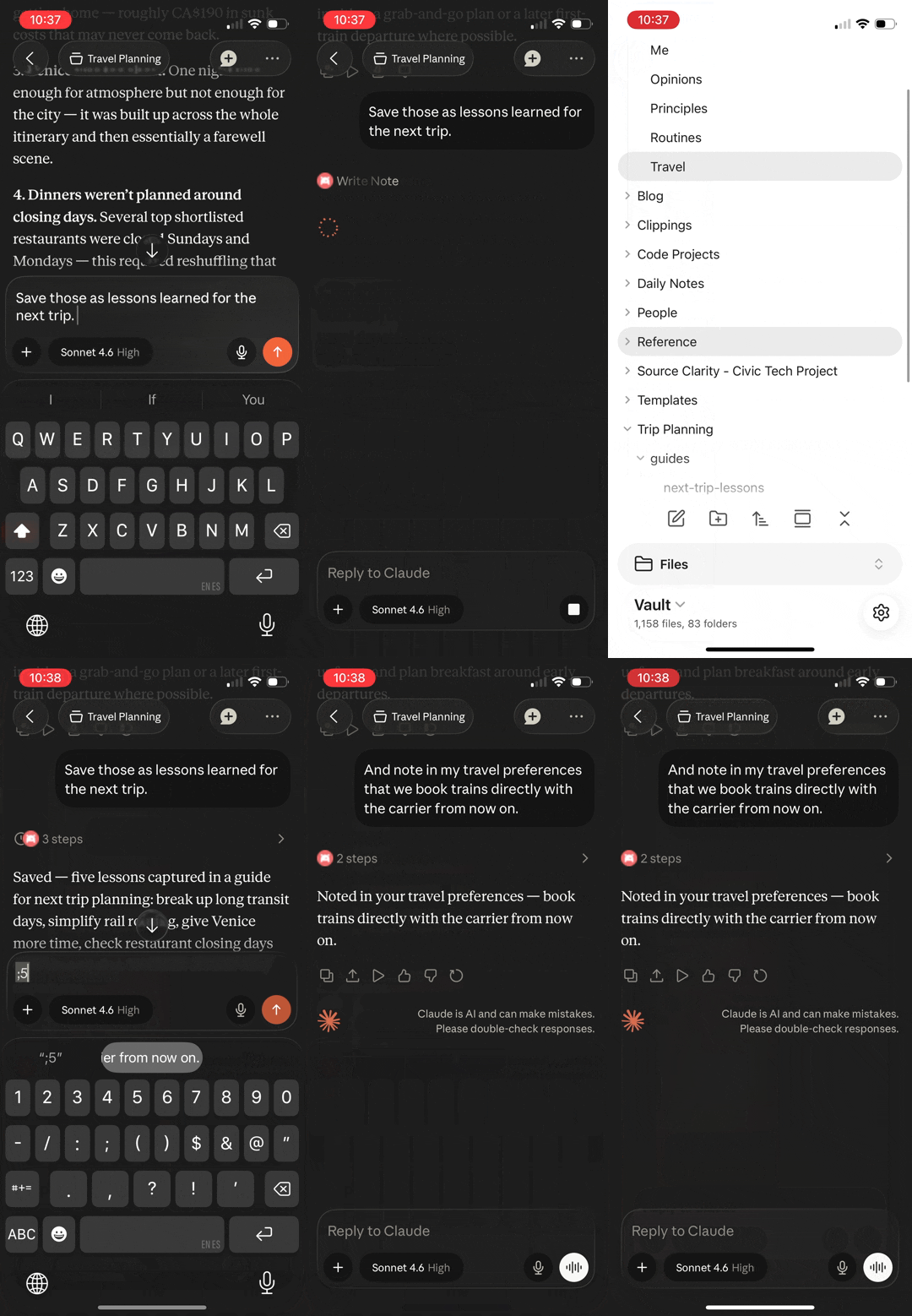 |
All three demos run on Claude mobile. The vault is on a remote server, not the phone.
- Remote access — works from your phone, a remote server, or any MCP client via OAuth 2.1. One click on Render or Railway gets you there with no server to manage; a VPS works too.
- Plugin-free — Obsidian doesn't need to be running. The server works directly with
.mdfiles on disk. Headless sync keeps the vault current. - Hybrid search — FTS5 keyword matching + vector semantic similarity via RRF fusion, refined by cross-encoder reranking for intent-heavy queries. Keywords stay precise on exact terms and jargon; vectors find notes even when your words differ from the vault's.
- Structured memory — dated, append-only entries accumulate into a personal knowledge layer, auto-initialized for AI personalization. Topic recall answers "what do I think about X?" with the current take and the dated history behind it — evolution included.
- Tasks — Kanban-aware task queries and updates: triage by status, dates, or priority, then complete, reprioritize, or move tasks between lanes in one call. Parses both Tasks plugin emoji and Dataview inline-field formats.
- Link graph — backlinks, outgoing links, and orphan detection across the vault
- Files — read the vault's non-markdown files too: images arrive as actual images (shrunk to fit when needed), PDFs as structured text or rendered pages, canvases as readable outlines, data files as text
- Obsidian-native — understands frontmatter, wikilinks, tags, headings, and daily notes
- Guided workflows — built-in prompts for vault health, memory review, and daily reconciliation — assembled from live vault data each time
Tested across a 15-day trip through Europe. 30+ sessions from a phone, 216 tool calls, zero laptop access needed. Writes in one session were immediately available in the next, across cities and days.
Quick Start
Local (2 minutes — Docker + your vault folder)
Prerequisites: Docker (or a Docker-compatible runtime, e.g. OrbStack, Colima, Podman), Node.js >= 22.12 (only for the CLI — the server itself runs in Docker), and an Obsidian vault (or any folder of .md files).
That's it — the CLI asks for your vault path, generates the auth token and config files, starts the server, and prints the connection details for your MCP client (CLI reference →).

Set up with the CLI? It manages the server from here on — configure, upgrade, start, restart, logs, down (CLI reference →).
Set up with Compose? Stick with Compose for updates too (docker compose pull && docker compose up -d) — the CLI and Compose manage the container independently.
Manual setup (no Node.js needed)
Full local guide → (includes Windows setup)
Remote (access from anywhere)
Your vault on a server, kept current by Obsidian Sync, reachable from your phone, claude.ai, or any MCP client. The one-click options ask for your vault name and timezone (plus the vault password if your vault is encrypted), then handle HTTPS, restarts, a generated MCP token, and persistent storage. Once deployed, a setup page walks you through signing in to Obsidian Sync in your browser. On your own server the CLI asks for the public URL and vault name, captures the Sync token for you, and generates the MCP token; HTTPS is yours to set up.
Related MCP Servers
Adoption & maintenance
Factual signals from GitHub, npm, and our automated checks — not a rating.
GitHub stars
19
Stargazers on the source repository.
Last commit
27d ago
Most recent push to the default branch.
Install check
Inconclusive
Didn't respond in our test window — often a slow first install.
Directory activity
2 views
Config copies, upvotes, and views on AllMCPs.
Reviews
No reviews yet — be the first to share how this listing worked for you.
Frequently Asked Questions about Vault Cortex
AllMCPs Directory Badge
Showcase your server listing on GitHub or your project documentation. Embed this dynamic SVG badge to highlight official listing status and live engagement.
Badge Style:
Live Dynamic SVG Preview
Markdown (GitHub README)
[](https://allmcps.com/mcp/aliasunder-vault-cortex)HTML Embed
<a href="https://allmcps.com/mcp/aliasunder-vault-cortex"><img src="https://allmcps.com/api/badge/aliasunder-vault-cortex?style=directory" alt="Vault Cortex on AllMCPs" /></a>