# Purl [Health: Active]
**Category:** 💻 Developer Tools
**Repository:** https://github.com/nublson/purl
**GitHub Stars:** 0
**Views:** 0
**Installs:** 0
**Upvotes:** 0
**Directory Page:** https://allmcps.com/mcp/purl
## Description
Search and save to your Purl read-it-later knowledge base from any MCP client.
## Claude Desktop Quick Installation
Remote MCP endpoint (confidence: high). Install path detected from listing signals. Add as a URL/SSE server in your client:
```json
"mcpServers": {
"purl": {
"url": "https://purl.nublson.com](https://purl.nublson.com"
}
}
```
## Documentation & README
# Purl
**Save anything. Ask questions. Get answers.**
**Live preview:** [https://purl.nublson.com](https://purl.nublson.com)
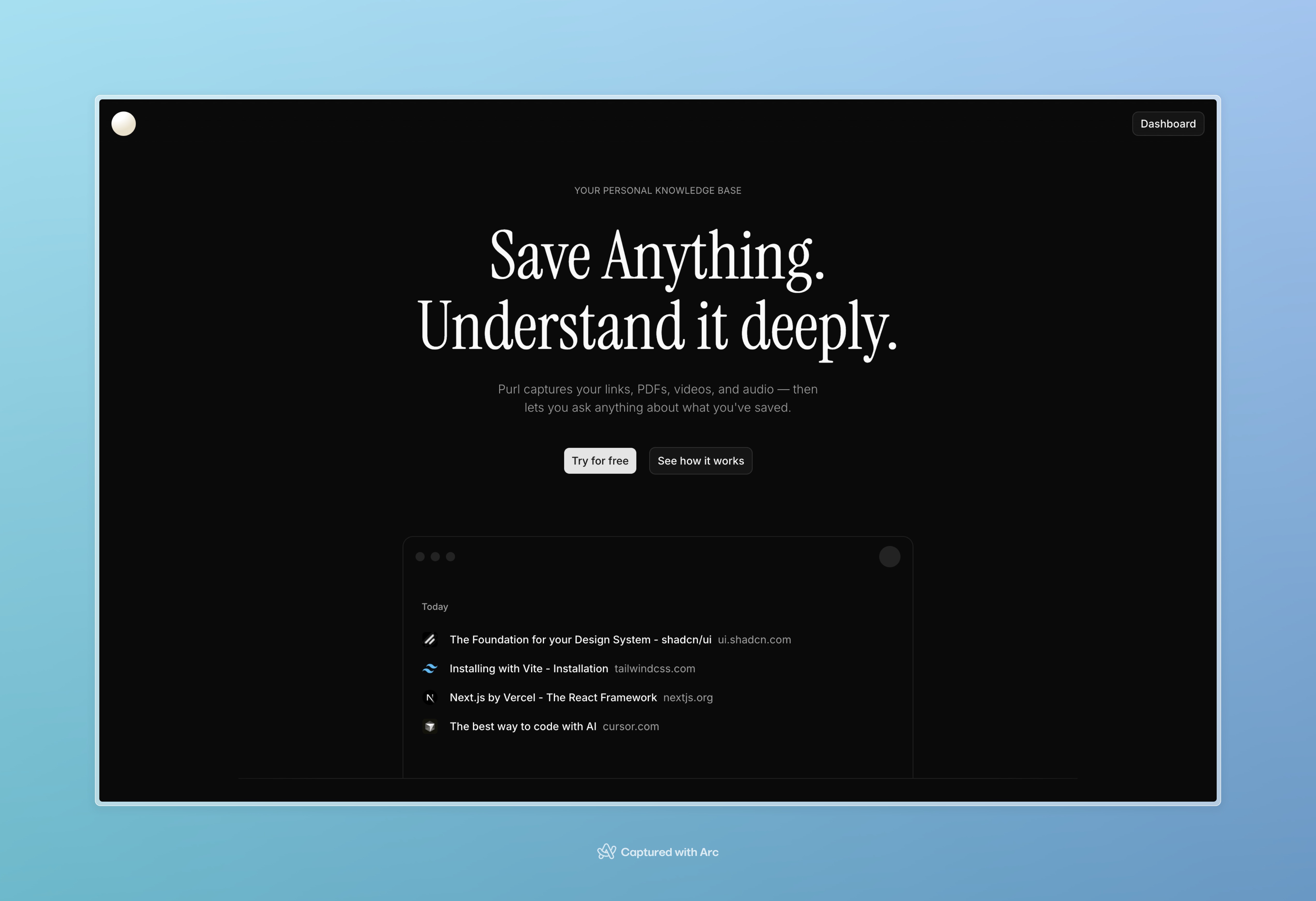
Purl is an AI-powered read-it-later app and personal knowledge base. You paste URLs (or upload files): web pages, PDFs, YouTube videos, and audio. Purl ingests the content, stores chunked text with vector embeddings, and answers questions by searching what you saved — optionally scoped with `@` mentions to specific items.
**Plans:** **Free**, **Pro**, and **BYOK** are enforced server-side (see [`docs/commercial-model.md`](https://github.com/nublson/purl/blob/HEAD/docs/commercial-model.md)). New signups get a **7-day Pro trial** (no card required). **Stripe Checkout** handles the one-time Pro payment; **webhooks** sync status to Postgres.
The product goal: one place to stash material you care about, then query it later with citations instead of digging through bookmarks.
## Plans (summary)
| Feature | Free | Pro ($39 one-time) | BYOK (free) |
| ----------------------------- | ---- | ------------------ | --------------- |
| Save links (100 lifetime cap) | Yes | Unlimited | Unlimited |
| Full-text search | Yes | Yes | Yes |
| AI extraction & embeddings | No | Yes (150/mo) | Yes (unlimited) |
| Semantic search | No | Yes | Yes |
| PDF/audio **upload** | No | Yes | Yes |
| AI chat | No | 300 msg/mo | Unlimited |
Exact limits are in [`docs/commercial-model.md`](https://github.com/nublson/purl/blob/HEAD/docs/commercial-model.md).
## Implemented today
- **Marketing site** — Landing page with hero, features, supported content types, pricing section, and FAQ.
- **Authentication** — Email/password (and related flows) via [Better Auth](https://www.better-auth.com/); optional email verification through [Resend](https://resend.com/).
- **Save & organize**
- Add items by URL with automatic content-type detection (web, PDF, YouTube, audio).
- **File upload** for PDF and audio (size limits enforced server-side).
- Links grouped by relative time (e.g. Today, This Week, Last Month).
- Preview metadata (title, description, favicon, thumbnail where available).
- **Ingestion pipeline** — Fetches or extracts text (including transcripts for YouTube/audio), chunks it, embeds via **Vercel AI Gateway** (`openai/text-embedding-3-small`), stores in Postgres with **pgvector**; tracks per-link ingest status (pending, processing, completed, failed, skipped for edge cases like heavy SPAs).
- **AI providers** — **Vercel AI Gateway** for streaming chat (Claude) and **embeddings** (`openai/text-embedding-3-small`). **OpenAI** directly for **Whisper** transcription only (`OPENAI_API_KEY`). Keys live in server environment variables only.
- **AI Gateway observability** — Chat, ingest embeddings, and the chat tool’s semantic search send `providerOptions.gateway` with the signed-in **`user`** id and **`tags`** so the [Vercel AI](https://vercel.com/docs/ai-gateway) dashboard can filter spend and usage by person and surface (`feature:chat`, `env:…` from `VERCEL_ENV` / `NODE_ENV`; `feature:ingest` on save pipelines; `feature:semantic-search` when the model runs vector search over saved chunks).
- **Hardened outbound fetch** — Server-side `safeFetch` with optional proxy/DNS controls (see `AGENTS.md`). For reliable **YouTube transcripts on Vercel**, configure [`SAFE_OUTBOUND_HTTP_PROXY`](https://github.com/nublson/purl/blob/HEAD/docs/production-outbound-proxy.md) in production.
- **Realtime list sync** — Supabase Realtime so saves and updates propagate across tabs/devices quickly.
- **AI chat**
- Streaming replies (**Anthropic Claude**) with tool use: list saved items (filters by date/type) and search over stored chunks.
- **`@` mentions** to focus the model on specific saved links; mentions persist on messages.
- Multiple chats, titles, and message history stored in the database.
- **Link actions** — Open original, copy URL, edit metadata, re-ingest, delete, add to chat context from the list.
- **Operational extras** — Optional Upstash-backed API rate limiting, optional Sentry, Vitest coverage for critical paths.
- **PWA (installable app)** — [Web App Manifest](https://github.com/nublson/purl/blob/HEAD/public/manifest.json) plus a [Serwist](https://serwist.pages.dev/) service worker ([`src/app/sw.ts`](https://github.com/nublson/purl/blob/HEAD/src/app/sw.ts)) that builds to **`public/sw.js`** (generated on `pnpm build`, gitignored). Enables **Install** in Chrome/Edge and similar where the platform supports it, with runtime caching via Serwist's Next.js defaults and a static offline shell at [`/~offline`](https://github.com/nublson/purl/blob/HEAD/src/app/~offline/page.tsx). **Serwist is disabled in `pnpm dev`** to avoid service-worker cache surprises during development — use **`pnpm build && pnpm start`** (or your production URL) to exercise installability and the SW.
## Ingestion flow
Saving a link is **synchronous** through metadata resolution and the database row; **heavy work runs afterward** so the API can return quickly.
1. **Input** — `POST /api/links` with a URL, or `POST /api/upload` with a PDF/audio file (files go to Supabase Storage; the `Link` stores the public URL).
2. **Classify & decorate** — Server-side [`detectContentType`](https://github.com/nublson/purl/blob/HEAD/src/lib/server-detect-content-type.ts) (SSRF-safe `HEAD` / sniff) plus [`scrapeLinkMetadata`](https://github.com/nublson/purl/blob/HEAD/src/lib/links.ts) (Open Graph HTML, PDF `Content-Disposition` / size, YouTube oEmbed). Duplicates of the same URL **refresh** metadata and reset ingestion.
3. **Persist** — A `Link` row is created (default **`PENDING`**) with title, favicon, thumbnail, domain, and `contentType` (`WEB`, `PDF`, `YOUTUBE`, or `AUDIO`).
4. **Schedule** — [`prepareIngestForLink`](https://github.com/nublson/purl/blob/HEAD/src/lib/links.ts) enforces plan limits, then uses Next.js [`after()`](https://nextjs.org/docs/app/api-reference/functions/after) to run the right handler: [`ingestWeb`](https://github.com/nublson/purl/blob/HEAD/src/lib/ingest-web.ts), [`ingestPdf`](https://github.com/nublson/purl/blob/HEAD/src/lib/ingest-pdf.ts), [`ingestYoutube`](https://github.com/nublson/purl/blob/HEAD/src/lib/ingest-youtube.ts), or [`ingestAudio`](https://github.com/nublson/purl/blob/HEAD/src/lib/ingest-audio.ts). Free accounts skip extraction (metadata-only; ingest **`SKIPPED`**).
5. **Pipeline** (each handler) — Set **`PROCESSING`** → fetch or extract plain text → split into chunks (with a synthetic **metadata** chunk first) → **Vercel AI Gateway** embeddings (`openai/text-embedding-3-small`) → replace `LinkContent` rows and attach **pgvector** values → **`COMPLETED`**. Failures set `ingestFailureReason` (`SCRAPE_FAILED`, `LINK_NOT_FOUND`, `OTHER`, etc.) alongside **`FAILED`**. **Re-ingest** reuses the same pipeline without re-scraping listing metadata.
**Web pages (`WEB`).** Article-style HTML is fetched with [`safeFetch`](https://github.com/nublson/purl/blob/HEAD/src/lib/safe-outbound-fetch.ts), parsed in **jsdom**, and the main content is extracted with Mozilla's [**Readability**](https://github.com/mozilla/readability) ([`scrapeWebContent`](https://github.com/nublson/purl/blob/HEAD/src/lib/web-scraper.ts)). That matches how Firefox's reader mode chooses "the article," but it is **not universal**: many **SPAs** and other **client-rendered** sites return a thin HTML shell to crawlers, so Readability finds little or nothing and ingest may **`FAIL`**. A small set of hosts that need a full browser are rejected early (`UnsupportedSpaError` → ingest **`SKIPPED`**).
Realtime subscribers get updates when ingestion finishes via [`notifyLinksAfterIngest`](https://github.com/nublson/purl/blob/HEAD/src/lib/notify-links-after-ingest.ts) (which calls [`broadcastLinksChanged`](https://github.com/nublson/purl/blob/HEAD/src/lib/realtime-broadcast.ts)).
```mermaid
flowchart TB
subgraph save["Save path (responds to client)"]
A(["URL or file upload"]) --> B["/api/links or /api/upload"]
B --> C["detectContentType + scrapeLinkMetadata (safeFetch)"]
C --> D["Insert Link — ingestStatus PENDING"]
D --> E["after() → prepareIngestForLink by contentType"]
end
subgraph work["Background ingest"]
E --> F["ingestStatus PROCESSING"]
F --> G{"Extract text"}
G --> W["WEB — jsdom + Mozilla Readability"]
G --> P["PDF — page text"]
G --> Y["YOUTUBE — transcript"]
G --> A2["AUDIO — transcription"]
W --> H["Chunk + metadata header"]
P --> H
Y --> H
A2 --> H
H --> I["Gateway embeddings"]
I --> J["Write LinkContent + pgvector"]
J --> K{"Outcome"}
K --> K1["COMPLETED"]
K --> K2["FAILED (+ ingestFailureReason)"]
K --> K3["SKIPPED (known SPA hosts)"]
end
K1 --> R["Realtime: list refresh"]
K2 --> R
K3 --> R
```
## Not implemented yet
These are called out explicitly because the repo is going public:
- **Settings breadth** — Settings include account deletion; broader account preferences (profile edits, password change, notification settings, etc.) are not implemented yet.
**Marketing vs. product:** The landing page copy mentions ideas such as **collections** and a **weekly digest**. Those are **not** built in the current schema or app — treat them as roadmap, not shipped features.
## Tech stack
- **Web:** Next.js (App Router), React, TypeScript
- **UI:** Tailwind CSS, shadcn/ui
- **Auth:** Better Auth
- **Database:** PostgreSQL + Prisma (with vector column for embeddings)
- **AI:** **Vercel AI Gateway** (Claude chat + OpenAI embeddings through gateway) and **OpenAI** (Whisper transcription direct) via the Vercel AI SDK — server environment variables
- **Email (optional in dev):** Resend for verification emails
- **Realtime:** Supabase client (anon + service role on server)
- **PWA:** [Serwist](https://serwist.pages.dev/) (`@serwist/next`), web manifest + precache / offline fallback
## CI / GitHub Actions
Automation lives under [`.github/workflows/`](https://github.com/nublson/purl/blob/HEAD/.github/workflows/). Every PR and manual release is gated by these pipelines.
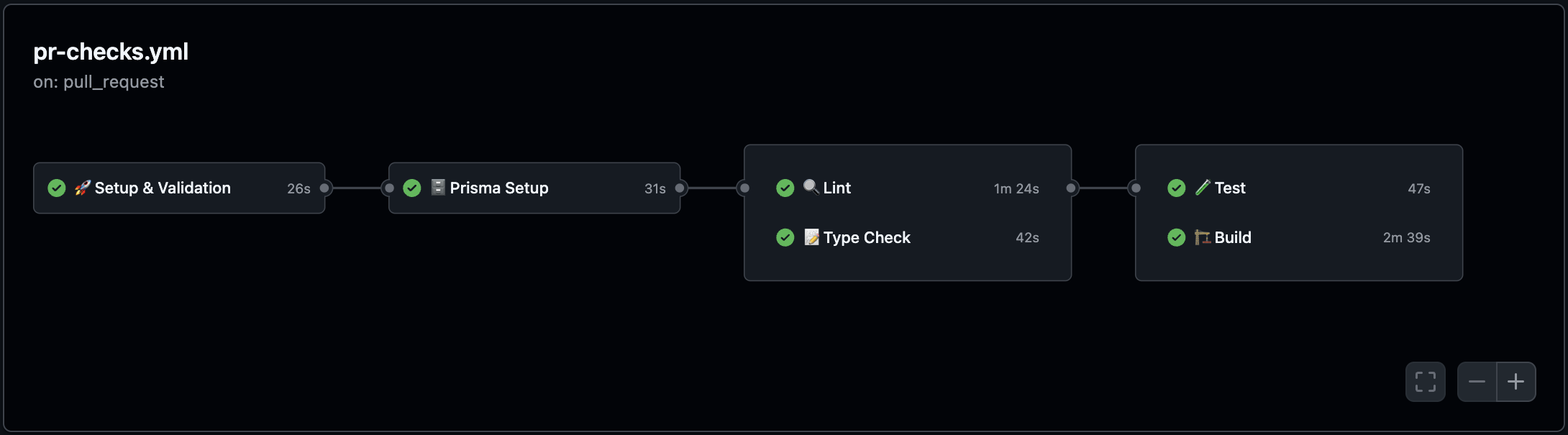
### PR checks — [`pr-checks.yml`](https://github.com/nublson/purl/blob/HEAD/.github/workflows/pr-checks.yml)
Runs on **`pull_request`** to **`develop`** and **`main`**: **Setup & validation** → **Prisma** (generate client + type fixes) → **Lint** and **type check** (in parallel) → **Tests** and **production build** (in parallel, after lint and type check pass). Concurrency is per-PR so new pushes cancel stale runs.
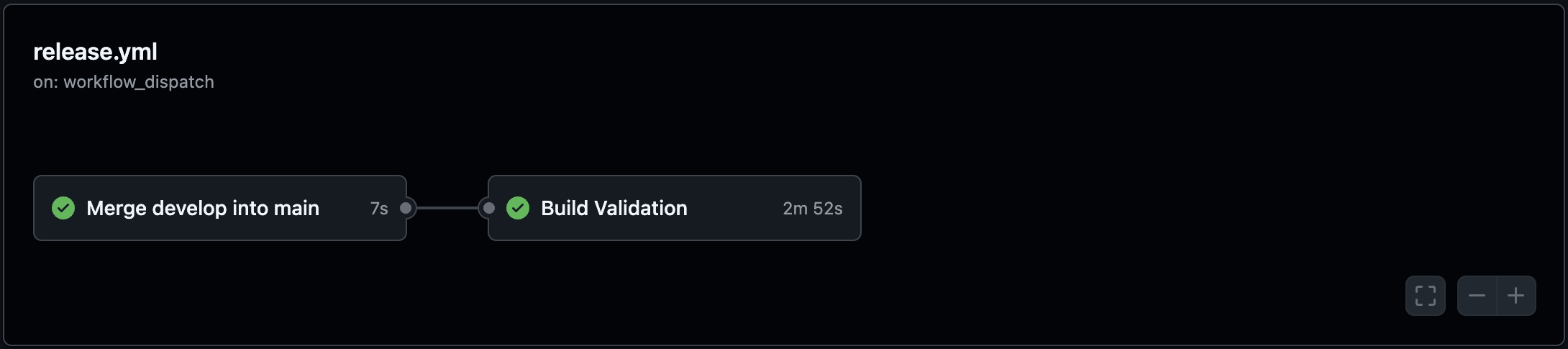
### Release — [`release.yml`](https://github.com/nublson/purl/blob/HEAD/.github/workflows/release.yml)
Runs on **`workflow_dispatch`** (manual): **Merge `develop` into `main`**, then **build validation** so production is only promoted after a green build.
## Security
Purl is built around **untrusted input** (arbitrary URLs and uploaded files). A few layers matter in production:
- **SSRF-aware outbound fetches** — User-supplied URLs are not passed to raw `fetch`. Ingest, OG/thumbnail probes, PDF fetch, content-type sniffing, and similar paths go through [`safeFetch`](https://github.com/nublson/purl/blob/HEAD/src/lib/safe-outbound-fetch.ts): HTTP(S) only, blocked private/link-local/reserved targets, redirect handling with per-hop host checks, DNS resolution pinned before connect (mitigates classic DNS rebinding against the pre-check), optional response size caps (e.g. PDF proxy). Optional **egress proxy** and custom DNS servers are documented in [`AGENTS.md`](https://github.com/nublson/purl/blob/HEAD/AGENTS.md).
- **Authentication & route gating** — [Better Auth](https://www.better-auth.com/) sessions; Next.js [`proxy`](https://github.com/nublson/purl/blob/HEAD/src/proxy.ts) redirects unauthenticated users away from private routes and can require **email verification** before app access.
- **API authorization** — Sensitive routes (`/api/chat`, `/api/links`, `/api/upload`, chats, etc.) resolve the session server-side and scope work to the signed-in user (e.g. chat mention IDs are validated against ownership).
- **Server-managed AI keys** — Chat and embeddings route through **Vercel AI Gateway** (`AI_GATEWAY_API_KEY` or `VERCEL_OIDC_TOKEN` after `vercel env pull`). **Whisper** transcription still calls **OpenAI** directly via `OPENAI_API_KEY`. These keys are never exposed to the client.
- **Rate limiting** — When `UPSTASH_REDIS_REST_URL` and `UPSTASH_REDIS_REST_TOKEN` are set, the proxy applies per-IP limits to **`/api/auth/*`**, **`POST /api/chat`**, **`POST /api/links`**, and **`POST /api/upload`** (see [`proxy-rate-limit.ts`](https://github.com/nublson/purl/blob/HEAD/src/lib/proxy-rate-limit.ts)). Without Upstash, limits are disabled — fine locally, not ideal for production.
- **Secrets & client exposure** — `SUPABASE_SERVICE_ROLE_KEY` and similar values are server-only. The browser uses the Supabase **anon** key for Realtime only; `.env` stays gitignored.
- **Upload bounds** — Audio uploads enforce a maximum size server-side; PDF proxy streaming is capped (see `safe-outbound-fetch` / upload limits in code).
**Reporting a vulnerability:** use [GitHub Security Advisories](https://docs.github.com/en/code-security/security-advisories/guidance-on-reporting-and-writing-information-about-vulnerabilities/privately-reporting-a-security-vulnerability) for this repository so details stay private until patched.
## Stripe (one-time payment)
Billing uses **Stripe Checkout** (`POST /api/billing/checkout`) for the one-time Pro payment, **Customer Portal** (`POST /api/billing/portal`), and **webhooks** (`POST /api/billing/webhook`). Plan entitlements and usage limits are enforced in-app from Postgres (see [`src/lib/entitlements.ts`](https://github.com/nublson/purl/blob/HEAD/src/lib/entitlements.ts)); webhooks keep the plan row in sync.
**Env (see `.env.example`):** `STRIPE_SECRET_KEY`, `STRIPE_PUBLISHABLE_KEY` (server-only), `STRIPE_WEBHOOK_SECRET`, `STRIPE_PRICE_PRO` (one-time price ID), optional `ADMIN_TOKEN` for `POST /api/admin/grants`.
**Local webhook testing:** create a one-time Pro price in [Stripe Test mode](https://dashboard.stripe.com/test/products), put the price ID in `.env`, then:
```bash
stripe listen --forward-to localhost:3000/api/billing/webhook
```
Copy the CLI signing secret into `STRIPE_WEBHOOK_SECRET` for that shell session. Trigger flows with `stripe trigger checkout.session.completed` (and exercise checkout from the app). **Go-live:** recreate the product and a Live webhook endpoint; rotate keys and webhook secret per environment.
## Setup (local development)
### Prerequisites
- **Node.js:** recent LTS
- **Package manager:** `pnpm` (this repo includes `pnpm-lock.yaml`)
- **Postgres:** local or hosted (Supabase works well with pgvector)
### 1) Install dependencies
```bash
pnpm install
```
### 2) Configure environment variables
Create a `.env` file in the repo root. See `.env.example` for the full list; minimum for core behavior:
```bash
DATABASE_URL="postgresql://USER:PASSWORD@HOST:5432/DBNAME"
# AI (server-side): gateway for chat + embeddings; OpenAI key for Whisper only
AI_GATEWAY_API_KEY="..." # or use VERCEL_OIDC_TOKEN from `vercel env pull`
OPENAI_API_KEY="sk-proj-..."
# Supabase Realtime — cross-device instant link list sync (same project as Postgres)
NEXT_PUBLIC_SUPABASE_URL="https://YOUR_PROJECT.supabase.co"
NEXT_PUBLIC_SUPABASE_ANON_KEY="eyJ..."
SUPABASE_SERVICE_ROLE_KEY="eyJ..."
# Optional (used for email verification on signup)
RESEND_API_KEY="re_..."
RESEND_FROM="Purl "
```
Notes:
- **`DATABASE_URL`** is required (Prisma + Better Auth).
- **`AI_GATEWAY_API_KEY`** (or **`VERCEL_OIDC_TOKEN`** on Vercel / after `vercel env pull`) is required for **chat** and **embeddings** (ingest + semantic search) via AI Gateway. Enable **AI Gateway** in the Vercel project settings for OIDC-based auth. Optional: configure **per-user** limits in the project AI Gateway settings; the app passes the Better Auth user id on gateway calls.
- **`OPENAI_API_KEY`** is required for **Whisper** transcription (audio ingest / URLs). Omit only if you do not use audio transcription.
- **Supabase** env vars are required for realtime link list sync. Use **Project Settings → API** in the Supabase dashboard. The service role key must stay server-only.
- **Resend** is optional for local dev: if `RESEND_API_KEY` is not set, signup can still work, but verification emails will not send.
- **Better Auth** secrets and URLs are in `.env.example` — copy those keys for a working auth setup.
### 3) Run database migrations
```bash
pnpm prisma migrate dev
```
### 4) Generate Prisma client (if needed)
```bash
pnpm prisma generate
```
### 5) Start the dev server
```bash
pnpm dev
```
Open `http://localhost:3000`.
**PWA / install:** With `pnpm dev`, the service worker is not active. After a production build, `public/sw.js` exists locally; run **`pnpm start`** and open the app in Chromium to use **Install** or to test offline navigation to `/~offline`.
## Testing
Tests use [Vitest](https://vitest.dev/) and focus on critical logic (formatters, link grouping, auth routing, API behavior, ingest pipeline). They intentionally avoid shallow UI-only wrappers.
```bash
pnpm test # run once
pnpm test:watch # watch mode
```
## Useful commands
```bash
pnpm lint
pnpm build
pnpm start
pnpm test
```
More contributor notes (Prisma, Sentry, outbound proxy env): see [`AGENTS.md`](https://github.com/nublson/purl/blob/HEAD/AGENTS.md).