
Give AI agents a safe, self-hosted OWASP ZAP operator for guided web security scans, findings, reports, and production guardrails.



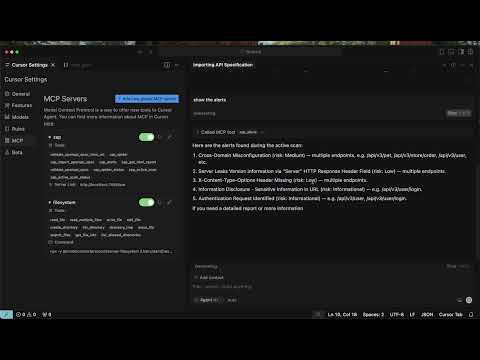 ## Quick Start
Prerequisites:
- Docker 20.10+
- Docker Compose v2 (`docker compose`)
- an MCP-capable client, or the bundled Open WebUI client
```bash
git clone https://github.com/dtkmn/mcp-zap-server.git
cd mcp-zap-server
./bin/bootstrap-local.sh
./dev.sh
./bin/self-serve-doctor.sh
```
Those scripts are the supported local happy path, not hidden magic:
- `bootstrap-local.sh` creates `.env`, generates local API keys, and prepares the ZAP workspace.
- `dev.sh` starts the Docker Compose stack with the faster JVM image.
- `self-serve-doctor.sh` checks Docker, auth, MCP initialize, `tools/list`, guided tools, and a harmless tool call.
The JVM image remains Java 25 end to end: source compilation, bytecode, and
runtime all target Java 25. Its final runtime is distroless, so it intentionally
contains no shell, package manager, or `curl`. A small built-in HTTP probe keeps
the normal Docker Compose health status; `docker compose ps` still reports the
MCP service as `(healthy)` after startup.
Then open:
- Open WebUI: `http://localhost:3000`
- MCP endpoint for host-side clients: `http://localhost:7456/mcp`
- Cursor config example: [`examples/cursor/mcp.json`](https://github.com/dtkmn/mcp-zap-server/blob/HEAD/examples/cursor/mcp.json)
When scanning the bundled demo targets, use the container URLs that ZAP can
reach from inside Compose:
- Juice Shop scan target: `http://juice-shop:3000`
- Petstore scan target: `http://petstore:8080`
The default Compose stack publishes host ports on `127.0.0.1` only. Set `MCP_ZAP_BIND_ADDRESS=0.0.0.0` only when you intentionally expose the stack behind trusted network controls.
Client setup:
- [Self-Serve First Run](https://danieltse.org/mcp-zap-server/getting-started/self-serve-first-run/)
- [MCP Access Authentication](https://danieltse.org/mcp-zap-server/getting-started/authentication-quick-start/)
- [MCP Client Configuration](https://danieltse.org/mcp-zap-server/getting-started/mcp-client-authentication/)
- [Optional Target Form-Login](https://danieltse.org/mcp-zap-server/getting-started/form-login-target-authentication/)
- [Tool Surfaces](https://danieltse.org/mcp-zap-server/getting-started/tool-surfaces/)
- [Agent install notes](https://github.com/dtkmn/mcp-zap-server/blob/HEAD/llms-install.md)
There are two independent authentication layers. The API key or JWT lets
Cursor call MCP ZAP Server. An optional target-auth profile lets ZAP log in to
an application you are authorized to scan. Most first runs need only the MCP
API key; never put a target website password in Cursor or an MCP prompt.
## Discovery Metadata
This repository includes MCP Registry metadata in [`.mcp/server.json`](https://github.com/dtkmn/mcp-zap-server/blob/HEAD/.mcp/server.json). The `v0.11.0` Docker images are labeled with the MCP server name expected by registry and catalog tooling.
Docker Compose remains the easiest installation path because the MCP server is designed to operate with an OWASP ZAP sidecar and explicit auth keys. The OCI package metadata is for advanced standalone installs where OWASP ZAP is already running and reachable from the MCP container.
## What You Get
- **Guided scans**: intent-first tools for spider, active scan, passive scan, API imports, findings, reports, and scan history.
- **Expert ZAP control**: optional lower-level tools for advanced ZAP context, user, scan, and report workflows.
- **Authentication**: API key mode by default, optional JWT mode with refresh and revocation support.
- **Runtime policy bundles**: dry-run and enforcement support through `zap_policy_dry_run` and policy-mode configuration.
- **Scan queue and history**: queued active, spider, and AJAX Spider jobs with claim-based recovery, durable Postgres state, and evidence export.
- **Extension contracts**: experimental policy, protection, evidence metadata, and extension metadata APIs with sample extension packaging.
- **Operational guardrails**: request body limits, rate limits, workspace quotas, tool-scope authorization, structured logs, metrics, and audit events.
- **Deployment paths**: local Docker Compose, published JVM container images, and Helm charts for Kubernetes.
## Latest Release
`v0.11.0` modernizes the runtime and container supply chain without changing MCP tool names or input schemas:
- gateway-core and its WebFlux adapter move to `0.8.0`, with application data binding migrated to Jackson 3 and managed by the Jackson `3.2.1` BOM
- the final Java 25 image is built on a Cosign-verified, digest-pinned distroless runtime with a shell-free HTTP health probe
- the unsupported native-image deployment facade is removed; use the versioned JVM image or Helm
- main CI no longer publishes rolling `main` or `sha-*` images; stable AMD64 and ARM64 images are published only from GitHub immutable-release events
- no database migration or authentication configuration change is required; the container remains UID/GID `1000`, now stated explicitly in Helm
Read the full notes:
- [Release notes](https://github.com/dtkmn/mcp-zap-server/blob/HEAD/docs/releases/RELEASE_NOTES_0.11.0.md)
- [Changelog](https://github.com/dtkmn/mcp-zap-server/blob/HEAD/CHANGELOG.md)
- [GitHub releases](https://github.com/dtkmn/mcp-zap-server/releases)
## Security Defaults
The default posture is intentionally conservative:
- `api-key` mode is the base runtime default.
- `none` mode is for explicit local dev/test only.
- Docker Compose binds published ports to loopback by default.
- The Java 25 JVM image uses a digest-pinned distroless runtime with no shell or
package manager; debug it through logs, metrics, and external diagnostic
containers rather than installing tools into the application container.
- URL validation blocks localhost, private networks, and link-local targets by default.
- Target authentication is optional and profiles default to an empty list. When enabled, guided auth binds an exact server-side credential reference and login settings to one approved origin; callers provide only `profileId` and `targetUrl`.
- Public auth exchange endpoints are rate-limited.
- MCP request bodies have a hard early size cap.
Production and shared deployments should review:
- [Security Modes](https://danieltse.org/mcp-zap-server/security-modes/)
- [JWT Authentication](https://danieltse.org/mcp-zap-server/security-modes/jwt-authentication/)
- [Optional Target Form-Login](https://danieltse.org/mcp-zap-server/getting-started/form-login-target-authentication/)
- [Authenticated Scanning Reference](https://danieltse.org/mcp-zap-server/scanning/authenticated-scanning-best-practices/)
- [Abuse Protection](https://danieltse.org/mcp-zap-server/operations/abuse-protection/)
- [Production Readiness Checklist](https://danieltse.org/mcp-zap-server/operations/production-checklist/)
- [Security Policy](https://github.com/dtkmn/mcp-zap-server/blob/HEAD/SECURITY.md)
## Architecture
```mermaid
flowchart LR
Client["Open WebUI / MCP Client"] -->|"MCP over Streamable HTTP"| MCP["MCP ZAP Server"]
MCP -->|"ZAP API"| ZAP["OWASP ZAP"]
ZAP -->|"scan"| Target["Authorized target app"]
MCP -->|"reports / findings / history"| Evidence["Evidence + reports"]
```
For multi-replica queueing, durable Postgres state, claim recovery, and ingress affinity, use the operations docs instead of this README:
- [Queue Coordinator and Worker Claims](https://danieltse.org/mcp-zap-server/operations/queue-coordinator-leader-election/)
- [Local HA Compose Simulation](https://danieltse.org/mcp-zap-server/operations/local-ha-compose/)
- [Scan History Ledger](https://danieltse.org/mcp-zap-server/operations/scan-history-ledger/)
- [Helm Deployment](https://github.com/dtkmn/mcp-zap-server/blob/HEAD/helm/mcp-zap-server/README.md)
### Extension Model
ZAP is the first scanner engine, not the whole product boundary. The current
public extension work is intentionally small:
- `mcp-zap-extension-api` packages selected policy, protection, evidence, and
metadata contracts without gateway runtime internals.
- [How extensions work](https://github.com/dtkmn/mcp-zap-server/blob/HEAD/docs/extensions/README.md) explains the core versus
extension boundary.
- [Build your own extension](https://github.com/dtkmn/mcp-zap-server/blob/HEAD/docs/extensions/BUILD_YOUR_OWN_EXTENSION.md)
shows the target standalone repository shape.
- [Extension API release policy](https://github.com/dtkmn/mcp-zap-server/blob/HEAD/docs/extensions/EXTENSION_API_RELEASE_POLICY.md)
explains publication stages and compatibility gates.
- [Standalone sample extension](https://github.com/dtkmn/mcp-zap-server/blob/HEAD/examples/extensions/standalone-policy-metadata-extension/README.md)
proves a separate project can compile against the API artifact.
This is not runtime multi-engine support yet. Additional scanner engines need
an adapter design and explicit fail-closed capability boundaries before they
become product claims.
## Documentation Map
Start here:
- [Full documentation](https://danieltse.org/mcp-zap-server/)
- [Self-Serve First Run](https://danieltse.org/mcp-zap-server/getting-started/self-serve-first-run/)
- [OSS Extension Model](https://github.com/dtkmn/mcp-zap-server/blob/HEAD/docs/extensions/README.md)
- [MCP Access Authentication](https://danieltse.org/mcp-zap-server/getting-started/authentication-quick-start/)
- [MCP Client Authentication](https://danieltse.org/mcp-zap-server/getting-started/mcp-client-authentication/)
- [Optional Target Form-Login](https://danieltse.org/mcp-zap-server/getting-started/form-login-target-authentication/)
- [Tool Surfaces](https://danieltse.org/mcp-zap-server/getting-started/tool-surfaces/)
Scanning:
- [MCP Client Scan To Evidence](https://danieltse.org/mcp-zap-server/scanning/mcp-client-scan-to-evidence/)
- [Scan Execution Modes](https://danieltse.org/mcp-zap-server/scanning/scan-execution-modes/)
- [Seeded API Gate Playbook](https://danieltse.org/mcp-zap-server/scanning/seeded-api-gate-playbook/)
- [API Schema Imports](https://danieltse.org/mcp-zap-server/scanning/api-schema-imports/)
- [AJAX Spider](https://danieltse.org/mcp-zap-server/scanning/ajax-spider/)
- [Findings and Reports](https://danieltse.org/mcp-zap-server/scanning/findings-and-reports/)
Operations:
- [Runtime Policy Bundles](https://danieltse.org/mcp-zap-server/operations/runtime-policy-bundles/)
- [Observability](https://danieltse.org/mcp-zap-server/operations/observability/)
- [Production Checklist](https://danieltse.org/mcp-zap-server/operations/production-checklist/)
- [Release Evidence Handoff](https://danieltse.org/mcp-zap-server/operations/release-evidence-handoff-runbook/)
## Open Source Core And Extension Model
`mcp-zap-server` is the Apache-2.0-licensed open-source core. It is intended to be useful on its own for self-hosted MCP and OWASP ZAP workflows.
Private or enterprise capabilities may be built as separate extensions around this core. Those extensions are not required to run the OSS project, and enterprise implementation code is not shipped in this repository.
The boundary is intentional:
- this repository remains the public OSS distribution
- extension points should be documented and kept stable where practical
- private extensions must not weaken the security, licensing, or usability of the OSS core
- security scanning and open-source program entitlements for this repository apply only to this public project
## Contributing And Support
- [Contributing](https://github.com/dtkmn/mcp-zap-server/blob/HEAD/CONTRIBUTING.md)
- [Security Policy](https://github.com/dtkmn/mcp-zap-server/blob/HEAD/SECURITY.md)
- [Discussions](https://github.com/dtkmn/mcp-zap-server/discussions)
- [Demo video](https://danieltse.org/mcp-zap-server/demo.html)
If this project saves you time or becomes part of your security workflow, you can [sponsor the maintainer](https://github.com/sponsors/dtkmn) to support ongoing maintenance.
Agentic Lab offers optional paid support for teams adopting the public core in production. Commercial support is separate from the Apache-2.0-licensed OSS distribution, and the public core should remain usable without private extensions or paid services.
[Contact Agentic Lab](mailto:agentic.lab.au@gmail.com?subject=Inquiry:%20MCP%20ZAP%20Server%20Commercial%20Support)
## License
Apache License 2.0. Copyright 2025-2026 Daniel Tse. See [LICENSE](https://github.com/dtkmn/mcp-zap-server/blob/HEAD/LICENSE).
## Quick Start
Prerequisites:
- Docker 20.10+
- Docker Compose v2 (`docker compose`)
- an MCP-capable client, or the bundled Open WebUI client
```bash
git clone https://github.com/dtkmn/mcp-zap-server.git
cd mcp-zap-server
./bin/bootstrap-local.sh
./dev.sh
./bin/self-serve-doctor.sh
```
Those scripts are the supported local happy path, not hidden magic:
- `bootstrap-local.sh` creates `.env`, generates local API keys, and prepares the ZAP workspace.
- `dev.sh` starts the Docker Compose stack with the faster JVM image.
- `self-serve-doctor.sh` checks Docker, auth, MCP initialize, `tools/list`, guided tools, and a harmless tool call.
The JVM image remains Java 25 end to end: source compilation, bytecode, and
runtime all target Java 25. Its final runtime is distroless, so it intentionally
contains no shell, package manager, or `curl`. A small built-in HTTP probe keeps
the normal Docker Compose health status; `docker compose ps` still reports the
MCP service as `(healthy)` after startup.
Then open:
- Open WebUI: `http://localhost:3000`
- MCP endpoint for host-side clients: `http://localhost:7456/mcp`
- Cursor config example: [`examples/cursor/mcp.json`](https://github.com/dtkmn/mcp-zap-server/blob/HEAD/examples/cursor/mcp.json)
When scanning the bundled demo targets, use the container URLs that ZAP can
reach from inside Compose:
- Juice Shop scan target: `http://juice-shop:3000`
- Petstore scan target: `http://petstore:8080`
The default Compose stack publishes host ports on `127.0.0.1` only. Set `MCP_ZAP_BIND_ADDRESS=0.0.0.0` only when you intentionally expose the stack behind trusted network controls.
Client setup:
- [Self-Serve First Run](https://danieltse.org/mcp-zap-server/getting-started/self-serve-first-run/)
- [MCP Access Authentication](https://danieltse.org/mcp-zap-server/getting-started/authentication-quick-start/)
- [MCP Client Configuration](https://danieltse.org/mcp-zap-server/getting-started/mcp-client-authentication/)
- [Optional Target Form-Login](https://danieltse.org/mcp-zap-server/getting-started/form-login-target-authentication/)
- [Tool Surfaces](https://danieltse.org/mcp-zap-server/getting-started/tool-surfaces/)
- [Agent install notes](https://github.com/dtkmn/mcp-zap-server/blob/HEAD/llms-install.md)
There are two independent authentication layers. The API key or JWT lets
Cursor call MCP ZAP Server. An optional target-auth profile lets ZAP log in to
an application you are authorized to scan. Most first runs need only the MCP
API key; never put a target website password in Cursor or an MCP prompt.
## Discovery Metadata
This repository includes MCP Registry metadata in [`.mcp/server.json`](https://github.com/dtkmn/mcp-zap-server/blob/HEAD/.mcp/server.json). The `v0.11.0` Docker images are labeled with the MCP server name expected by registry and catalog tooling.
Docker Compose remains the easiest installation path because the MCP server is designed to operate with an OWASP ZAP sidecar and explicit auth keys. The OCI package metadata is for advanced standalone installs where OWASP ZAP is already running and reachable from the MCP container.
## What You Get
- **Guided scans**: intent-first tools for spider, active scan, passive scan, API imports, findings, reports, and scan history.
- **Expert ZAP control**: optional lower-level tools for advanced ZAP context, user, scan, and report workflows.
- **Authentication**: API key mode by default, optional JWT mode with refresh and revocation support.
- **Runtime policy bundles**: dry-run and enforcement support through `zap_policy_dry_run` and policy-mode configuration.
- **Scan queue and history**: queued active, spider, and AJAX Spider jobs with claim-based recovery, durable Postgres state, and evidence export.
- **Extension contracts**: experimental policy, protection, evidence metadata, and extension metadata APIs with sample extension packaging.
- **Operational guardrails**: request body limits, rate limits, workspace quotas, tool-scope authorization, structured logs, metrics, and audit events.
- **Deployment paths**: local Docker Compose, published JVM container images, and Helm charts for Kubernetes.
## Latest Release
`v0.11.0` modernizes the runtime and container supply chain without changing MCP tool names or input schemas:
- gateway-core and its WebFlux adapter move to `0.8.0`, with application data binding migrated to Jackson 3 and managed by the Jackson `3.2.1` BOM
- the final Java 25 image is built on a Cosign-verified, digest-pinned distroless runtime with a shell-free HTTP health probe
- the unsupported native-image deployment facade is removed; use the versioned JVM image or Helm
- main CI no longer publishes rolling `main` or `sha-*` images; stable AMD64 and ARM64 images are published only from GitHub immutable-release events
- no database migration or authentication configuration change is required; the container remains UID/GID `1000`, now stated explicitly in Helm
Read the full notes:
- [Release notes](https://github.com/dtkmn/mcp-zap-server/blob/HEAD/docs/releases/RELEASE_NOTES_0.11.0.md)
- [Changelog](https://github.com/dtkmn/mcp-zap-server/blob/HEAD/CHANGELOG.md)
- [GitHub releases](https://github.com/dtkmn/mcp-zap-server/releases)
## Security Defaults
The default posture is intentionally conservative:
- `api-key` mode is the base runtime default.
- `none` mode is for explicit local dev/test only.
- Docker Compose binds published ports to loopback by default.
- The Java 25 JVM image uses a digest-pinned distroless runtime with no shell or
package manager; debug it through logs, metrics, and external diagnostic
containers rather than installing tools into the application container.
- URL validation blocks localhost, private networks, and link-local targets by default.
- Target authentication is optional and profiles default to an empty list. When enabled, guided auth binds an exact server-side credential reference and login settings to one approved origin; callers provide only `profileId` and `targetUrl`.
- Public auth exchange endpoints are rate-limited.
- MCP request bodies have a hard early size cap.
Production and shared deployments should review:
- [Security Modes](https://danieltse.org/mcp-zap-server/security-modes/)
- [JWT Authentication](https://danieltse.org/mcp-zap-server/security-modes/jwt-authentication/)
- [Optional Target Form-Login](https://danieltse.org/mcp-zap-server/getting-started/form-login-target-authentication/)
- [Authenticated Scanning Reference](https://danieltse.org/mcp-zap-server/scanning/authenticated-scanning-best-practices/)
- [Abuse Protection](https://danieltse.org/mcp-zap-server/operations/abuse-protection/)
- [Production Readiness Checklist](https://danieltse.org/mcp-zap-server/operations/production-checklist/)
- [Security Policy](https://github.com/dtkmn/mcp-zap-server/blob/HEAD/SECURITY.md)
## Architecture
```mermaid
flowchart LR
Client["Open WebUI / MCP Client"] -->|"MCP over Streamable HTTP"| MCP["MCP ZAP Server"]
MCP -->|"ZAP API"| ZAP["OWASP ZAP"]
ZAP -->|"scan"| Target["Authorized target app"]
MCP -->|"reports / findings / history"| Evidence["Evidence + reports"]
```
For multi-replica queueing, durable Postgres state, claim recovery, and ingress affinity, use the operations docs instead of this README:
- [Queue Coordinator and Worker Claims](https://danieltse.org/mcp-zap-server/operations/queue-coordinator-leader-election/)
- [Local HA Compose Simulation](https://danieltse.org/mcp-zap-server/operations/local-ha-compose/)
- [Scan History Ledger](https://danieltse.org/mcp-zap-server/operations/scan-history-ledger/)
- [Helm Deployment](https://github.com/dtkmn/mcp-zap-server/blob/HEAD/helm/mcp-zap-server/README.md)
### Extension Model
ZAP is the first scanner engine, not the whole product boundary. The current
public extension work is intentionally small:
- `mcp-zap-extension-api` packages selected policy, protection, evidence, and
metadata contracts without gateway runtime internals.
- [How extensions work](https://github.com/dtkmn/mcp-zap-server/blob/HEAD/docs/extensions/README.md) explains the core versus
extension boundary.
- [Build your own extension](https://github.com/dtkmn/mcp-zap-server/blob/HEAD/docs/extensions/BUILD_YOUR_OWN_EXTENSION.md)
shows the target standalone repository shape.
- [Extension API release policy](https://github.com/dtkmn/mcp-zap-server/blob/HEAD/docs/extensions/EXTENSION_API_RELEASE_POLICY.md)
explains publication stages and compatibility gates.
- [Standalone sample extension](https://github.com/dtkmn/mcp-zap-server/blob/HEAD/examples/extensions/standalone-policy-metadata-extension/README.md)
proves a separate project can compile against the API artifact.
This is not runtime multi-engine support yet. Additional scanner engines need
an adapter design and explicit fail-closed capability boundaries before they
become product claims.
## Documentation Map
Start here:
- [Full documentation](https://danieltse.org/mcp-zap-server/)
- [Self-Serve First Run](https://danieltse.org/mcp-zap-server/getting-started/self-serve-first-run/)
- [OSS Extension Model](https://github.com/dtkmn/mcp-zap-server/blob/HEAD/docs/extensions/README.md)
- [MCP Access Authentication](https://danieltse.org/mcp-zap-server/getting-started/authentication-quick-start/)
- [MCP Client Authentication](https://danieltse.org/mcp-zap-server/getting-started/mcp-client-authentication/)
- [Optional Target Form-Login](https://danieltse.org/mcp-zap-server/getting-started/form-login-target-authentication/)
- [Tool Surfaces](https://danieltse.org/mcp-zap-server/getting-started/tool-surfaces/)
Scanning:
- [MCP Client Scan To Evidence](https://danieltse.org/mcp-zap-server/scanning/mcp-client-scan-to-evidence/)
- [Scan Execution Modes](https://danieltse.org/mcp-zap-server/scanning/scan-execution-modes/)
- [Seeded API Gate Playbook](https://danieltse.org/mcp-zap-server/scanning/seeded-api-gate-playbook/)
- [API Schema Imports](https://danieltse.org/mcp-zap-server/scanning/api-schema-imports/)
- [AJAX Spider](https://danieltse.org/mcp-zap-server/scanning/ajax-spider/)
- [Findings and Reports](https://danieltse.org/mcp-zap-server/scanning/findings-and-reports/)
Operations:
- [Runtime Policy Bundles](https://danieltse.org/mcp-zap-server/operations/runtime-policy-bundles/)
- [Observability](https://danieltse.org/mcp-zap-server/operations/observability/)
- [Production Checklist](https://danieltse.org/mcp-zap-server/operations/production-checklist/)
- [Release Evidence Handoff](https://danieltse.org/mcp-zap-server/operations/release-evidence-handoff-runbook/)
## Open Source Core And Extension Model
`mcp-zap-server` is the Apache-2.0-licensed open-source core. It is intended to be useful on its own for self-hosted MCP and OWASP ZAP workflows.
Private or enterprise capabilities may be built as separate extensions around this core. Those extensions are not required to run the OSS project, and enterprise implementation code is not shipped in this repository.
The boundary is intentional:
- this repository remains the public OSS distribution
- extension points should be documented and kept stable where practical
- private extensions must not weaken the security, licensing, or usability of the OSS core
- security scanning and open-source program entitlements for this repository apply only to this public project
## Contributing And Support
- [Contributing](https://github.com/dtkmn/mcp-zap-server/blob/HEAD/CONTRIBUTING.md)
- [Security Policy](https://github.com/dtkmn/mcp-zap-server/blob/HEAD/SECURITY.md)
- [Discussions](https://github.com/dtkmn/mcp-zap-server/discussions)
- [Demo video](https://danieltse.org/mcp-zap-server/demo.html)
If this project saves you time or becomes part of your security workflow, you can [sponsor the maintainer](https://github.com/sponsors/dtkmn) to support ongoing maintenance.
Agentic Lab offers optional paid support for teams adopting the public core in production. Commercial support is separate from the Apache-2.0-licensed OSS distribution, and the public core should remain usable without private extensions or paid services.
[Contact Agentic Lab](mailto:agentic.lab.au@gmail.com?subject=Inquiry:%20MCP%20ZAP%20Server%20Commercial%20Support)
## License
Apache License 2.0. Copyright 2025-2026 Daniel Tse. See [LICENSE](https://github.com/dtkmn/mcp-zap-server/blob/HEAD/LICENSE).