---
**Note on the license:** this project is MIT licensed. Copyright is held by Rudrendu Paul and Sourav Nandy. See [License](#license) below for full terms.
## Install the CLI
```bash
pip install freelancer-payment-protection-cli
# or: uvx freelancer-payment-protection-cli --help
# or: npx freelancer-payment-protection-cli --help
```
That installs `fpp`, a typed command-line client for the FastAPI backend below (invoices, escalations, client risk scoring, `--json` on every data command). It talks to a `freelancer-payment-protection` API instance you run yourself. See [Run the full stack locally](#run-the-full-stack-locally) to stand one up, or point `FPP_API_URL` at one that's already running.
## Table of Contents
- [What This Is](#what-this-is)
- [Features](#features)
- [Run the full stack locally](#run-the-full-stack-locally)
- [Command-Line Interface](#command-line-interface)
- [API Reference](#api-reference)
- [Comparison](#comparison)
- [Architecture](#architecture)
- [MCP Server](#mcp-server)
- [Security](#security)
- [What's Not Implemented Yet](#whats-not-implemented-yet)
- [FAQ](#faq)
- [Contributing](#contributing)
- [License](#license)
---
## What This Is
FreshBooks and HoneyBook stop at "invoice sent." Neither drafts what to say when a client goes quiet, and neither scores a client's risk of non-payment before you start the work. This project is a FastAPI + Next.js app, backed by Claude, that does two specific things well: it drafts a stage-appropriate escalation email or a jurisdiction-referenced demand letter for an overdue invoice, and it scores a client's payment risk from 0–100 with a full factor breakdown, both with an AI-generated confidence/reasoning trail a human reviews before anything goes out.
It is not a set-and-forget automation system. There's no background scheduler enforcing wait times between stages and no live sync with FreshBooks/QuickBooks/Wave today. See [What's Not Implemented Yet](#whats-not-implemented-yet) for the honest gap between the architecture diagram and what's wired up. What's real: the AI drafting, the risk scoring, the evidence locker, and a CLI that scripts all three.
---
## Features
| Capability | What's actually implemented |
|---|---|
| **AI escalation drafting** | Five ordered stages (`polite_reminder` → `firm_notice` → `final_warning` → `legal_demand` → `legal_action`). `POST /api/v1/escalations/{id}/draft` asks Claude for the next stage's subject/body/tone/confidence score. It's a preview: the endpoint doesn't send the email or persist the stage change (`apps/api/app/services/escalation_service.py`). |
| **Jurisdiction-referenced demand letters** | Claude drafts a letter for a jurisdiction string you supply. Four jurisdictions (California, New York, England & Wales, Ontario) have a dedicated template file under `legal-templates/`; any other jurisdiction still gets a draft, formatted from the model's general knowledge rather than a hard-coded template. Every letter carries a fixed AI-disclaimer paragraph. Streams to the UI over SSE via a `threading.Thread` → `queue.Queue` → `asyncio.run_in_executor` bridge (`apps/api/app/services/ai_service.py`), verified real and not just a UI-only typewriter effect. |
| **Client risk scoring** | `POST /api/v1/risk/score` returns a 0–100 score, a level (low/medium/high/critical), and a `factors` array. The prompt asks Claude to weigh 7 named factors (industry payment culture, payment-terms length, historical delay, contract quality, invoice size, geography, outstanding-balance ratio) and return its reasoning. If the Claude call fails, `risk_service.py` falls back to a deterministic heuristic score rather than erroring. Rate-limited to 30 requests/minute. |
| **Evidence locker** | Manual upload of PDF/PNG/JPEG/`.eml`/plain-text files (25MB cap), listed and deletable per invoice, backed by Supabase Storage in production. There's no drag-and-drop auto-capture and no ZIP export endpoint today. Uploads happen one file at a time via `POST /api/v1/evidence/{invoice_id}/upload`. |
| **CLI (`fpp`)** | Every data-returning command supports `--json`. Persistent login against Supabase's own password-grant endpoint, cached to `~/.config/freelancer-payment-protection-cli/credentials.json` (mode 600), transparent refresh. Published on PyPI and npm as `freelancer-payment-protection-cli`. |
| **Security controls** | Row Level Security on every Postgres table (`packages/db/migrations/versions/002_rls_policies.sql`), Supabase JWT auth with no local bypass, `slowapi` rate limiting (10/min on the AI-drafting routes, 30/min on risk scoring, 100/min global), CodeQL on every PR, `pip-audit` + `pnpm audit` dependency scanning, and TruffleHog secret scanning in CI. |
---
## Run the full stack locally
Verified against a fresh clone. **Prerequisites:** Node.js 20+, pnpm 9.x, Python 3.12.x (3.13/3.14 aren't supported by this checkout: 3.14 fails at `pip install` for one of the pinned backend dependencies).
> [!WARNING]
> Requires Python 3.12.x specifically. 3.13 and 3.14 are not yet supported.
```bash
git clone https://github.com/RudrenduPaul/freelancer-payment-protection.git
cd freelancer-payment-protection
pnpm install
# Backend env
cp apps/api/.env.example apps/api/.env
# apps/api/.env.example ships two values that don't parse as written. See the
# Troubleshooting question in the FAQ before you skip this:
# ALLOWED_ORIGINS=["http://localhost:3000"] (needs the JSON-array brackets)
# delete the DATABASE_URL= line entirely (Settings doesn't accept it; the
# app already defaults to sqlite:///./dev.db without it)
cp apps/web/.env.example apps/web/.env.local
pip install -r apps/api/requirements.txt
python -m alembic -c packages/db/migrations/alembic.ini upgrade head
python scripts/seed_dev.py
pnpm dev
```
The seed script needs no external services and produces 8 clients, 16 invoices, and pre-generated escalation events, all queryable through the API or the CLI once seeded. Verified end to end in a fresh venv: `alembic upgrade head` runs clean, `seed_dev.py` populates SQLite, and `uvicorn app.main:app` boots and serves `/health` and `/health/ready` once the two `.env` fixes above are applied.
| Service | URL |
|---|---|
| Dashboard | `http://localhost:3000` |
| API + OpenAPI docs | `http://localhost:8000/docs` |
Logging into the **web dashboard** needs a real (free tier is fine) [Supabase](https://supabase.com) project. `apps/api/app/middleware/auth.py` validates a Supabase-issued JWT with no local bypass. The seeded data is fully reachable through the API/CLI without one. AI features (demand letters, risk scoring, escalation drafts) need a real `ANTHROPIC_API_KEY` in `apps/api/.env`; without one, risk scoring falls back to the heuristic score and the other two AI routes return a 503.
---
## Command-Line Interface
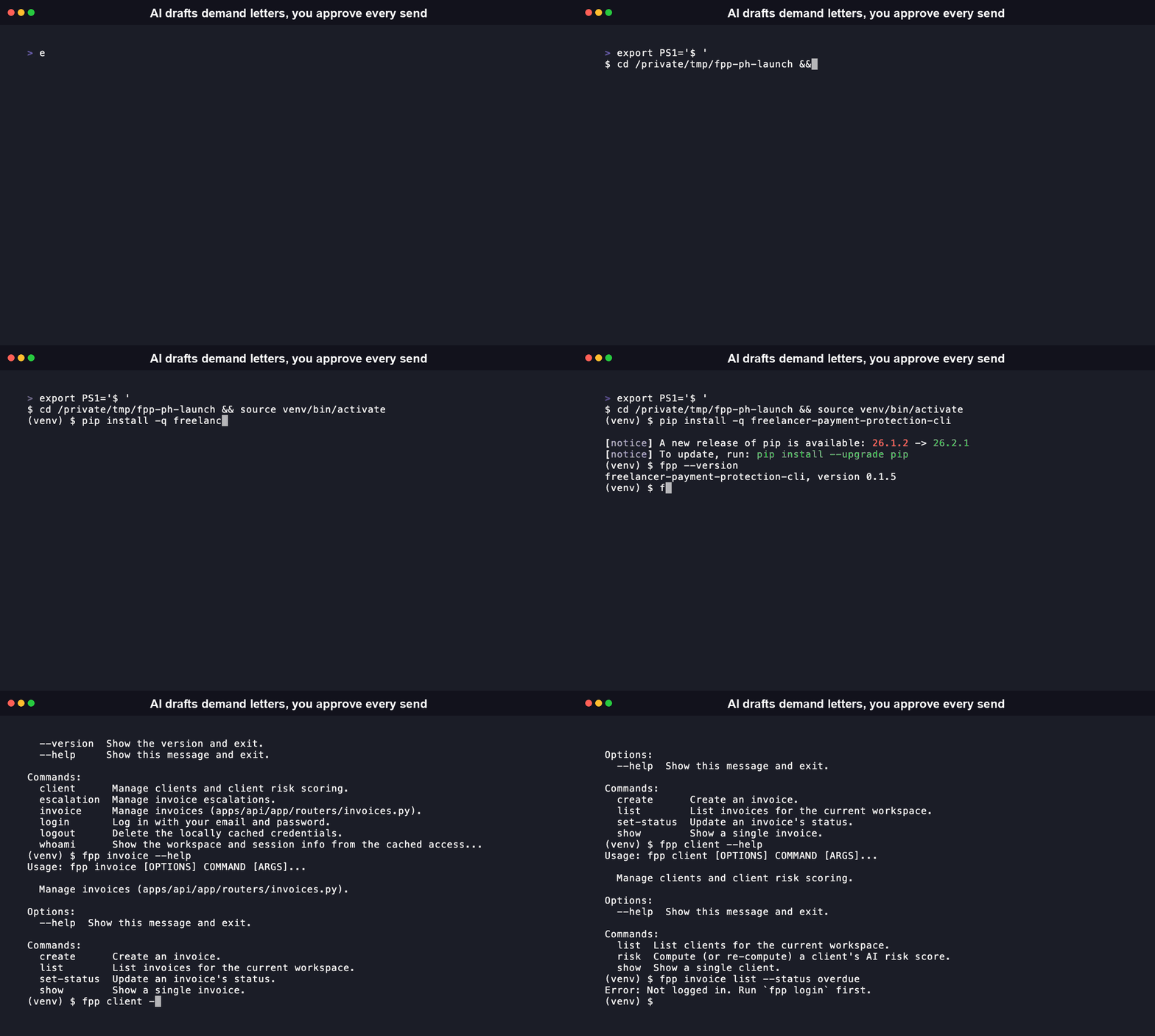
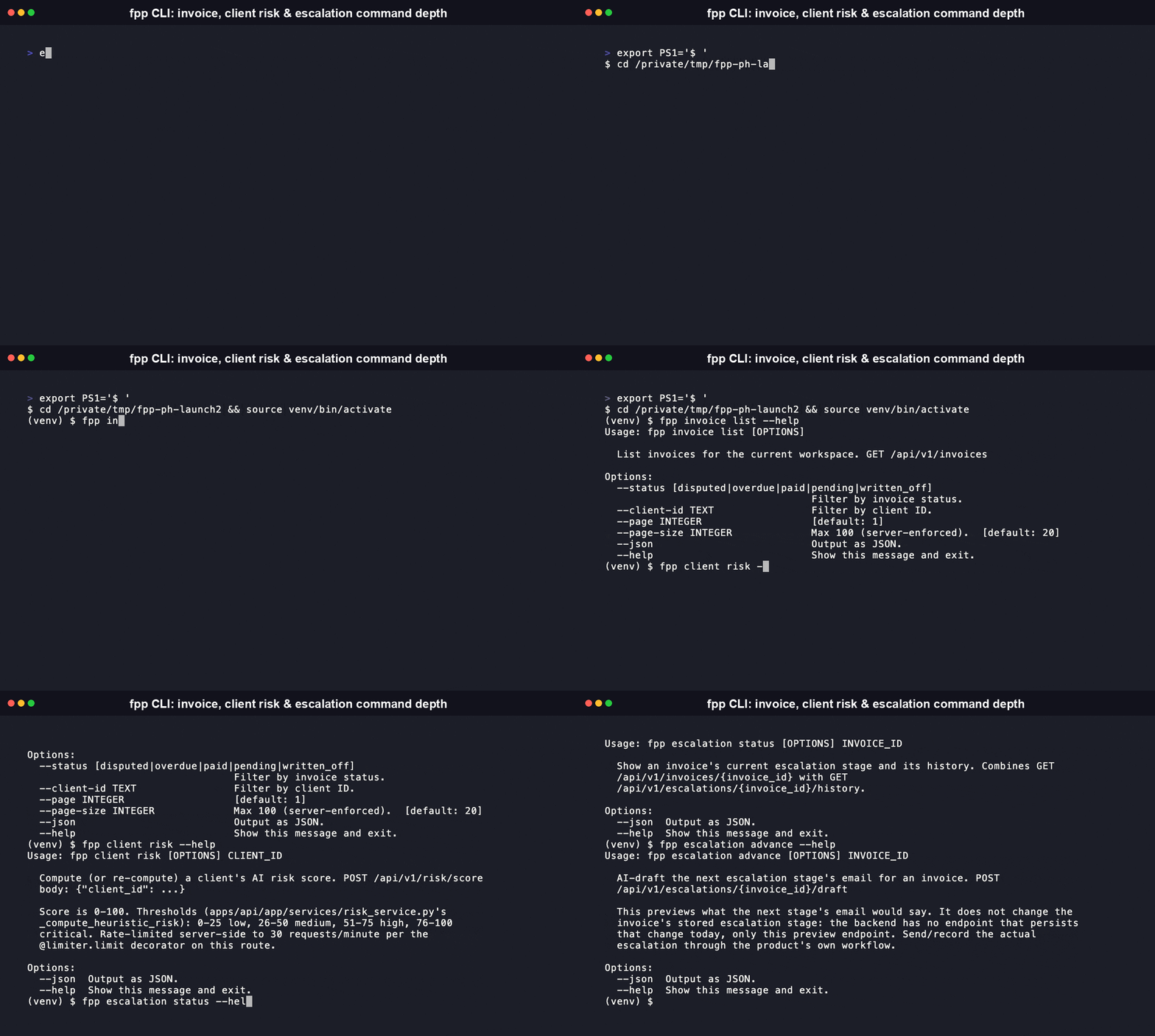
Verified against the installed package's actual `--help` output.
```
fpp login Log in (prompts for email/password)
fpp logout Delete cached credentials
fpp whoami [--json] Show cached workspace/session info
fpp invoice list [--status] [--client-id] [--page] [--page-size] [--json]
fpp invoice create --client-id --invoice-number --amount --due-date [--currency] [--source-system] [--external-id] [--json]
fpp invoice show 

















 ---
## API Reference
Interactive OpenAPI at `http://localhost:8000/docs`. Verified against the router source directly:
```
GET /health Liveness probe
GET /health/ready Readiness (DB)
GET /api/v1/clients List
POST /api/v1/clients Create
GET /api/v1/clients/{client_id} Detail
PUT /api/v1/clients/{client_id} Update
DELETE /api/v1/clients/{client_id} Delete
GET /api/v1/invoices List
POST /api/v1/invoices Create (manual)
GET /api/v1/invoices/{invoice_id} Detail
PATCH /api/v1/invoices/{invoice_id}/status Update status
GET /api/v1/escalations Active escalations
POST /api/v1/escalations/{invoice_id}/draft AI-draft next escalation email (preview only)
GET /api/v1/escalations/{invoice_id}/history Full history
POST /api/v1/legal/demand-letter Generate demand letter
POST /api/v1/legal/demand-letter/stream Generate + stream (SSE)
GET /api/v1/evidence/{invoice_id} Evidence items
POST /api/v1/evidence/{invoice_id}/upload Manual upload
DELETE /api/v1/evidence/{item_id} Remove
POST /api/v1/risk/score AI risk score, structured JSON
GET /api/v1/analytics/overview Dashboard totals
```
---
## Comparison
Every non-`freelancer-payment-protection` row below is sourced from each vendor's own docs/help center, checked in August 2026.
| Capability | Spreadsheets | FreshBooks | HoneyBook | HubSpot | freelancer-payment-protection |
|---|:---:|:---:|:---:|:---:|:---:|
| Overdue-payment reminders | ✗ | Automatic, up to 3 per invoice, configurable timing, template-based | Automatic, 4 fixed timings (7 days before, due day, 2 days after, recurring), template-based | Automated "Payment Reminder" workflow (rule-based) | AI-drafted per stage, tone-calibrated, confidence-scored (preview only, not auto-sent) |
| Jurisdiction-referenced legal demand letters | ✗ | ✗ (not documented) | ✗ (not documented) | ✗ (not documented) | AI-drafted; 4 jurisdictions have a dedicated template (CA, NY, UK, Ontario) |
| Client/invoice risk scoring | ✗ | ✗ (not documented) | ✗ (not documented) | **Breeze Invoice Prioritization**, an AI ranking of overdue invoices by risk/age/customer value, Revenue Hub public beta as of June 2026; no published 0–100 score or per-factor reasoning | 0–100 score, 7 named factors, full AI reasoning returned per client, heuristic fallback if AI is down |
| Evidence/document storage per invoice | ✗ | ✗ (not documented) | ✗ (not documented) | ✗ (not documented) | Manual upload, Supabase Storage-backed, no ZIP export yet |
| Streaming AI generation in the UI | ✗ | ✗ | ✗ | ✗ | Real SSE streaming (verified in source, not just a UI animation) |
| Native invoicing | ✗ | Yes (core product) | Yes (core product) | Yes (Commerce/Payments) | No. Invoices are created via API/CLI, not synced from an accounting tool today |
| Background job automation (sync, scheduled escalation) | N/A | Native | Native | Native | Not implemented. See [What's Not Implemented Yet](#whats-not-implemented-yet) |
The honest read: FreshBooks and HoneyBook are stronger at the mechanical, rule-based reminder they already do well. HubSpot's June 2026 Breeze beta is the closest thing to a competing risk-scoring feature on this list and is worth watching. Nobody here drafts a jurisdiction-referenced demand letter or streams AI generation into the UI; that's the actual gap this project fills, not "full collection automation," which none of these, including this project, deliver end to end yet.
---
## Architecture
### System diagram (what's actually implemented)
```mermaid
graph TB
subgraph "Frontend: Next.js 14"
A[App Router Pages]
B[TanStack Query Cache]
C[Framer Motion UI]
D[Supabase Auth Client]
end
subgraph "Backend: FastAPI, Python 3.12"
E[FastAPI App Factory]
F[JWT Middleware]
G[slowapi Rate Limiter]
H["Routers: 8 domains"]
I[Services: business logic only]
end
subgraph "AI: Claude Sonnet 4.6"
J[packages/legal_ai/client.py]
K[Demand Letter: streaming SSE]
L[Escalation Email: structured draft]
M[Risk Scorer: JSON output]
end
subgraph "Data Layer"
T[(Supabase PostgreSQL + RLS)]
U[Supabase Storage]
W[(SQLite Dev DB)]
end
A --> E
D --> T
B --> E
E --> F --> G --> H --> I
I --> J
J --> K
J --> L
J --> M
I --> T & U
```
Celery and Redis are declared dependencies (`requirements.txt`) with no worker code in the repository today: no `apps/workers/` directory exists, and there is no scheduled job that advances an invoice's stage automatically. See [What's Not Implemented Yet](#whats-not-implemented-yet).
### Why Python for the backend, not Node
Legal document drafting uses `python-docx`/`WeasyPrint` in the code paths that are wired up for it, and the Anthropic Python SDK is the reference implementation. The Python ecosystem is also where contract-analysis tooling (NLTK, spaCy) would live for a future dispute-analysis feature.
### Why centralize all Claude calls in one file
`packages/legal_ai/client.py` (called from `apps/api/app/services/ai_service.py`) is the only place the Anthropic SDK is imported. Model version, retries, and the sync-SDK/async-FastAPI bridge live there, so upgrading the model is a one-file change.
### Why Pydantic Settings with fail-fast validation
`settings = Settings()` runs at import time. If `ANTHROPIC_API_KEY` is absent, the app raises before serving a request rather than degrading silently. The tradeoff: the settings model is strict about unrecognized fields too, which is the root cause of one of the two `.env.example` issues in the FAQ below.
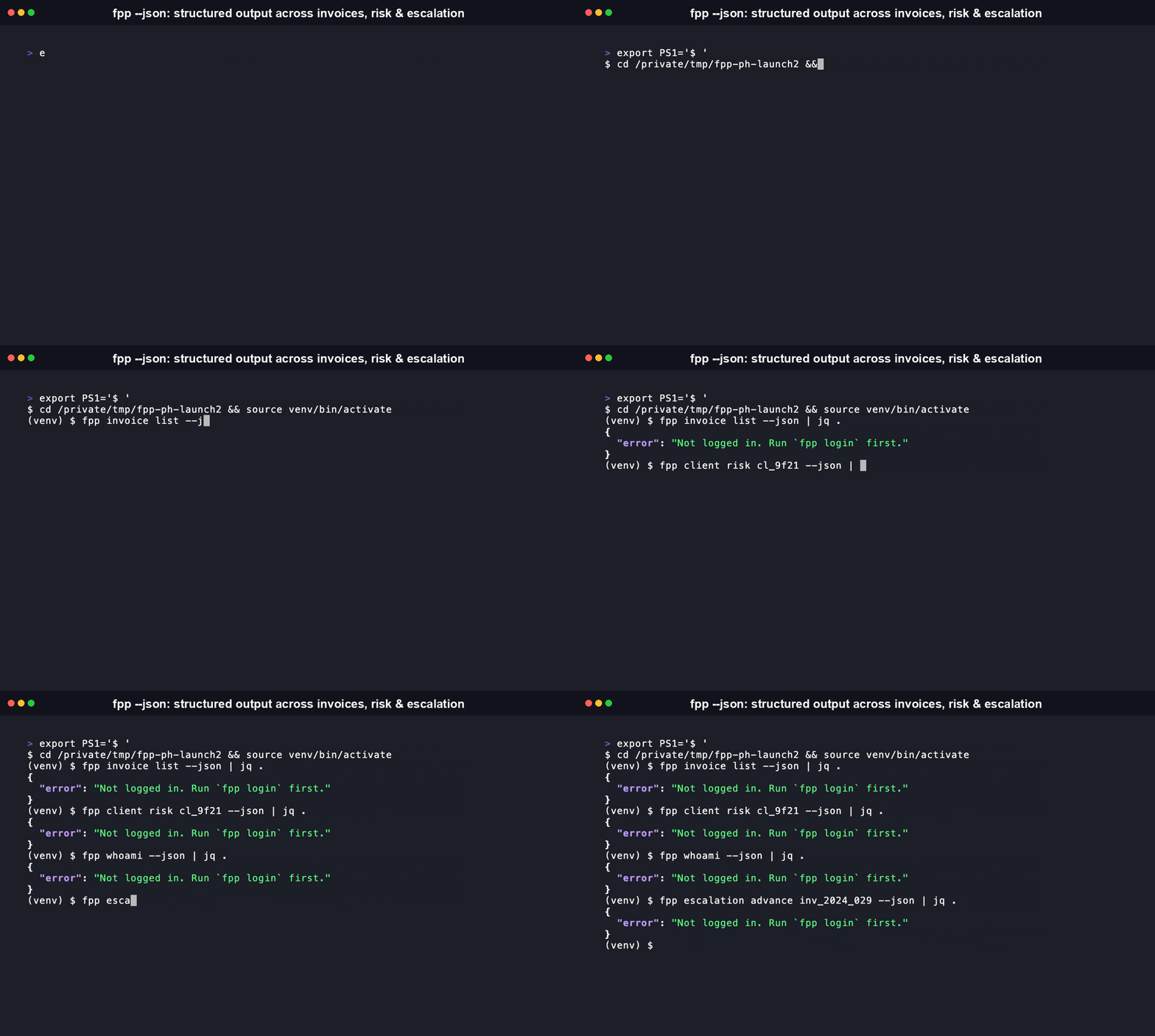
Every data-returning command also takes `--json` for structured output an agent or script can parse directly:
---
## API Reference
Interactive OpenAPI at `http://localhost:8000/docs`. Verified against the router source directly:
```
GET /health Liveness probe
GET /health/ready Readiness (DB)
GET /api/v1/clients List
POST /api/v1/clients Create
GET /api/v1/clients/{client_id} Detail
PUT /api/v1/clients/{client_id} Update
DELETE /api/v1/clients/{client_id} Delete
GET /api/v1/invoices List
POST /api/v1/invoices Create (manual)
GET /api/v1/invoices/{invoice_id} Detail
PATCH /api/v1/invoices/{invoice_id}/status Update status
GET /api/v1/escalations Active escalations
POST /api/v1/escalations/{invoice_id}/draft AI-draft next escalation email (preview only)
GET /api/v1/escalations/{invoice_id}/history Full history
POST /api/v1/legal/demand-letter Generate demand letter
POST /api/v1/legal/demand-letter/stream Generate + stream (SSE)
GET /api/v1/evidence/{invoice_id} Evidence items
POST /api/v1/evidence/{invoice_id}/upload Manual upload
DELETE /api/v1/evidence/{item_id} Remove
POST /api/v1/risk/score AI risk score, structured JSON
GET /api/v1/analytics/overview Dashboard totals
```
---
## Comparison
Every non-`freelancer-payment-protection` row below is sourced from each vendor's own docs/help center, checked in August 2026.
| Capability | Spreadsheets | FreshBooks | HoneyBook | HubSpot | freelancer-payment-protection |
|---|:---:|:---:|:---:|:---:|:---:|
| Overdue-payment reminders | ✗ | Automatic, up to 3 per invoice, configurable timing, template-based | Automatic, 4 fixed timings (7 days before, due day, 2 days after, recurring), template-based | Automated "Payment Reminder" workflow (rule-based) | AI-drafted per stage, tone-calibrated, confidence-scored (preview only, not auto-sent) |
| Jurisdiction-referenced legal demand letters | ✗ | ✗ (not documented) | ✗ (not documented) | ✗ (not documented) | AI-drafted; 4 jurisdictions have a dedicated template (CA, NY, UK, Ontario) |
| Client/invoice risk scoring | ✗ | ✗ (not documented) | ✗ (not documented) | **Breeze Invoice Prioritization**, an AI ranking of overdue invoices by risk/age/customer value, Revenue Hub public beta as of June 2026; no published 0–100 score or per-factor reasoning | 0–100 score, 7 named factors, full AI reasoning returned per client, heuristic fallback if AI is down |
| Evidence/document storage per invoice | ✗ | ✗ (not documented) | ✗ (not documented) | ✗ (not documented) | Manual upload, Supabase Storage-backed, no ZIP export yet |
| Streaming AI generation in the UI | ✗ | ✗ | ✗ | ✗ | Real SSE streaming (verified in source, not just a UI animation) |
| Native invoicing | ✗ | Yes (core product) | Yes (core product) | Yes (Commerce/Payments) | No. Invoices are created via API/CLI, not synced from an accounting tool today |
| Background job automation (sync, scheduled escalation) | N/A | Native | Native | Native | Not implemented. See [What's Not Implemented Yet](#whats-not-implemented-yet) |
The honest read: FreshBooks and HoneyBook are stronger at the mechanical, rule-based reminder they already do well. HubSpot's June 2026 Breeze beta is the closest thing to a competing risk-scoring feature on this list and is worth watching. Nobody here drafts a jurisdiction-referenced demand letter or streams AI generation into the UI; that's the actual gap this project fills, not "full collection automation," which none of these, including this project, deliver end to end yet.
---
## Architecture
### System diagram (what's actually implemented)
```mermaid
graph TB
subgraph "Frontend: Next.js 14"
A[App Router Pages]
B[TanStack Query Cache]
C[Framer Motion UI]
D[Supabase Auth Client]
end
subgraph "Backend: FastAPI, Python 3.12"
E[FastAPI App Factory]
F[JWT Middleware]
G[slowapi Rate Limiter]
H["Routers: 8 domains"]
I[Services: business logic only]
end
subgraph "AI: Claude Sonnet 4.6"
J[packages/legal_ai/client.py]
K[Demand Letter: streaming SSE]
L[Escalation Email: structured draft]
M[Risk Scorer: JSON output]
end
subgraph "Data Layer"
T[(Supabase PostgreSQL + RLS)]
U[Supabase Storage]
W[(SQLite Dev DB)]
end
A --> E
D --> T
B --> E
E --> F --> G --> H --> I
I --> J
J --> K
J --> L
J --> M
I --> T & U
```
Celery and Redis are declared dependencies (`requirements.txt`) with no worker code in the repository today: no `apps/workers/` directory exists, and there is no scheduled job that advances an invoice's stage automatically. See [What's Not Implemented Yet](#whats-not-implemented-yet).
### Why Python for the backend, not Node
Legal document drafting uses `python-docx`/`WeasyPrint` in the code paths that are wired up for it, and the Anthropic Python SDK is the reference implementation. The Python ecosystem is also where contract-analysis tooling (NLTK, spaCy) would live for a future dispute-analysis feature.
### Why centralize all Claude calls in one file
`packages/legal_ai/client.py` (called from `apps/api/app/services/ai_service.py`) is the only place the Anthropic SDK is imported. Model version, retries, and the sync-SDK/async-FastAPI bridge live there, so upgrading the model is a one-file change.
### Why Pydantic Settings with fail-fast validation
`settings = Settings()` runs at import time. If `ANTHROPIC_API_KEY` is absent, the app raises before serving a request rather than degrading silently. The tradeoff: the settings model is strict about unrecognized fields too, which is the root cause of one of the two `.env.example` issues in the FAQ below.
Every data-returning command also takes `--json` for structured output an agent or script can parse directly:
 ---
## MCP Server
`freelancer-payment-protection-cli` ships a Model Context Protocol (MCP) server, so an
agent (Claude Desktop, Claude Code, or any other MCP client) can call the same commands
above (`invoice list`, `client risk`, `escalation status`, ...) as tool calls instead of
shelling out to the CLI directly.
**Install:**
```bash
pip install "freelancer-payment-protection-cli[mcp]"
```
**Claude Desktop config** (`claude_desktop_config.json`):
```json
{
"mcpServers": {
"freelancer-payment-protection": {
"command": "fpp-mcp"
}
}
}
```
The server exposes one tool, `run`, that shells out to the installed `fpp` binary with
the given argument list and returns its output as structured JSON when possible — every
`fpp` subcommand is reachable through it, not just a hand-picked subset. Example call:
`run(args=["client", "risk", "
---
## MCP Server
`freelancer-payment-protection-cli` ships a Model Context Protocol (MCP) server, so an
agent (Claude Desktop, Claude Code, or any other MCP client) can call the same commands
above (`invoice list`, `client risk`, `escalation status`, ...) as tool calls instead of
shelling out to the CLI directly.
**Install:**
```bash
pip install "freelancer-payment-protection-cli[mcp]"
```
**Claude Desktop config** (`claude_desktop_config.json`):
```json
{
"mcpServers": {
"freelancer-payment-protection": {
"command": "fpp-mcp"
}
}
}
```
The server exposes one tool, `run`, that shells out to the installed `fpp` binary with
the given argument list and returns its output as structured JSON when possible — every
`fpp` subcommand is reachable through it, not just a hand-picked subset. Example call:
`run(args=["client", "risk", "