# ChemDraw MCP (unofficial) [Health: Active]
**Category:** 💻 Developer Tools
**Repository:** https://github.com/jurimaxam-dotcom/chemdraw-mcp
**GitHub Stars:** 13
**Views:** 0
**Installs:** 0
**Upvotes:** 0
**Directory Page:** https://allmcps.com/mcp/chemdraw-mcp-unofficial
## Description
Molecule names or SMILES to 2D structures, reactions, mechanisms, spectra - offline via RDKit.
## Claude Desktop Quick Installation
Install path detected from listing signals. Uses `uvx` (confidence: high):
```json
"mcpServers": {
"chemdraw-mcp-unofficial": {
"command": "uvx",
"args": ["--from"]
}
}
```
## Documentation & README
# chemdraw-mcp
[](https://github.com/jurimaxam-dotcom/chemdraw-mcp/actions/workflows/ci.yml)
[](https://github.com/jurimaxam-dotcom/chemdraw-mcp/releases)
[](LICENSE)
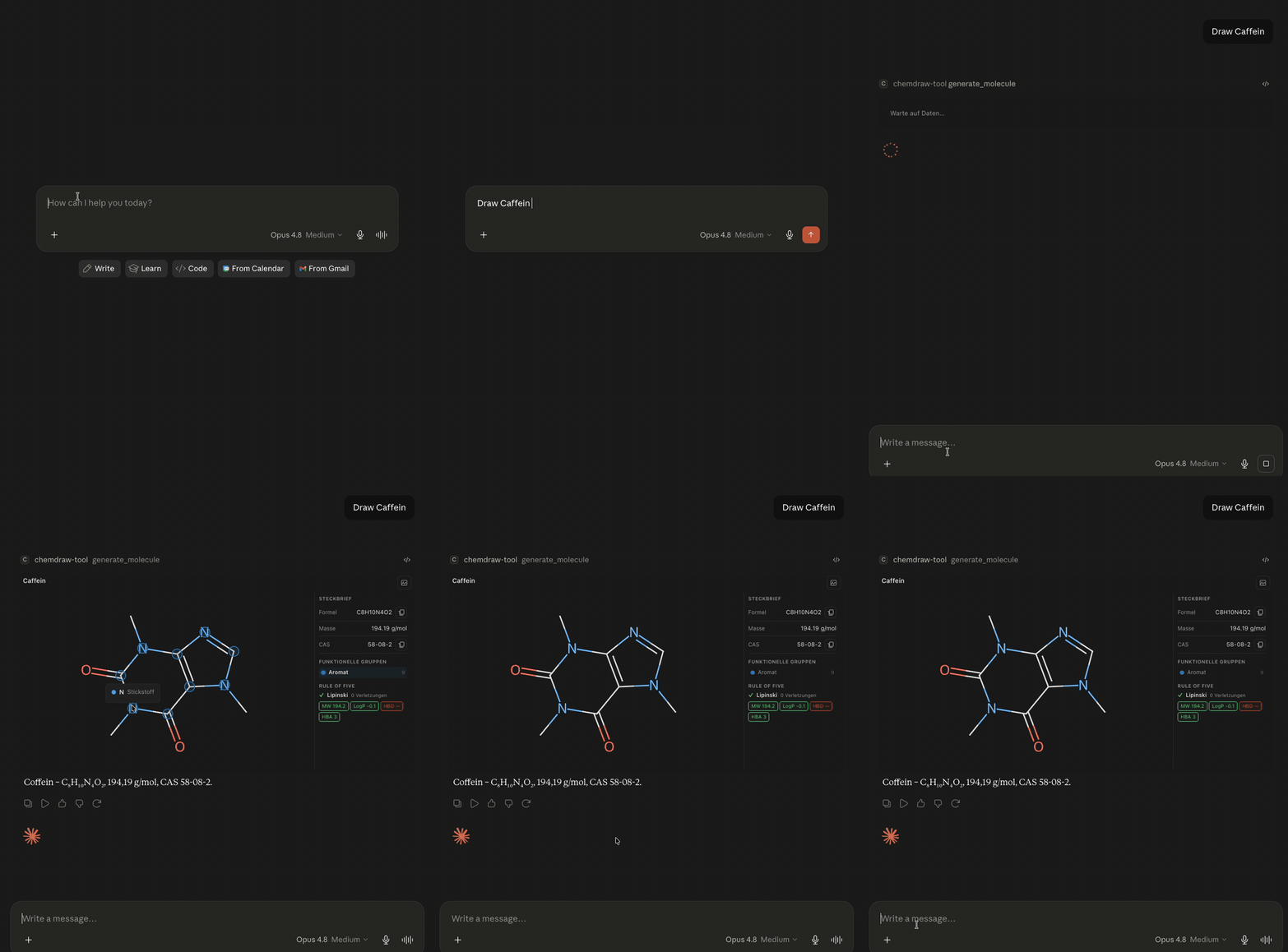
**Chat → chemical structure.** An MCP server for Claude Desktop: you describe
a molecule, a reaction or a lab result in plain words, and it draws the
figure — a print-ready PNG/SVG rendered locally with RDKit, plus an
interactive preview inside the chat. *"Draw aspirin"* is already a complete
command.
Built for pharmacy and chemistry students who spend too much time clicking
hexagons. 20 tools cover what a report or a slide actually needs:
structures, reaction schemes, step-by-step mechanisms, substrate-scope
figures, TLC plates, titration curves, schematic spectra, substance data
sheets, Ph.Eur. assay calculations and Anki decks.
What it costs you: one install command. Apache-2.0, no API key, no sign-up
for the server, no ChemDraw licence — you need Claude Desktop and
[uv](https://docs.astral.sh/uv/), everything else is fetched once.
Rendering runs entirely on your machine; only name resolution and the
database lookups reach the internet. ChemDraw CDXML is an optional extra
format for people who want to keep editing there, never a requirement.
## Example output
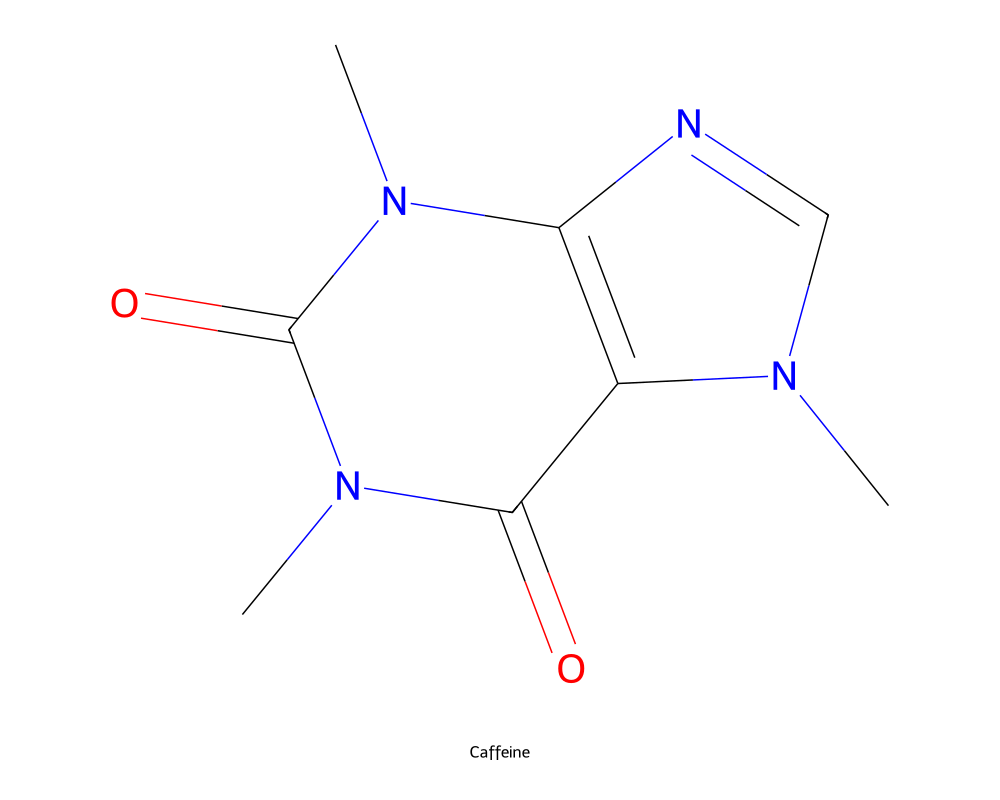
*"Draw caffeine"* — print-ready PNG, generated by `generate_molecule`:
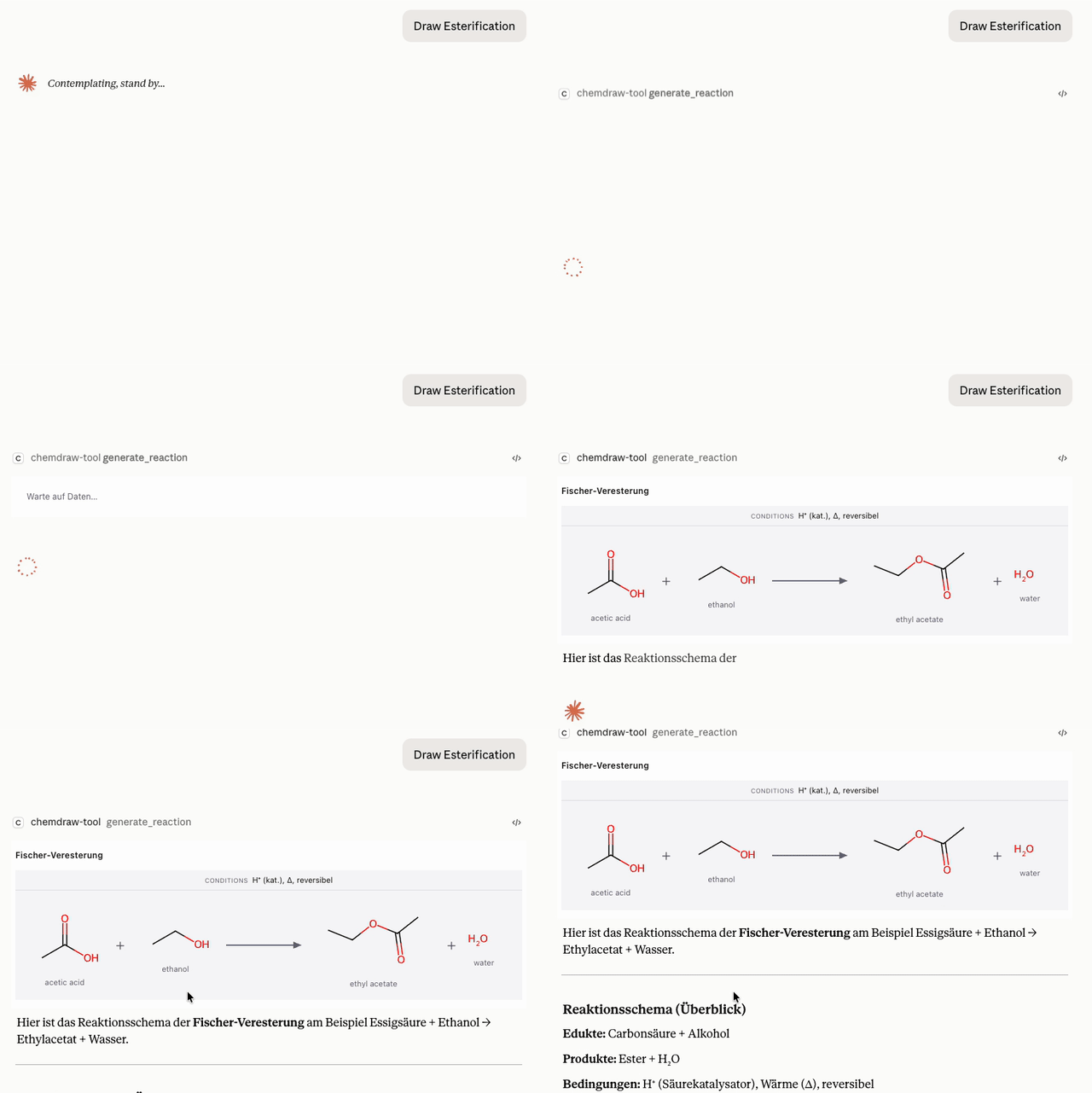
*"Show the Fischer esterification of ethanol with acetic acid"* —
`generate_reaction` renders the scheme with conditions above the arrow,
live in the chat panel:
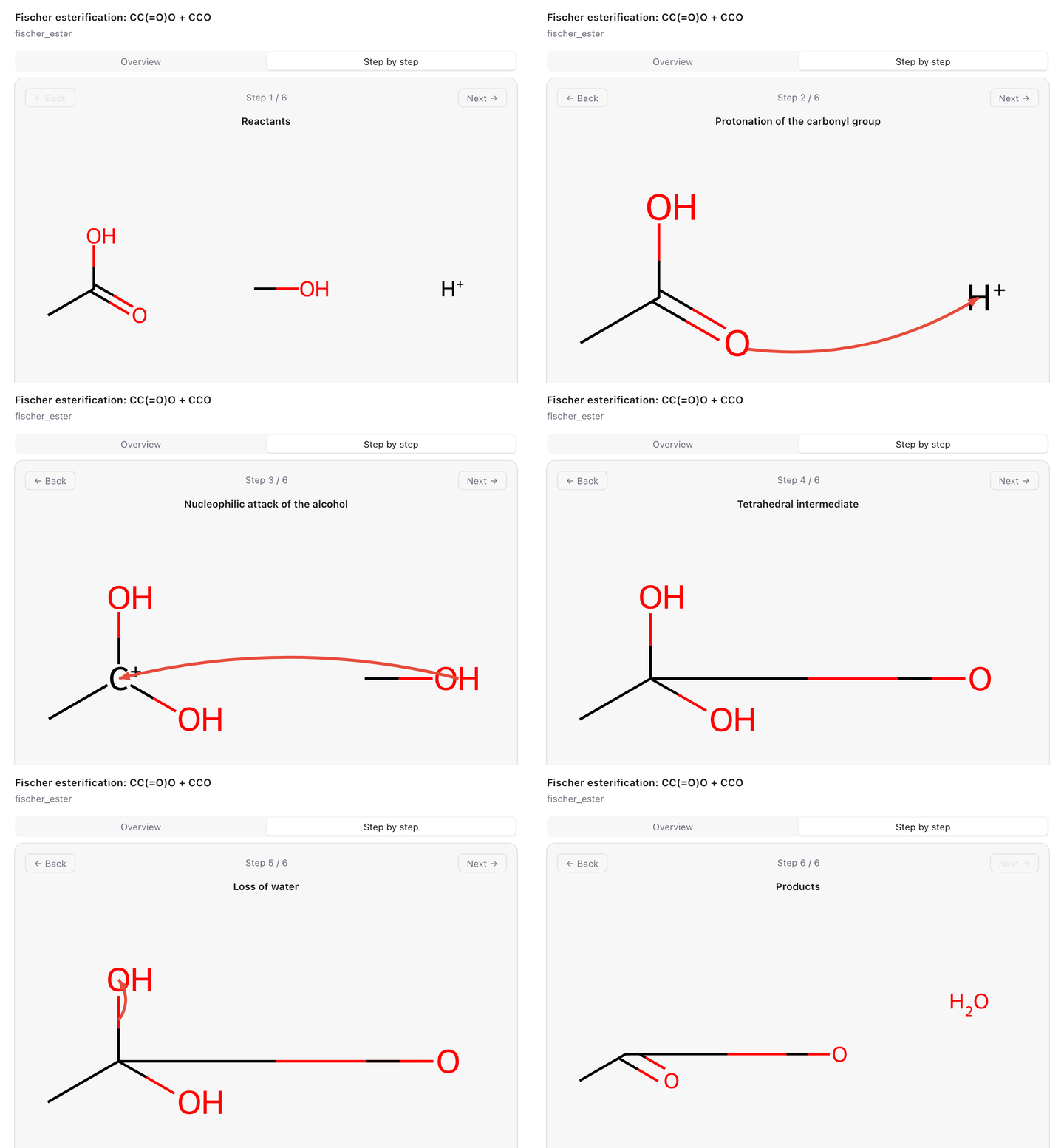
*"Show the Fischer esterification mechanism step by step"* —
`generate_mechanism` renders curved electron-flow arrows in the interactive
panel:
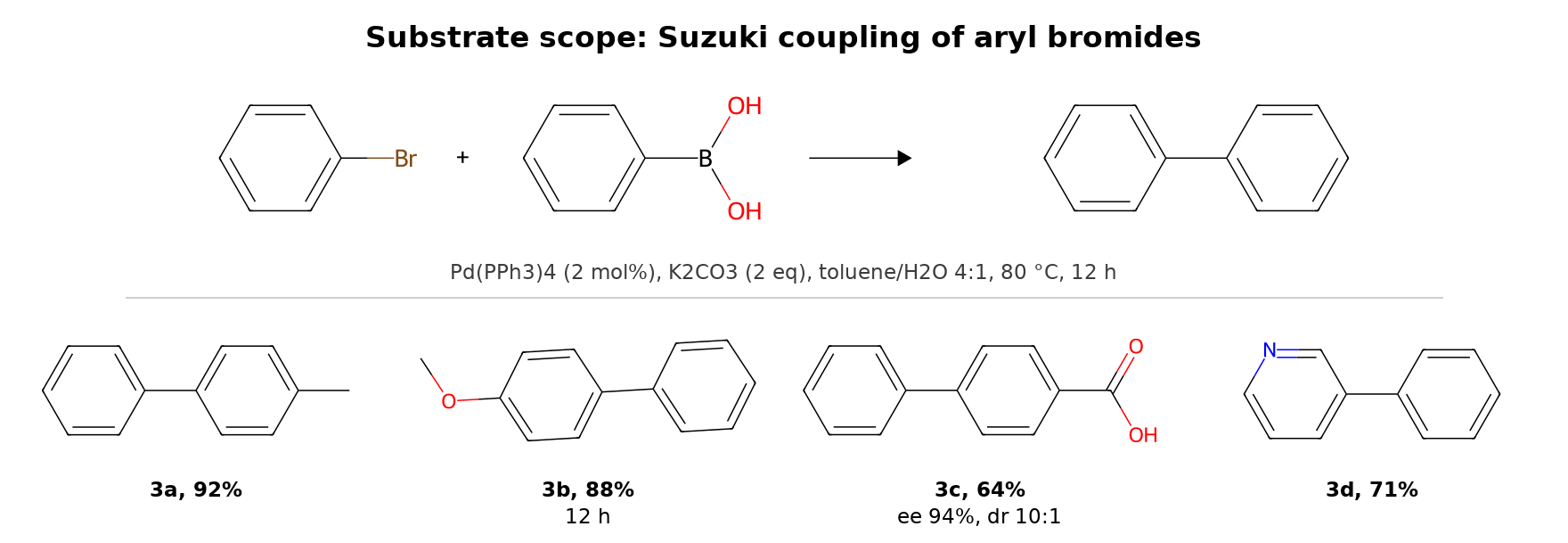
*"Make a scope figure of my Suzuki couplings: 3a 92%, 3b 88% after 12 h,
3c 64% with ee 94% and dr 10:1, 3d 71%"* — `generate_scope_table` sets the
general equation with its conditions on top and the products below it, on a
shared bond length and a shared caption baseline:
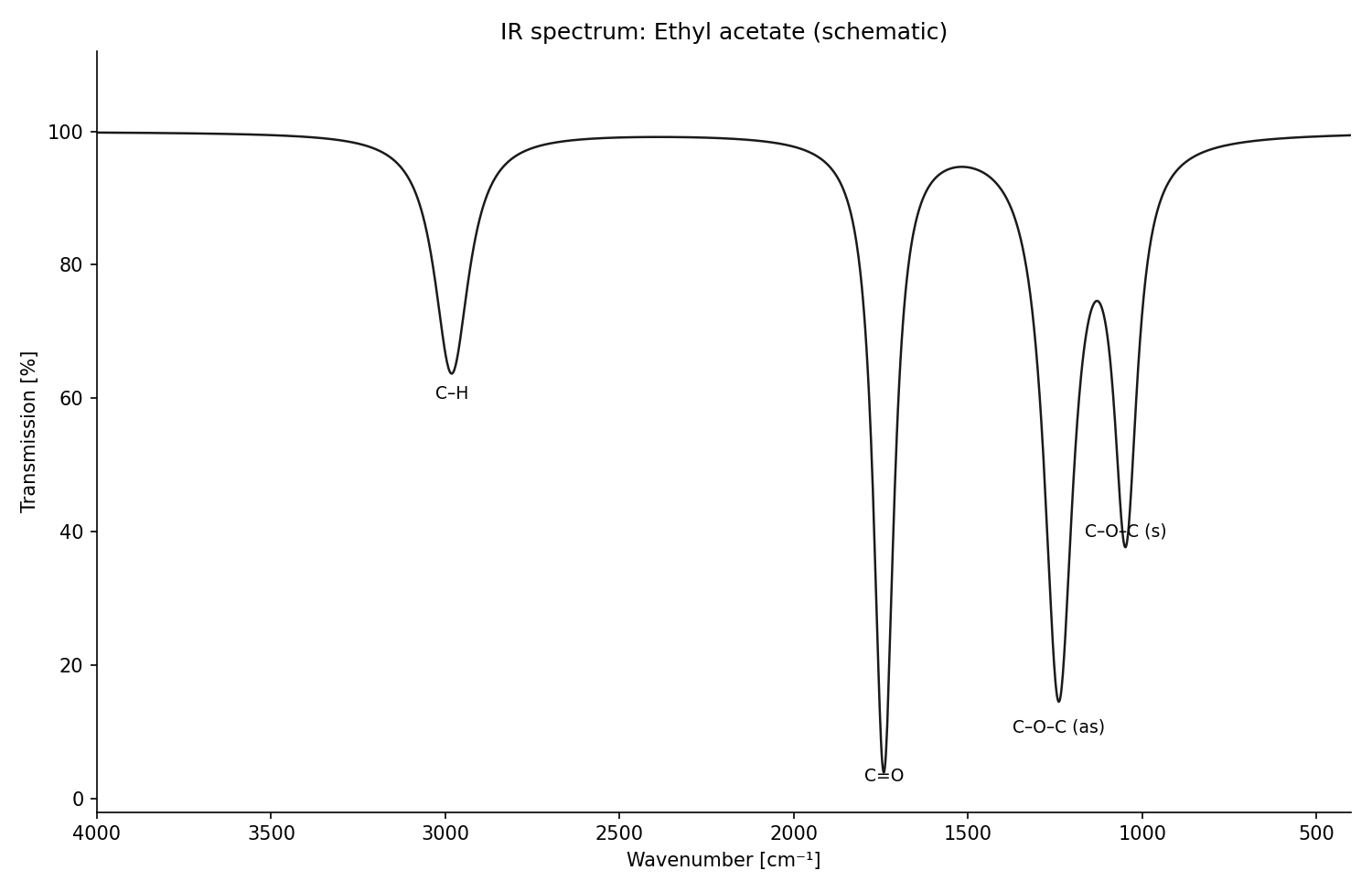
*"Sketch the IR spectrum of ethyl acetate"* — `generate_spectrum` (draws the
peaks it is given, with per-type axis conventions):
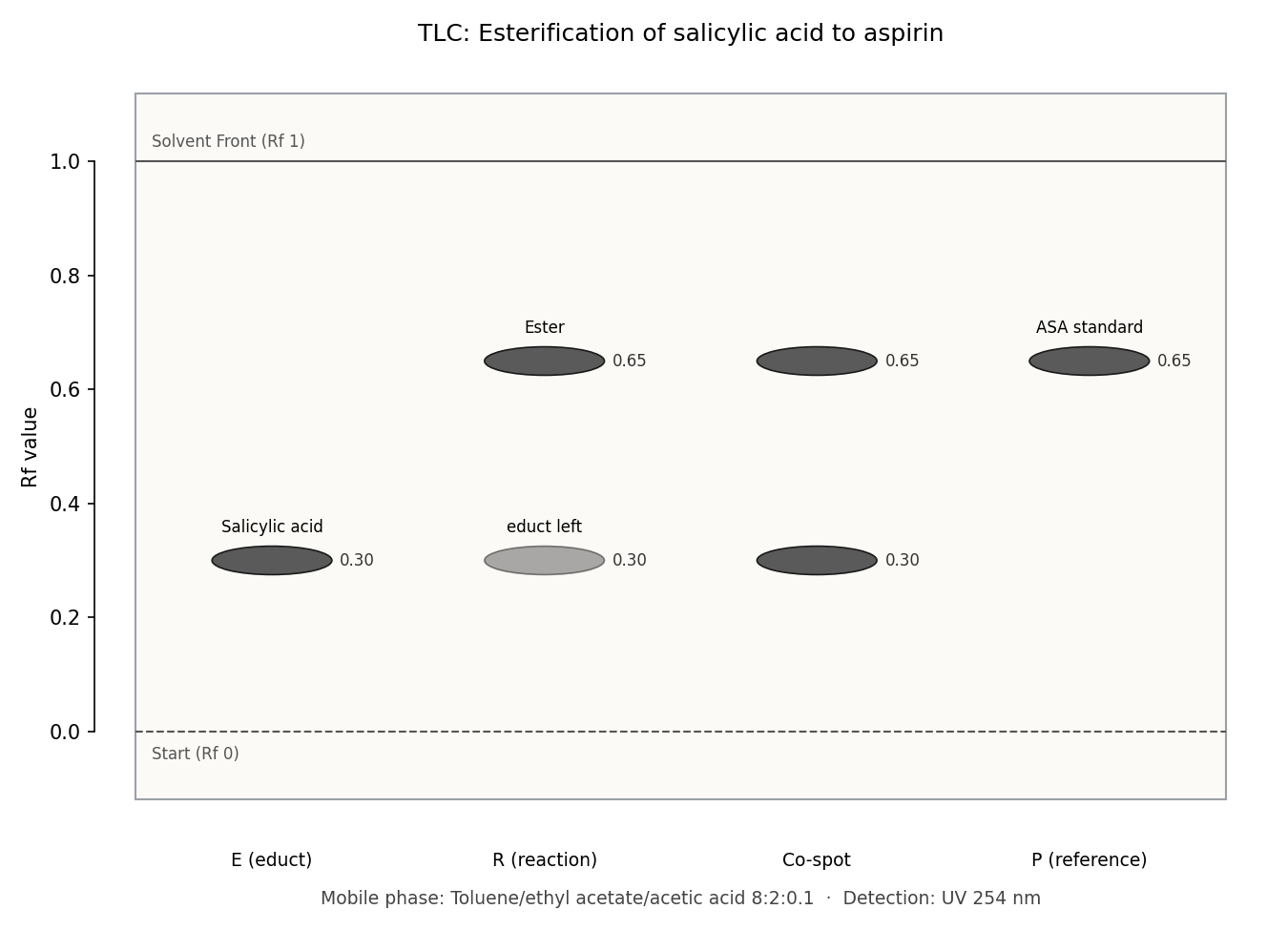
*"TLC of my esterification: educt at 0.30, product at 0.65, the co-spot shows
both, some educt left"* — `generate_tlc` draws the plate the lab report asks
for, with mobile phase and detection as its caption:
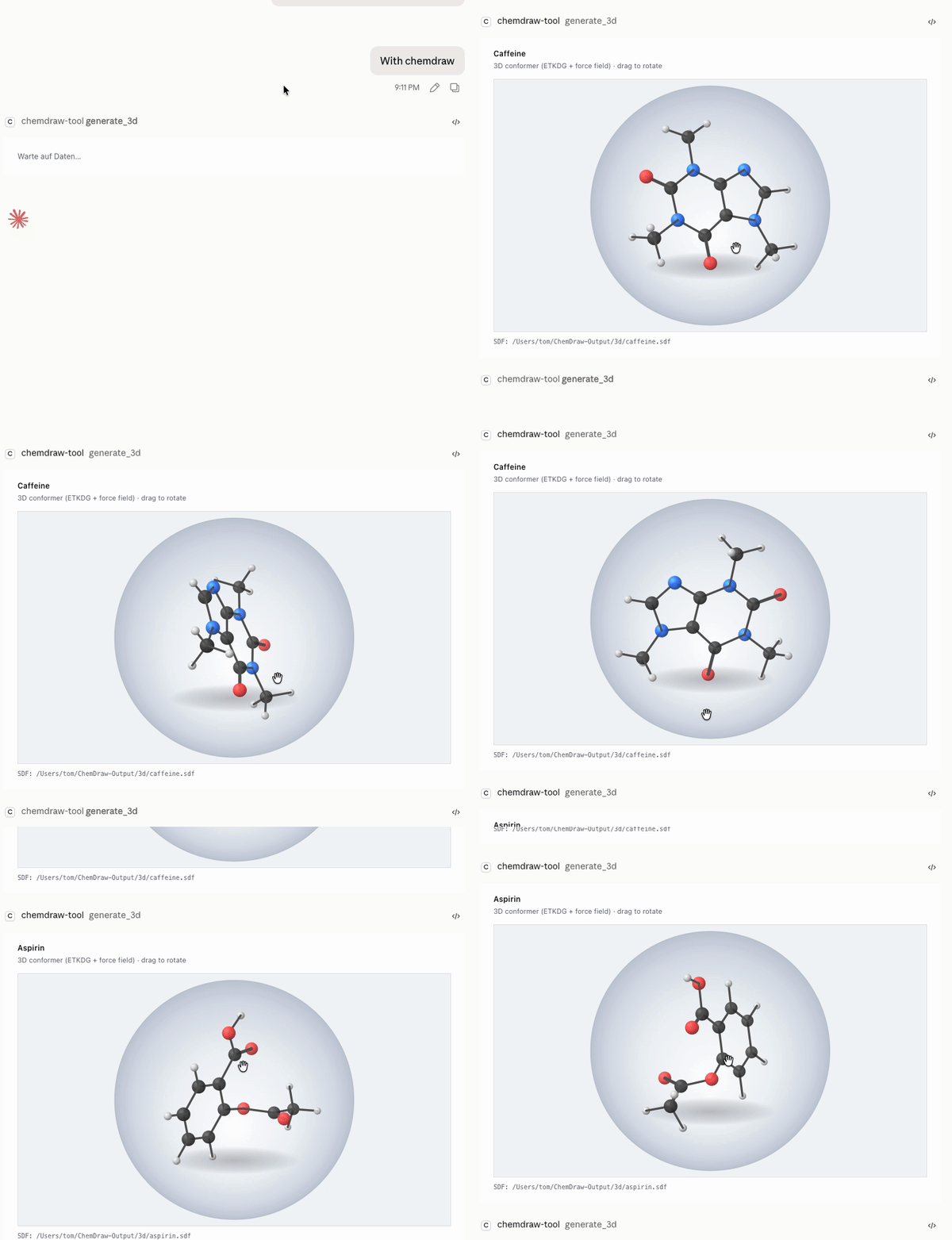
*"Show caffeine in 3D"* — `generate_3d` embeds the molecule (ETKDG + force
field) and opens a drag-to-rotate ball-and-stick viewer in the chat panel:
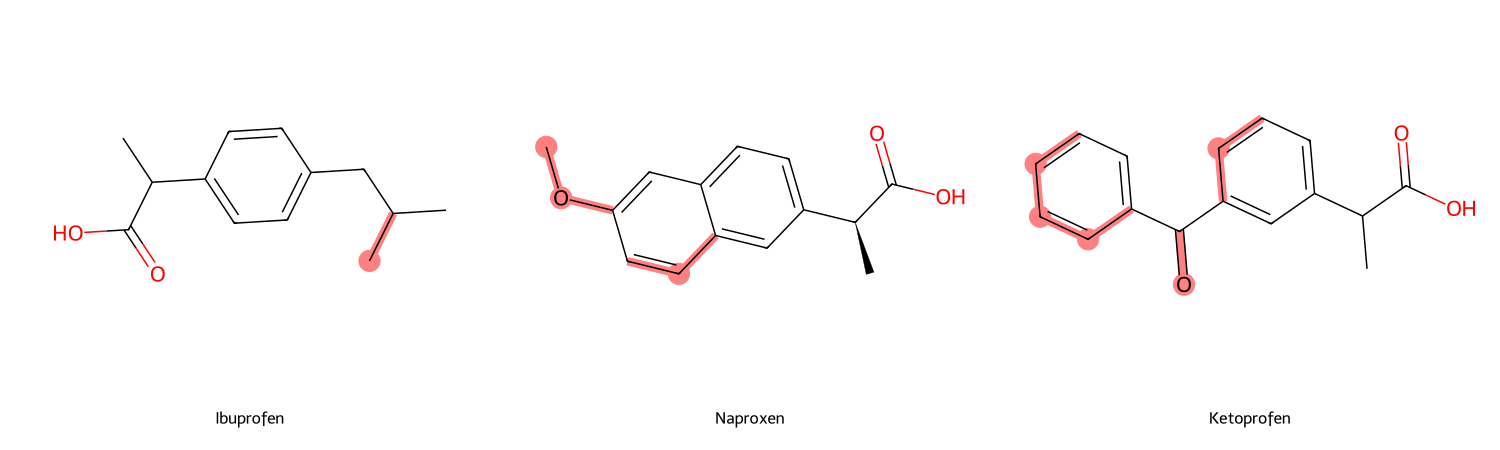
*"What distinguishes ibuprofen from naproxen and ketoprofen?"* —
`compare_molecules` keeps the shared scaffold (MCS) neutral and highlights
everything that differs:
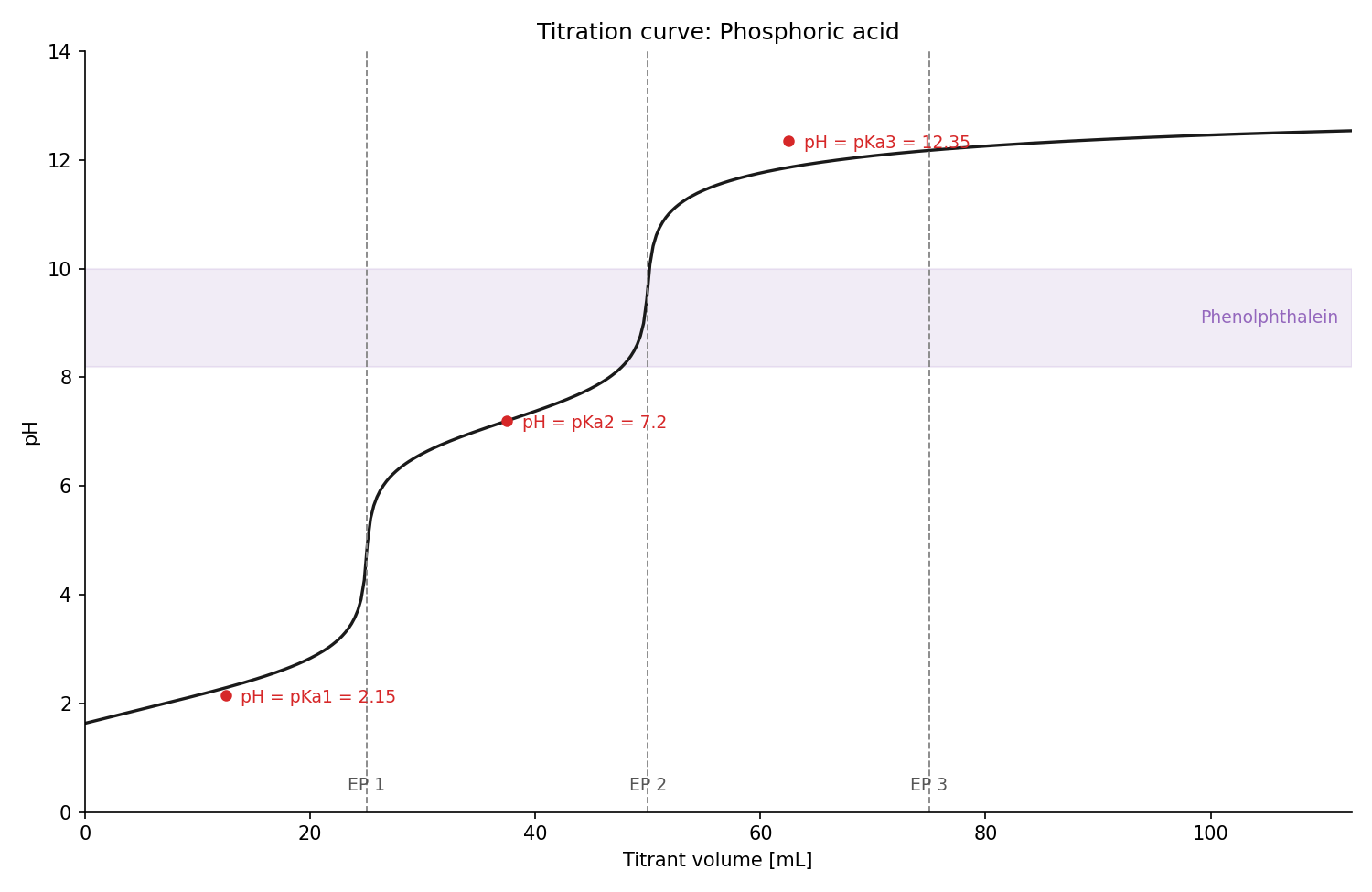
*"Titration curve of phosphoric acid with NaOH, phenolphthalein as
indicator"* — `generate_titration_curve` computes pH from the exact charge
balance, with equivalence points, buffer points (pH = pKa) and the indicator
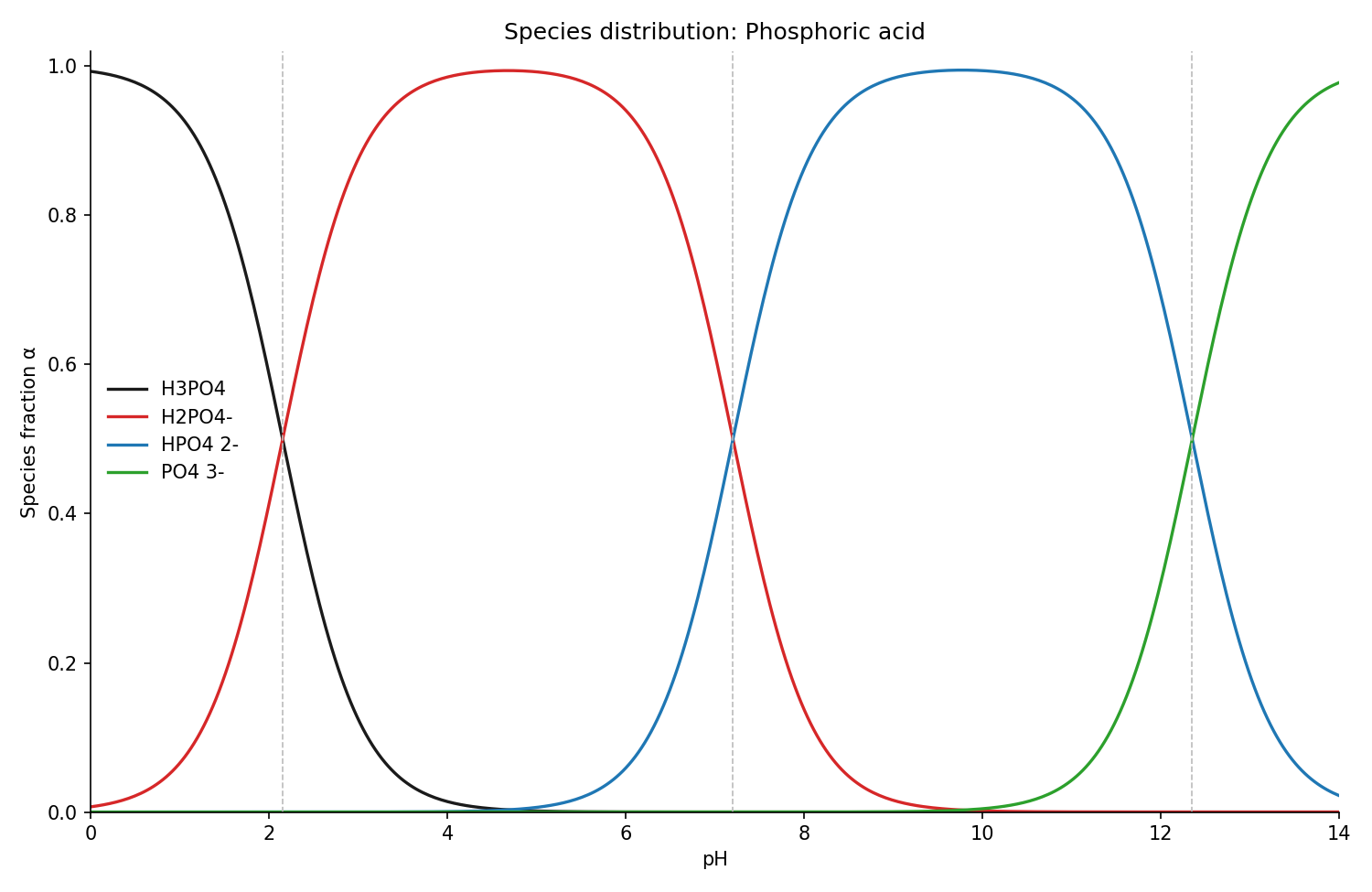
band; its sibling `generate_species_distribution` shows which protonation
species dominates at every pH:
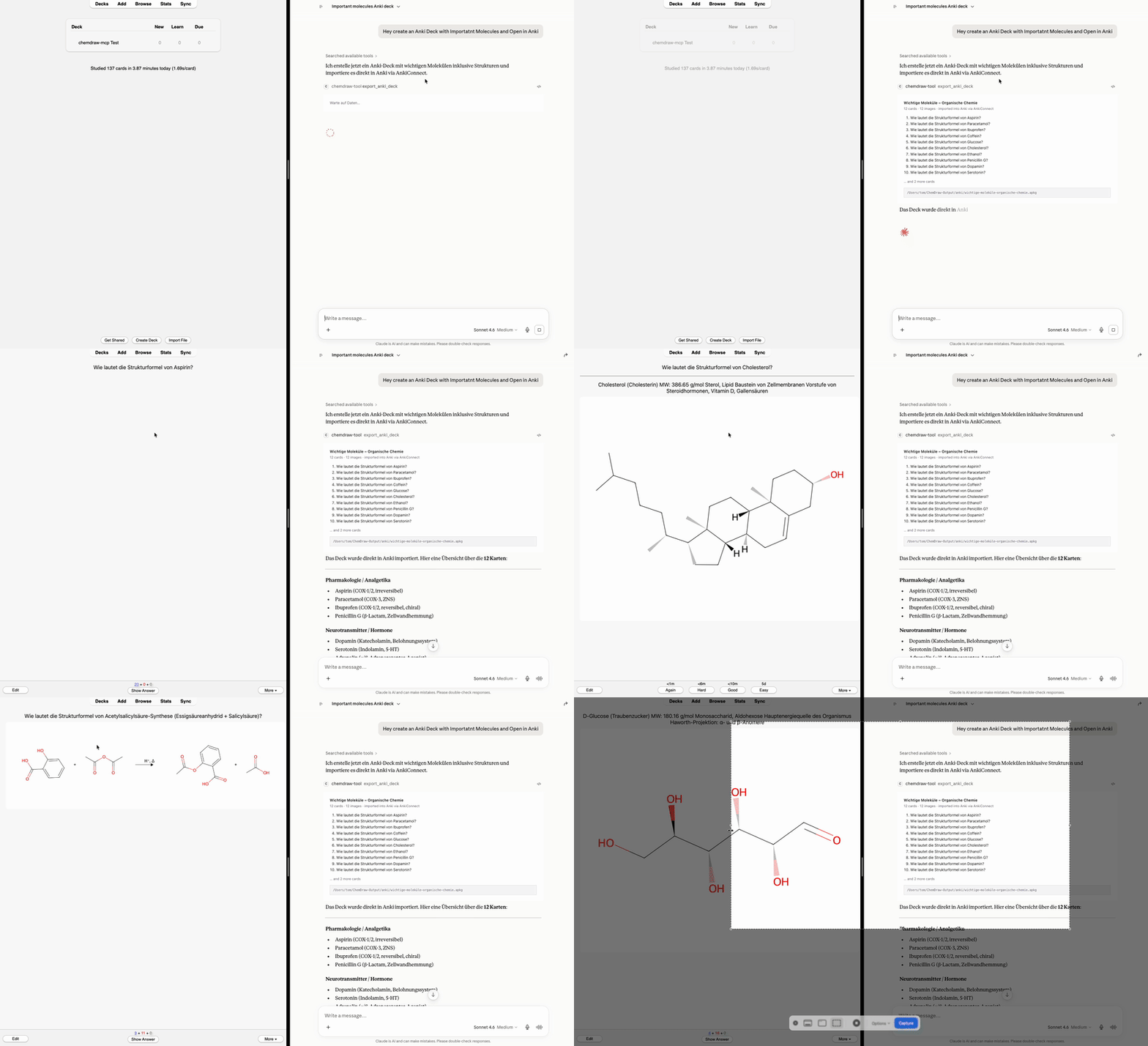
*"Create an Anki deck with important molecules and open it in Anki"* —
`export_anki_deck` builds a ready-to-import `.apkg`
with rendered structures embedded; with the optional AnkiConnect add-on the
cards land straight in the running Anki, no clicks:
## Features
All 20 tools the server exposes. Files are written to `~/ChemDraw-Output/`;
every drawing tool also returns a live preview for the in-chat panel.
**Structures and schemes**
- **`generate_molecule`** — name/SMILES → 2D structure as PNG + SVG
(optionally CDXML), with properties, functional-group detection and a
Lipinski rule-of-five check
- **`batch_generate`** — a whole list of structures in one call
- **`generate_reaction`** — educts + products + conditions → reaction scheme
with the conditions set above the arrow
- **`generate_mechanism`** — curved-arrow mechanisms (SN1, SN2, Fischer
esterification) step by step
- **`generate_scope_table`** — the substrate-scope figure of the methodology
literature: the general equation with its conditions on top, below it a
grid of products, each with identifier ("1a") and yield ("78%") plus
optional ee/dr/time. All structures share one bond length, all captions one
baseline; an entry that cannot be resolved is reported, not fatal
- **`compare_molecules`** — 2–4 structures side by side, differences
highlighted, shared scaffold (MCS) neutral
- **`generate_3d`** — rotatable 3D ball-and-stick conformer in the chat
panel (ETKDGv3 + force field) plus SDF export
**Lab results and analysis**
- **`generate_spectrum`** — schematic spectra from peak lists (IR, NIR,
Raman, UV/Vis, fluorescence, ORD, CD, ¹H/¹³C NMR, MS) with per-type axis
conventions — draws given peaks, does not predict spectra
- **`generate_tlc`** — TLC plate sketch from Rf values: start line at the
bottom, solvent front at the top, one captioned lane per application
point (educt / reaction / co-spot), Rf annotated at every spot, mobile
phase and detection printed as a caption — the sketch a lab report asks for
- **`generate_titration_curve`** — pH vs. titrant volume from the exact
charge balance, with equivalence points, buffer points (pH = pKa) and
indicator transition band
- **`generate_species_distribution`** — protonation species fractions
over pH (Henderson–Hasselbalch) with pKa crossovers marked
- **`generate_calibration_curve`** — least-squares line through your
standards, and the unknowns read back off it the way you would with a
ruler. A sample outside the calibrated range is labelled as extrapolated
rather than quietly reported; limits of detection and quantitation
(DIN 32645) come along for the validation question
**Bench maths** (the number *and* the working — a lab report asks for both)
- **`calculate_solution`** — what to weigh (`m = c · V · M`), what you
actually got, dilutions (C₁V₁ = C₂V₂ with the solvent volume spelled out),
the mixing cross, and molar masses including hydrates like `CuSO₄·5H₂O`.
Warns when the calculated portion falls below what an analytical balance
resolves — then diluting a larger portion is the right move
- **`calculate_content`** — a content determination the way the protocol
wants it: one content per measurement → Grubbs outlier test → mean, s, RSD
→ t-test against the declared content. Titration (with titer determination
from reference titrations) and photometry, plus the fat characteristics
(acid, saponification, ester and iodine value) and Karl Fischer water
content as further `method`s
- **`calculate_ph`** — weak and strong acids and bases, buffers, and buffer
recipes down to weighable masses. Solved through the exact charge balance
with the textbook approximation printed beside it: where the two disagree,
the approximation has lost its assumptions and says so. 10⁻⁸ M HCl comes
out at pH 6.98, not 8
**Substance data** (online lookups)
- **`lookup`** — the facts as text, one `topic` per question:
`properties` (formula, mass, CAS, InChIKey — the default), `safety` (GHS
hazard statements, pictograms, signal word), `physical` (melting/boiling
point, solubility, density), `biochem` (ChEBI classification plus related
UniProt entries), `pathway` (metabolic pathways from KEGG)
- **`lookup_molecule_data`** — PubChem + GHS combined into one data sheet
for the in-chat panel, structure included
- **`predict_spectrum`** — which IR bands a structure should show (with
intensity and band shape), what a measured wavenumber could belong to, and
how many ¹H signals to expect with their integral ratio. Deterministic, so
it says what it cannot do: no chemical shifts in ppm, and diastereotopic
protons are counted as one signal
**Exam prep**
- **`export_anki_deck`** — flashcards as a ready-to-import Anki `.apkg`:
structure↔name drills (optionally reversed: one note, both directions),
cloze/fill-in-the-blank cards, identity/detection reactions, spectrum
band assignment — with rendered images embedded, per-card tags,
`Parent::Child` subdecks; re-exporting a deck updates cards instead of
duplicating them. Optional delivery straight into the running Anki via
the AnkiConnect add-on. Pass `curated_deck_id` instead of your own cards
for a small, formula-verified starter deck (classic analgesics, Ph.Eur.
identity reactions)
Every tool belongs to one of five areas — draw, lab graphics, look up,
calculate, Anki — and each says what it is *not* for, in both directions, so
"draw aspirin" cannot end up in a substrate-scope grid and "what pH is my
buffer?" cannot end up in a plotting tool. One tool sits outside them: `save_png` is the
server half of the panel's export button, called when you click it, never
on its own.
Two optional vault tools (`search_vault`, `read_vault_entry`) appear only
when `CHEMDRAW_VAULT_PATH` is set; without it the server exposes exactly the
20 tools above.
### Options on the drawing tools
- **`formats`** — `["png","svg"]` by default; `"cdxml"` on top of that for
`generate_molecule`, `generate_reaction` and `batch_generate`. The figure
tools (`generate_scope_table`, `generate_tlc`, `generate_spectrum`) reject
CDXML with a clear error instead of writing something meaningless.
- **`abbreviate_groups=True`** — draws common substituents as the labels
chemists actually write: Ph, Bn, OMe, OAc, tBu, CO₂H, Boc, Ts, TBS.
Worth it whenever cells get small — a scope figure stays readable because
only what differs between the substrates remains spelled out. Available on
`generate_molecule`, `generate_reaction`, `generate_scope_table`,
`batch_generate`.
- **`render_style`** — a named look instead of a pile of render parameters,
on the same four tools. `"compact"` (thin bonds, capped label size, tight
margins) for a small figure in a two-column layout, `"presentation"`
(double bond width, minimum font size, more padding) for a lecture slide,
`"grayscale"` for black-and-white printing, where red and blue would
otherwise become two indistinguishable greys. Empty means the default
look, untouched.
- **`annotate_stereo=True`** — prints CIP descriptors (R/S, E/Z) on the 2D
drawing (`generate_molecule`, `batch_generate`).
## Installation
Three ways in; pick one. Options 1 and 2 merge into the config idempotently,
back it up first and leave every other MCP server you have configured
untouched. Afterwards restart Claude Desktop and ask: *"draw caffeine"*.
**Option 1 — clone the repo** (recommended if you want to read or change the
code; installs uv if missing, syncs dependencies, registers the server):
```bash
git clone https://github.com/jurimaxam-dotcom/chemdraw-mcp.git
cd chemdraw-mcp && ./install.sh
```
**Option 2 — from PyPI, no clone** (needs [uv](https://docs.astral.sh/uv/)):
```bash
uv tool install chemdraw-mcp
chemdraw-install
```
`chemdraw-install` writes the Claude Desktop entry for you, using the
absolute path of the installed launcher, and prints the start command it
registered.
**Option 3 — edit the config by hand.** Add this to
`claude_desktop_config.json` under `mcpServers` (macOS:
`~/Library/Application Support/Claude/claude_desktop_config.json`):
```json
"chemdraw-tool": {
"command": "/opt/homebrew/bin/uvx",
"args": ["chemdraw-mcp"]
}
```
> **The one pitfall that breaks every manual install:** Claude Desktop does
> not start MCP servers from a login shell — it uses the minimal GUI PATH.
> A bare `"uvx"` or `"uv"` cannot be resolved there, and the server fails to
> start without saying so. Always put the **absolute** path that
> `which uvx` prints on *your* machine into `command`. Options 1 and 2 do
> this for you.
### Optional extras
- **A Java runtime** (e.g. `brew install openjdk`) lets
[OPSIN](https://github.com/dan2097/opsin) parse systematic IUPAC names
offline — including ones no database indexes. Without Java the resolver
simply continues with the PubChem/NCI online lookup.
- **The AnkiConnect add-on** lets `export_anki_deck` push cards straight
into a running Anki. Without it you get the `.apkg` file and import it
yourself.
- **ChemDraw** (macOS) is never required: request `formats=["cdxml"]` and
open the file yourself if you want to keep editing there.
### Something not working? Run the doctor
```bash
chemdraw-doctor # after "uv tool install chemdraw-mcp"
uv run chemdraw-doctor # in the cloned repo
uvx --from chemdraw-mcp chemdraw-doctor # without installing anything
```
This is the first thing to try — it turns "the server does nothing" into a
named cause. It checks the six things that make the server look dead in the
chat (RDKit rendering, the Java/OPSIN runtime, the `uv` path, the Claude
Desktop entry, the name databases, the output directory) and prints, for
every problem, the exact command that fixes it. Three levels are
distinguished: `[OK]`, `[LIMITED]` (works, but restricted) and `[FAIL]`
(broken); `[NOTE]` marks checks that simply do not apply, such as not having
Claude Desktop installed. The exit code stays 0 as long as the server is
usable, so it can run in scripts. (From a PyPI install the `uv` and Claude
Desktop checks report `[NOTE]` — they relate to the repo installer.)
## Limitations
Stated up front, so nothing surprises you in a report:
- **Java is optional, and that has a price.** Without a JRE, OPSIN is
skipped and names are resolved online via PubChem/NCI — so name lookups
need an internet connection and only work for names those databases index.
SMILES input never touches the network.
- **Spectra are schematic.** `generate_spectrum` draws the peaks it is
handed, with the right axis conventions for the spectrum type. It measures
nothing and predicts nothing — if the peak values came from the chat rather
than from your instrument, verify them before they go into a report.
- **TLC intensity is a drawing hint.** The optional `intensity` (0…1) makes
a spot fainter on the sketch. It is not densitometry and carries no
quantitative meaning.
- **CDXML is a side path.** It is written from the RDKit molecule and
round-trip validated, but PNG/SVG are the primary outputs and the ones the
pixel tests cover. CDXML is off by default and limited to structures and
reaction schemes — TLC plates, scope figures and spectra reject it.
- **3D is one conformer.** `generate_3d` embeds with ETKDGv3 and optimizes
with MMFF (UFF as fallback). That is a plausible geometry for looking at,
not a conformational search and not an energy statement.
- **The ChemDraw bridge is macOS-only** and needs a locally installed
ChemDraw. Everything else works without it.
## How it works
```
name / SMILES
│
▼
resolver ──► OPSIN (systematic IUPAC names, offline) ──► PubChem / NCI (names) · direct parse (SMILES)
│
▼
RDKit 2D coordinates ──► validation (sanity, round-trip)
│
├──► image_export → PNG + SVG files (primary, offline)
├──► svg_renderer → interactive chat preview (MCP App resource)
└──► cdxml_writer → ChemDraw CDXML (optional, on request)
```
## Development
Python 3.11+, package manager `uv`.
```bash
uv sync # backend deps
cd chemdraw_tool/ui && npm install && npx playwright install chromium # frontend, once
./test.sh # the gate: pytest + JS unit + headless-Chromium e2e
```
600+ tests, written test-first. The e2e test rasters a real RDKit SVG in
headless Chromium and compares it against an exact pixel snapshot — the
export path and the in-chat preview are held to the same drawing constants.
## License
Apache-2.0 — see [LICENSE](https://github.com/jurimaxam-dotcom/chemdraw-mcp/blob/HEAD/LICENSE). Copyright 2026 jurimaxam-dotcom.
> **Disclaimer:** This is an unofficial, independent project, not affiliated
> with or endorsed by Revvity. *ChemDraw* is a trademark of Revvity Signals
> Software, Inc. This tool does not include or require ChemDraw; it can
> optionally export files in the open CDXML format.